
A strong tattoo usually starts before the first line ever hits the skin. The custom tattoo design process is where the piece either becomes personal, balanced, and built to last – or ends up feeling generic, crowded, or disconnected from the body it lives on.
For clients who want something original, this process matters as much as the tattoo session itself. A custom piece is not just a matter of picking a subject and filling space. It is a collaboration between your story, the artist’s visual language, and the practical realities of placement, flow, readability, and long-term wear.
What the custom tattoo design process is really for
People sometimes assume design is just sketching. In practice, it is decision-making. The design stage clarifies what the tattoo needs to say, how bold or subtle it should feel, and which visual elements actually belong in the composition.
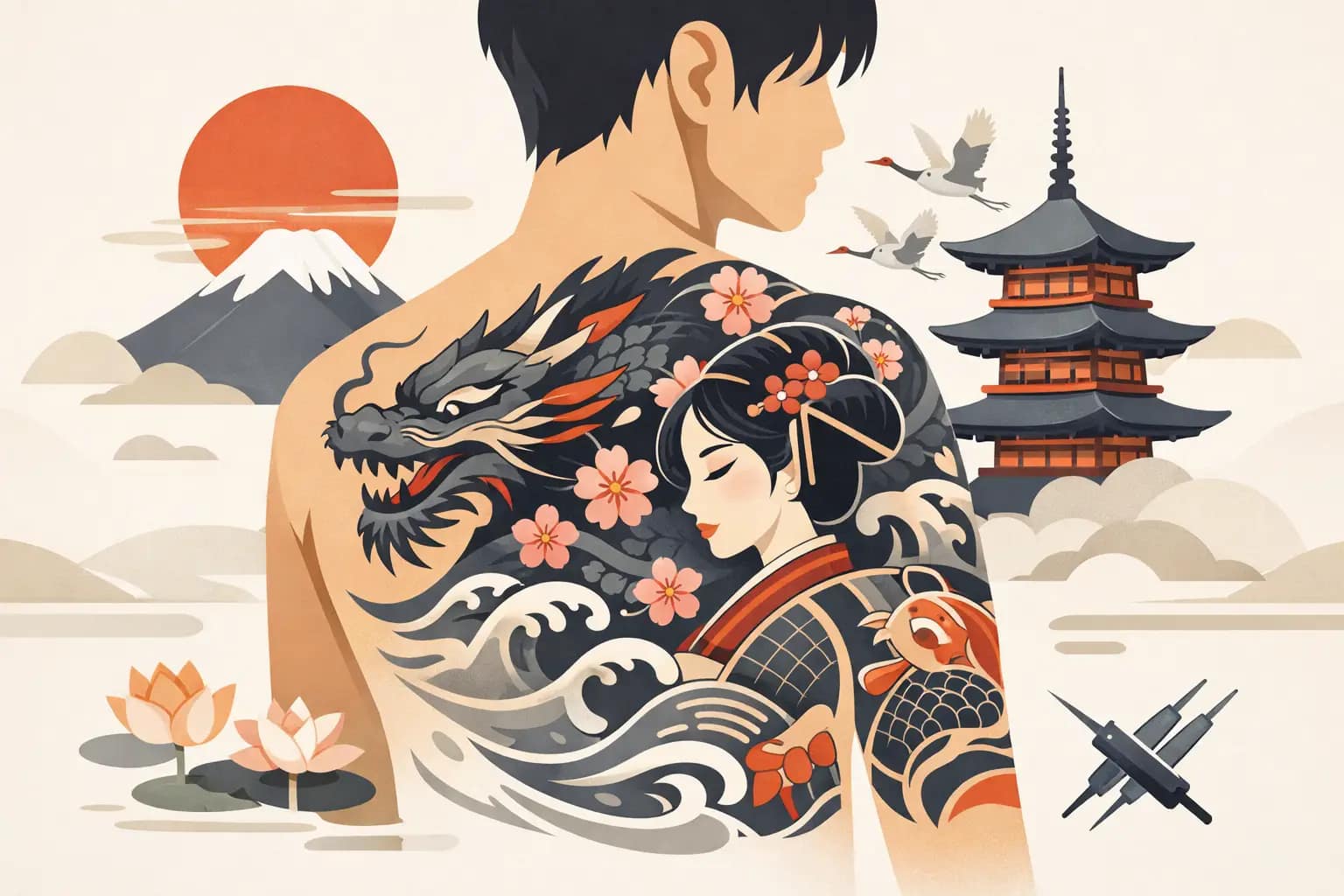
That matters even more with Japanese, Irezumi-inspired, and Neo-Traditional work, where every choice affects rhythm, movement, and impact. A dragon, peony, tiger, snake, mask, wave, or background element can be beautiful on its own, but the piece only feels complete when those elements are arranged with intention. Good design gives the tattoo structure. Great design gives it presence.
It starts with the idea, not the finished image
Most clients do not walk in with a fully formed concept, and that is completely fine. In fact, it is often better when they do not. The best starting point is usually a clear direction rather than a rigid drawing request.
That direction might come from a personal milestone, a cultural influence, a visual motif you have always connected with, or a body area you want to develop properly. Maybe you know you want a sleeve rooted in Japanese imagery but are not sure whether a koi, phoenix, or samurai theme fits best. Maybe you want a Neo-Traditional piece with strong color and symbolism, but you are still sorting out which symbols feel true to you.
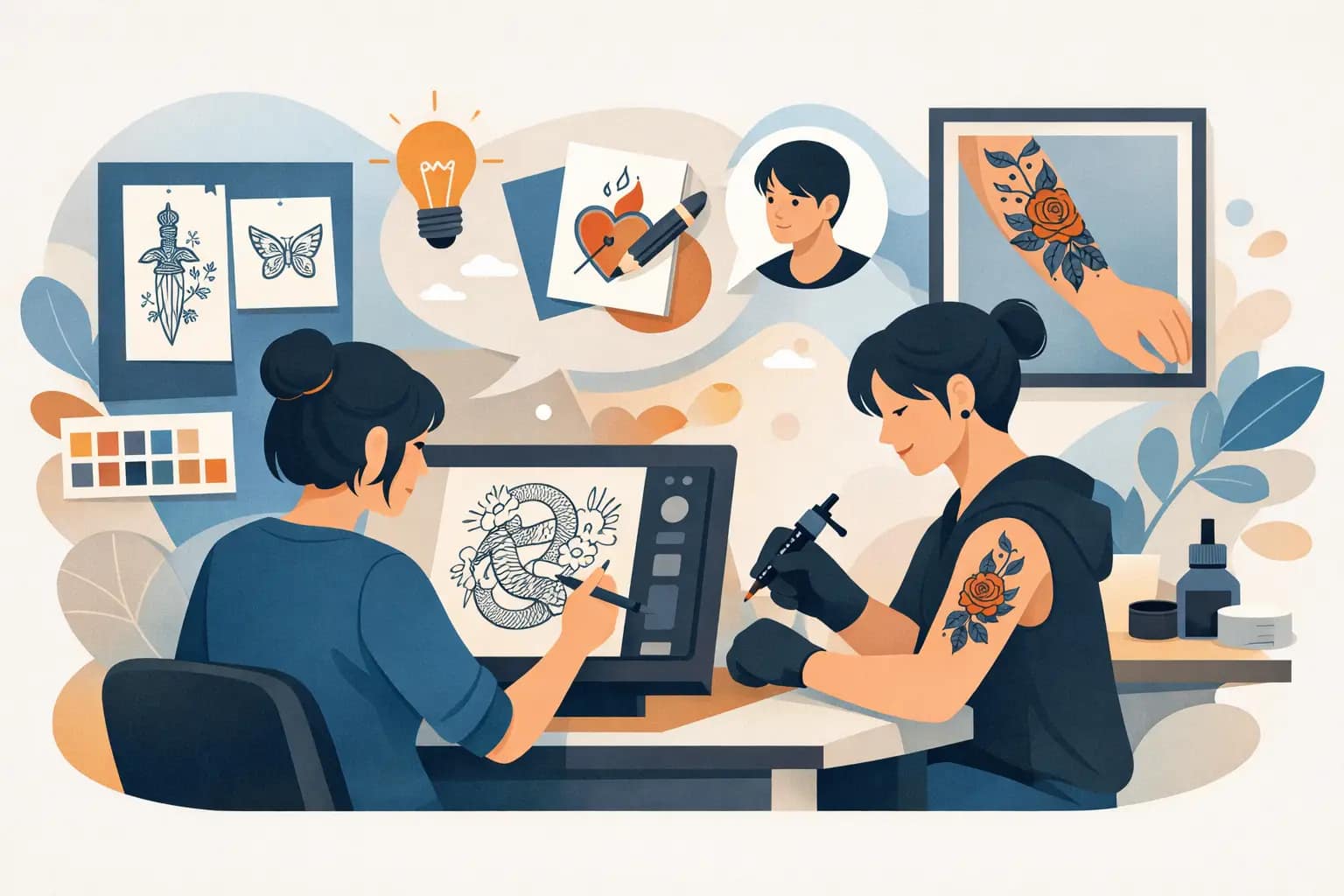
An experienced artist helps translate that early idea into something visually coherent. That means listening for themes, asking better questions, and noticing where the concept has real emotional weight versus where it is just decoration.
References help, but they are not the design
Reference images are useful when they show taste, mood, color direction, subject matter, or composition preferences. They are less useful when they are treated like a blueprint to copy.
A custom tattoo should be built for your body and your goals, not recreated from someone else’s skin. The point of references is to help communicate. Maybe you like the movement in one sleeve, the color balance in another, and the facial expression in a third. Those preferences can guide the design without flattening it into a duplicate.
This is where trust matters. If you seek out a specialist because of their portfolio, part of the process is allowing them to work in the language they do best. A custom artist is not there to trace your Pinterest board. They are there to build a stronger piece than the references could give you on their own.
Placement changes everything
One of the biggest parts of the custom tattoo design process is placement. A design that works on paper can fail on the body if it ignores shape, muscle flow, visibility, and natural movement.
An arm, back, chest, thigh, and calf all ask for different solutions. A sleeve needs pacing and transitions. A back piece needs authority and balance. A forearm tattoo needs to read well from multiple angles. A chest panel may need to work with the collarbone, shoulder, and sternum rather than fight them.
This is also where size becomes a real conversation. Many clients want a lot of meaning in a limited space. Sometimes that can work. Sometimes it leads to visual traffic. If a tattoo includes too many small ideas, too much textural detail, or too many competing focal points, it may look busy early and soften even more over time.
A good artist will tell you when the design needs more room, fewer elements, or a stronger hierarchy. That is not resistance. That is craftsmanship.
Style determines how the story gets told
The same subject can feel completely different depending on style. A tiger rendered through Japanese tattoo principles will not communicate the same way as a Neo-Traditional tiger with exaggerated color contrast and graphic linework.
This is why style fit matters so much during design. It is not just about whether you like the look. It is about whether the artist’s approach supports the feeling you want the tattoo to carry.
Japanese and Irezumi-inspired work often relies on movement, flow, symbolic relationships, and strong compositional discipline. Neo-Traditional pieces may lean harder into stylized anatomy, saturated color, ornate framing, and bold decorative drama. Both can be deeply personal. Both can age beautifully. But they solve visual problems differently.
When clients choose a specialist, they are not only hiring technical skill. They are hiring a point of view.
Refinement is where quality shows up
Once the concept is established, refinement begins. This is the part clients do not always see clearly, but it is often where the final result is won.
Refinement means adjusting proportions, simplifying what is unnecessary, strengthening focal points, and making sure the composition breathes. It can also mean reworking background elements, shifting angles, changing scale relationships, or editing symbolism so the piece feels more honest and less crowded.
Sometimes the first concept is close and only needs tuning. Sometimes it needs more revision than expected. That is normal. Custom work is not assembly-line work. If the artist takes time to make the piece stronger, that is usually a sign the process is being taken seriously.
The trade-off is patience. Clients who want meaningful custom work often need to accept that speed is not the main goal. Clean ideas happen fast. Mature designs take thought.
Why artists may not send a finished drawing far in advance
This is one of the most misunderstood parts of custom tattooing. Some clients expect a polished final design weeks before the appointment. Depending on the artist and project, that may not happen.
There are practical reasons for this. Custom artists spend much of their design time close to the appointment date, when the project is active and the details are fresh. There is also the reality that designs often need final adjustment once placement is confirmed in person. A stencil that looked right digitally may need to shift once it meets the actual body.
That does not mean the process is careless. It means the design is being handled in a way that protects fit, originality, and working time. The real measure is not how early you receive an image. It is whether the artist communicates clearly, understands your direction, and has a body of work that proves they can deliver.
The consultation sets the tone
A good consultation does more than gather details. It establishes whether the collaboration makes sense.
This is where you should talk openly about subject matter, placement, style preferences, timeline, and any concerns about pain, coverage, or future expansion. It is also the moment to be honest about what matters most. Is this a collector piece with room to grow into a larger project? Is it a standalone tattoo with a very specific emotional meaning? Are you prioritizing bold readability, fine detail, heavy black, color saturation, or symbolism?
The stronger the communication at this stage, the stronger the design usually becomes. Clear direction helps. Micromanaging usually does not.
For clients looking for serious custom work in Sacramento and beyond, this artist-client fit is often the difference between a tattoo that feels merely competent and one that feels fully alive.
What clients can do to get a better design
The best client input is specific, but not controlling. Share the subjects you connect with, the emotions or themes behind the piece, and the examples that reflect your taste. Be clear about placement, scale, and whether this tattoo needs to connect with existing work.
Just as important, be open to guidance. If your artist recommends simplifying an idea, enlarging the piece, changing the orientation, or leaving out a favorite detail, there is usually a design reason behind it. Tattoos are not judged only on day one. They are judged by how they settle, age, and read from across the room years later.
That long view is where real quality shows.
At Dani Olmos Tattoo, custom work is built with that mindset from the beginning. The goal is not to rush a concept into skin. It is to create something original, grounded in strong tattoo design, and worthy of the space it takes on your body.
The best tattoos do not just represent something meaningful. They are designed well enough to keep meaning it, year after year.