
A great sleeve does not start with a stencil. It starts with a point of view.
The custom sleeve tattoo journey is bigger than booking a long session and filling an arm. It is a design process, a trust process, and a long-term commitment to wearing one cohesive piece of art. If you want a sleeve that feels intentional instead of crowded, the early decisions matter as much as the tattooing itself.
What makes a custom sleeve tattoo journey different
A sleeve is not just a collection of cool images placed side by side. When it is built well, every section supports the next. Flow, contrast, negative space, subject matter, and skin movement all have to work together. That is what separates a custom sleeve from a patchwork arm that happened over time.
This is also why sleeves ask more from both the artist and the client. The artist has to think beyond single-tattoo impact and design for the whole arm as one canvas. The client has to think beyond immediate excitement and consider how the piece will look years from now, how it reflects their story, and whether the chosen style has enough depth to carry a full-arm composition.
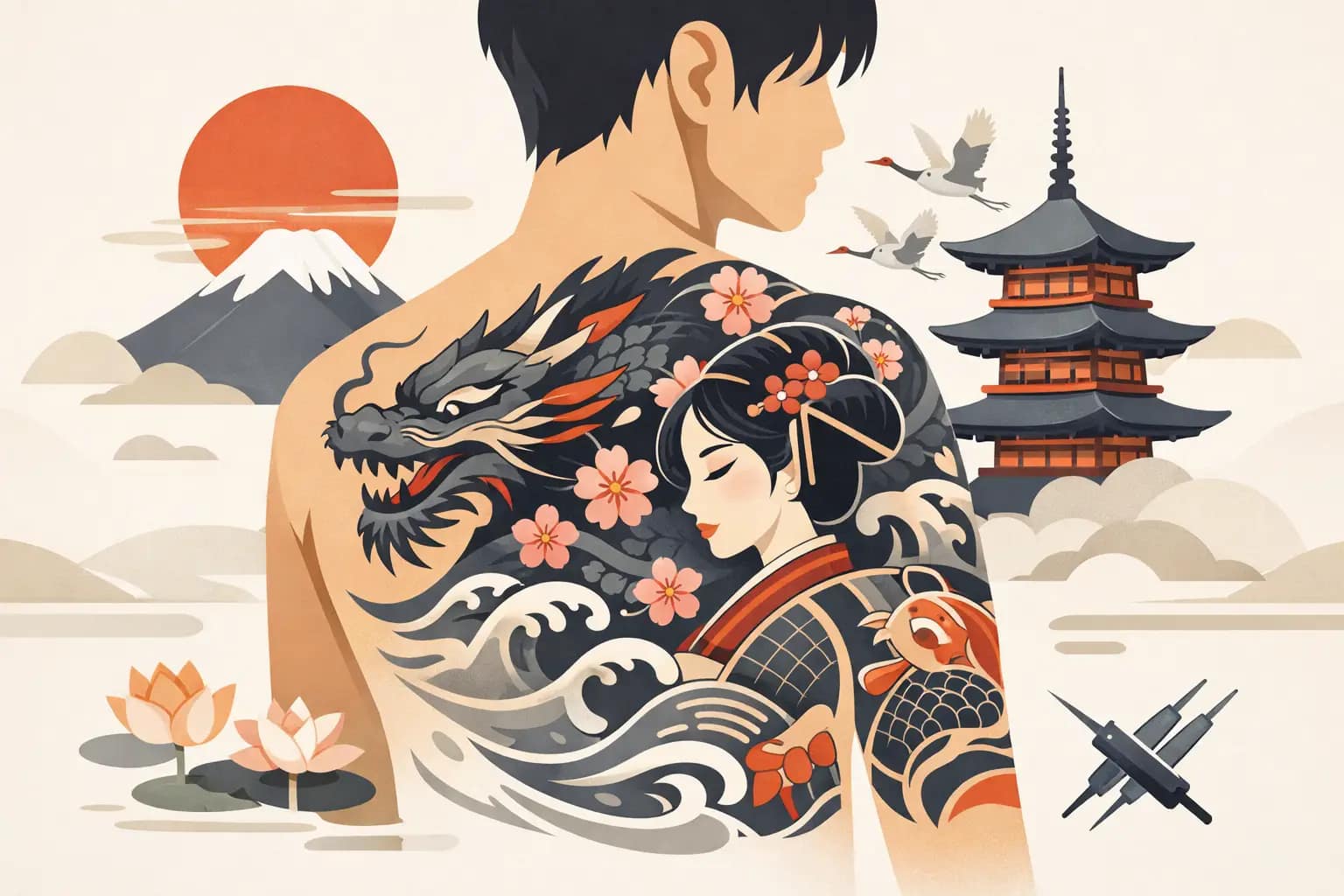
For many clients, Japanese and Neo-Traditional sleeves make sense because those styles are built for scale. They handle movement well. They allow strong composition. They also age with clarity when they are designed with discipline instead of excess detail packed into every inch.
Start with meaning, not image collecting
One of the most common mistakes in a custom sleeve tattoo journey is starting with a folder full of unrelated references and no clear direction. Inspiration helps, but too much disconnected imagery can muddy the concept. A sleeve needs a central idea, even if that idea is emotional rather than literal.
Sometimes the concept is rooted in heritage, resilience, transformation, or protection. Sometimes it is a visual language built around a few powerful symbols instead of a detailed narrative. Either approach can work. What matters is that the sleeve has an internal logic.
That does not mean every element has to be heavy or deeply symbolic. It means the piece should feel like it belongs to one story. A tiger, peonies, wind bars, and waves can create a strong sleeve when they are composed with purpose. The same images can feel random if they are chosen one by one with no larger vision.
Choosing the right artist for the journey
Not every excellent tattoo artist is the right sleeve artist. That is not a criticism. Sleeves require a specific kind of planning, pacing, and stylistic consistency. If you are investing in a full arm, you want someone who understands how large-scale work wraps, breathes, and settles over time.
Look at healed work, not just fresh photos. Look for composition across the entire arm, not just bold individual motifs. Pay attention to whether the sleeve still reads clearly from a few feet away. Strong sleeves are built on readable shapes first. Fine details should support the design, not carry it.
The consultation matters here. A serious custom artist should ask questions, challenge weak ideas, and help refine the concept. If the process feels rushed, or if the artist is simply saying yes to every image request without discussing flow, that is a warning sign. Good collaboration is not passive. It is thoughtful.
For clients looking for Japanese, Irezumi-inspired, or Neo-Traditional work, specialization matters even more. These styles have visual rules, rhythm, and historical weight. You want an artist who respects that structure while still making the sleeve personal.
The design phase of a custom sleeve tattoo journey
This is where excitement meets restraint.
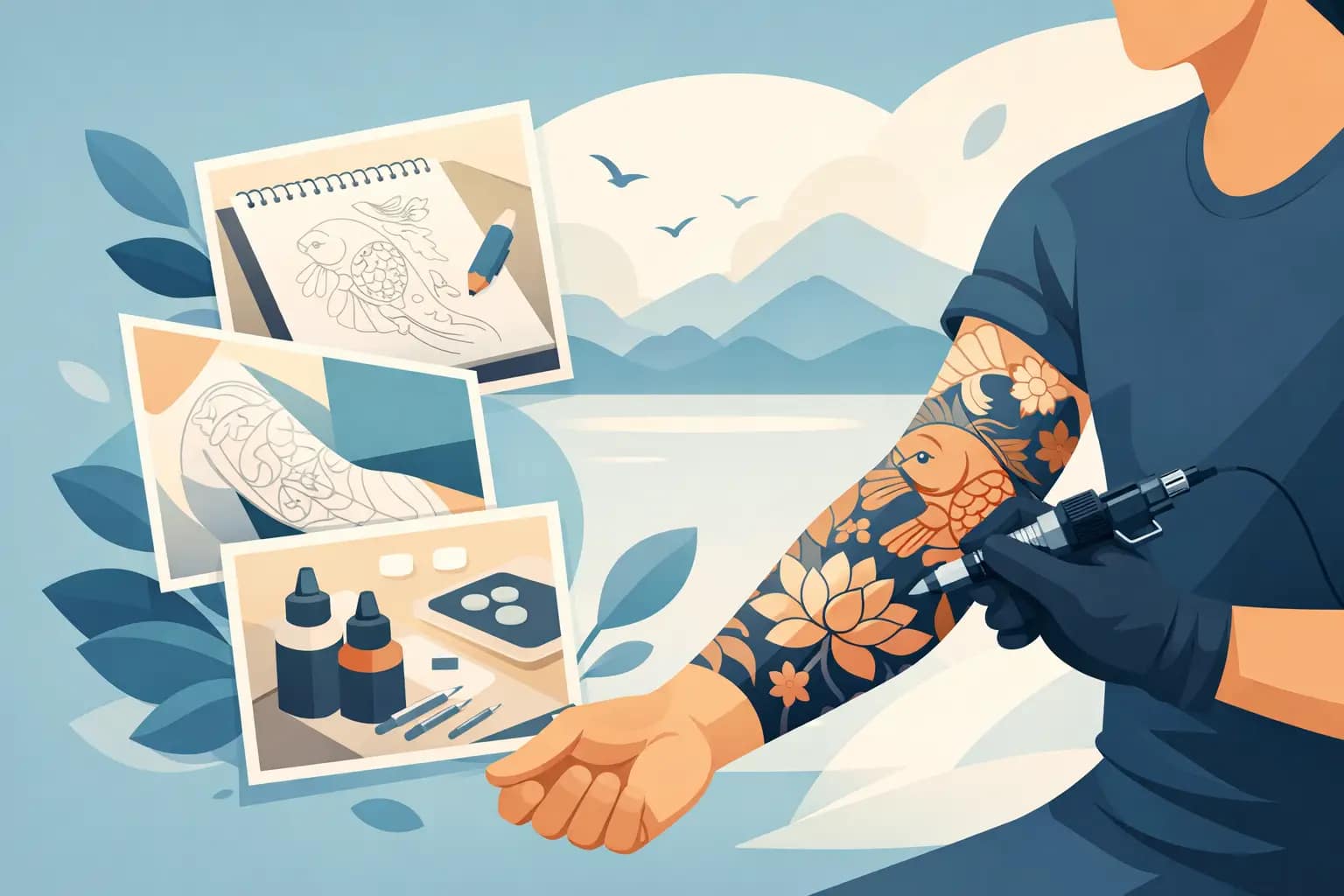
Most clients come in with a few non-negotiables. Maybe they know they want a dragon, chrysanthemum, snake, mask, or koi. That is a useful starting point. The next step is shaping those ideas into a composition that fits the arm rather than forcing the arm to fit a list.
A strong sleeve design considers the shoulder cap, outer arm, inner bicep, elbow, forearm, and wrist as connected zones. Each area behaves differently. Some places are broad and ideal for focal imagery. Others are transitional and better for movement, texture, or background. The elbow is a perfect example. It is not always the place for delicate complexity. It often needs design choices that can handle wear, motion, and healing challenges.
This phase also includes hard conversations about what to leave out. More is not always better. Sometimes removing one secondary element gives the whole sleeve more power. Space is part of the composition. Skin breaks, breathing room, and contrast make the major imagery hit harder.
Planning the timeline realistically
A sleeve rarely happens in one burst of motivation. It unfolds over multiple sessions, with healing time between them. Depending on the design, placement, skin, schedule, and pain tolerance, the process can take months or longer.
That is normal.
The best sleeves are rarely rushed. They are paced in a way that protects the quality of the tattoo and the endurance of the client. Some people prefer long sessions and fewer appointments. Others do better with shorter, more focused days. Neither is more serious than the other. The right schedule depends on how you sit, how you heal, and how the artist structures the work.
Budget matters too, and it should be discussed honestly. A custom sleeve is a major investment. If pricing clarity is vague from the start, that creates stress later. It is better to understand the likely scale of the project up front and plan for it than to begin half-prepared and stall the piece midway.
Trusting the process without disappearing from it
Clients sometimes worry that collaboration means losing control. In reality, good collaboration means you are involved at the right level.
Your role is to communicate clearly – what matters to you, what imagery you are drawn to, what styles you do and do not connect with, and what level of symbolism feels authentic. The artist’s role is to translate that into tattoo design. That translation is where expertise lives.
There is a balance here. Too little input can leave the design emotionally flat. Too much micromanaging can weaken the composition. If you chose the right artist, trust should grow during the custom sleeve tattoo journey because you can see your ideas becoming stronger, not getting ignored.
That is especially true with large-scale work. The best decisions are not always obvious in isolation. A background shape, a shift in placement, or a simplified secondary motif may not seem dramatic on paper, but on skin those choices can be the difference between a sleeve that reads clean and one that feels crowded.
Healing, consistency, and how sleeves age
A sleeve is judged twice – when it is fresh and when it has lived on the body.
Long-term quality comes from technical execution, but it also comes from client follow-through. Healing instructions matter. Session spacing matters. Sun exposure matters. Skin care matters. Even a beautifully designed sleeve can lose impact if it is not cared for properly during and after the process.
This is another reason not to chase density for its own sake. Tattoos need room to settle. Bold composition, solid saturation, and intentional contrast tend to age better than overworked surfaces full of tiny details that compete with each other.
Clients who want a timeless sleeve should ask a simple question throughout the process: will this still read clearly in ten years? That question usually leads to better choices.
When the sleeve becomes personal in the right way
The strongest custom sleeves do not scream for attention. They hold attention.
That usually happens when the piece feels true to both the wearer and the artist’s style. Not trend-driven. Not overloaded with references from ten different aesthetics. Just clear, confident, and built with care. A custom sleeve should feel like something that could only belong to you, while still showing the hand of an artist with a refined point of view.
For serious collectors and first-time sleeve clients alike, that is the real value of working with a custom-focused studio. The goal is not just to tattoo an arm. It is to create a piece with presence, movement, and staying power. In a place like Sacramento, where clients have options, that level of craftsmanship is what makes the experience worth waiting for.
If you are thinking about your own sleeve, start by narrowing the story, not expanding the image list. The right concept, in the right hands, gives the whole process direction – and that is what turns an idea into a sleeve you will be proud to wear for years.