
A Japanese tattoo can look powerful from across the room, but the real impact usually comes from what it represents up close. When people start researching japanese tattoos and meanings, they’re often not just picking imagery they like – they’re trying to find symbols that actually fit their story, values, and the way they want the piece to live on the body for years.
That’s where the conversation gets more interesting than a simple symbol chart. In Japanese-inspired tattooing, imagery carries history, folklore, emotion, and visual rhythm. The strongest pieces don’t happen because someone chose a cool dragon or a pretty peony. They work because the design, placement, flow, and symbolism all support each other.
Japanese tattoos and meanings are more than symbols
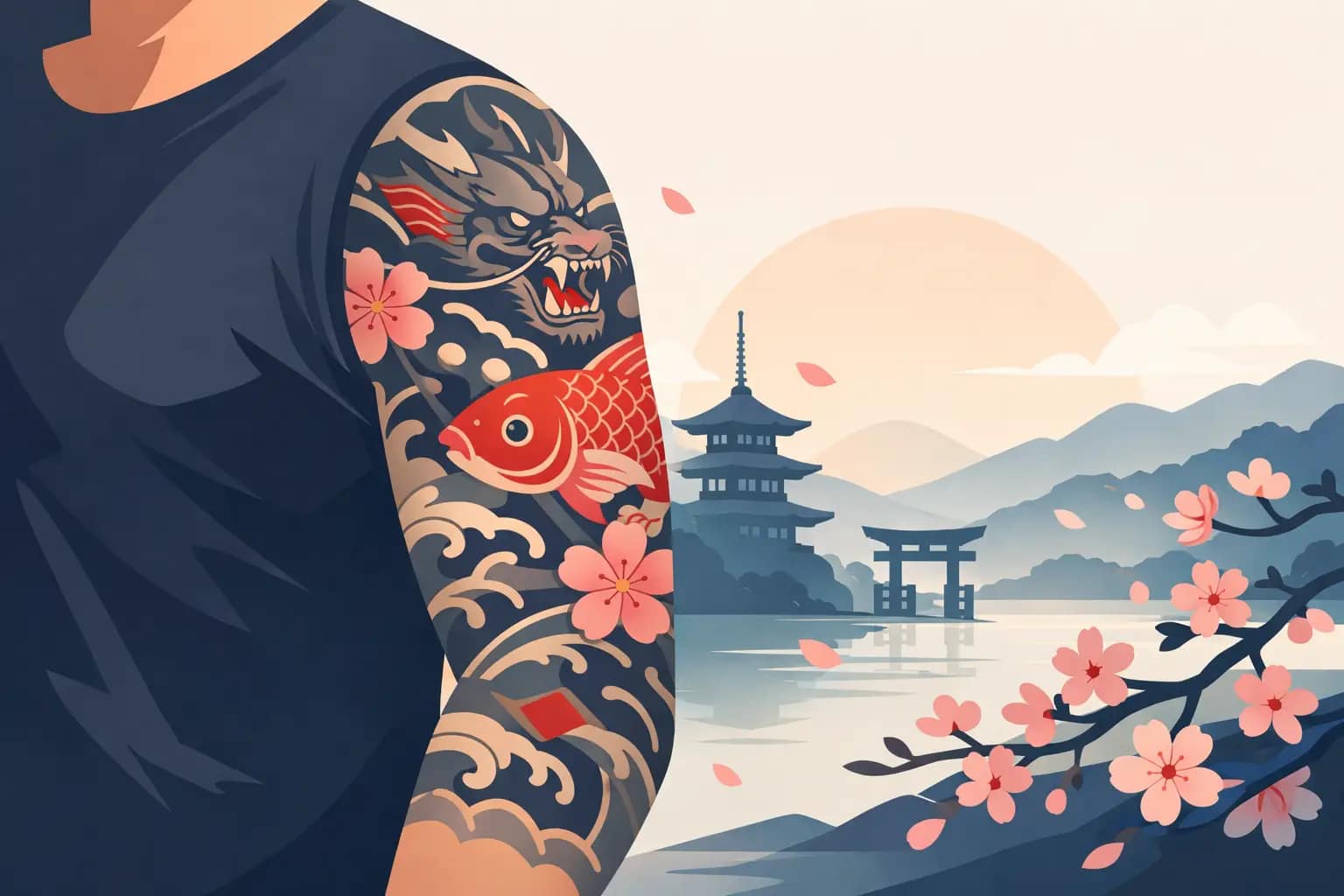
One of the biggest misconceptions about Japanese tattooing is that every image has a single fixed definition. In reality, meaning is layered. A koi can suggest perseverance, ambition, or personal transformation. A dragon can represent wisdom and protection, but the feeling of the piece shifts depending on posture, expression, scale patterning, surrounding elements, and whether it’s paired with clouds, waves, or fire.
That matters if you’re planning custom work. The goal isn’t to force your life story into a generic meaning. It’s to build a design language around themes that resonate with you, then shape those themes into a tattoo that feels visually cohesive and personally true.
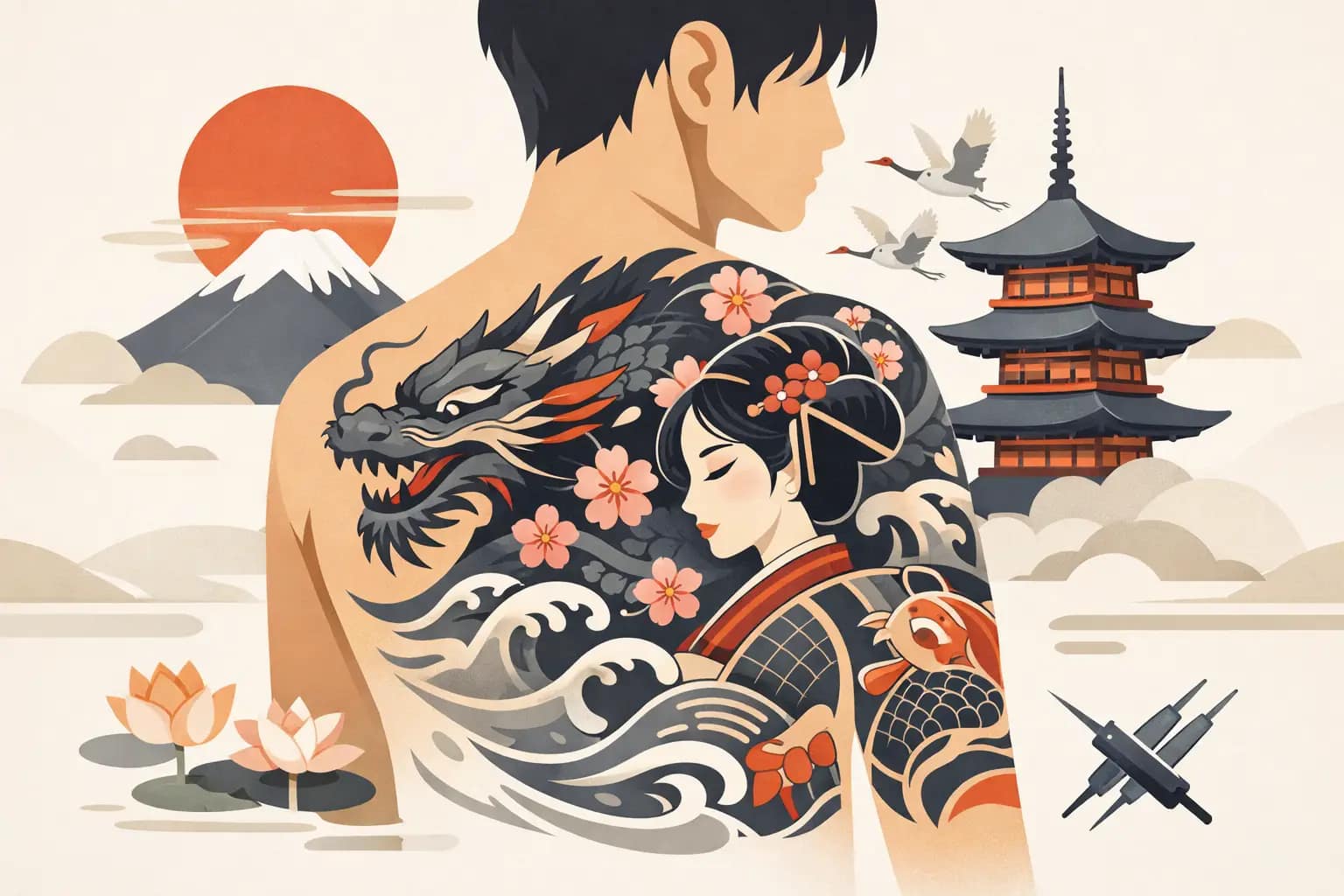
Traditional Japanese tattooing, often associated with irezumi, also places a lot of emphasis on movement and composition. Background elements aren’t filler. Wind bars, water, smoke, maple leaves, cherry blossoms, and rock forms help create season, energy, and emotional tone. In a well-designed piece, meaning comes from the full composition, not just the main subject.
Common Japanese tattoo motifs and what they can represent
Koi fish
Koi are one of the most requested subjects in Japanese-inspired tattooing for good reason. They’re visually dynamic, they fit the body well, and they carry strong symbolism. Most often, koi are connected to perseverance, resilience, and the ability to push through adversity.
That said, context matters. An upward-moving koi can suggest striving, discipline, or overcoming hardship. A calmer composition may lean more toward balance, maturity, or a chapter of earned peace. Color choices can also shift the feel. Bold, high-contrast palettes tend to read stronger and more energetic, while softer treatment can feel reflective.
Dragon
Japanese dragons are very different in tone from many Western dragon depictions. They’re often associated with wisdom, protection, strength, and command over natural forces. They can be fierce, but they’re not always meant to read as destructive. Many clients are drawn to dragons when they want a piece that feels powerful without being one-note aggressive.
A dragon also gives an artist room to create beautiful flow across larger areas like the arm, back, ribs, or leg. If symbolism matters to you, this is a great example of a subject where body movement and composition amplify meaning.
Tiger
The tiger usually carries themes of courage, strength, protection, and determination. It can also represent mastery over hardship or a willingness to move through life with confidence. Visually, tiger tattoos can feel bold and direct, especially when paired with wind bars, bamboo, or rocky terrain.
For some people, the tiger resonates because it reflects inner force. For others, it’s about guarding what matters. Both readings can be valid, which is why custom interpretation matters more than copying a stock design.
Hannya mask
The hannya mask is one of the most misunderstood images in Japanese tattooing. People often reduce it to anger or jealousy, but it carries more emotional depth than that. In traditional theater, the hannya represents a woman transformed by pain, obsession, and sorrow. In tattooing, it can speak to emotional intensity, betrayal, heartbreak, or the darker parts of personal transformation.
That complexity is exactly why some collectors connect with it. A hannya piece can be dramatic and beautiful at the same time. It can represent suffering, but it can also represent surviving it.
Oni mask
Oni are often associated with demons or ogres, but their meaning in tattooing isn’t always purely negative. Depending on interpretation, an oni can represent punishment, protection, spiritual force, rebellion, or confronting fear. Some clients are drawn to oni imagery because it reflects struggle with darker impulses. Others want the visual intensity and mythic presence it brings to a larger composition.
This is one of those subjects where the artistic direction matters a lot. The expression, surrounding elements, and overall tone determine whether it reads menacing, protective, or somewhere in between.
Phoenix
The phoenix is commonly tied to rebirth, renewal, triumph after destruction, and major life change. It’s an especially strong fit for people who want to mark a turning point without choosing something overly literal.
Japanese-inspired phoenix designs can be elegant, sweeping, and highly detailed, making them ideal for larger custom pieces. If your goal is a tattoo that feels both graceful and commanding, the phoenix offers a lot of range.
Snake
Snakes in Japanese tattooing often symbolize protection, wisdom, change, and regeneration. Because snakes shed their skin, they naturally connect to growth and renewal. They can also act as guardians in certain symbolic pairings.
A snake can be designed as the main subject or woven into a larger piece. That flexibility makes it a smart option for collectors who want something meaningful but also visually adaptable.
The meaning of flowers and background elements
In Japanese tattooing, flowers are not just decorative accents. They shape mood, season, and symbolism.
Cherry blossoms often point to the fleeting nature of life and beauty. They can make a piece feel softer, more reflective, or more aware of impermanence. Peonies are linked to prosperity, beauty, courage, and abundance. They’re full, dramatic, and pair well with strong subjects like dragons, lions, or snakes. Chrysanthemums can suggest longevity, nobility, and steadiness.
Maple leaves often bring an autumnal feeling tied to change, time, and transition. Waves may symbolize power, unpredictability, or endurance. Clouds can add elevation, mystery, or a sense of movement between worlds. These details are part of the meaning, not extras added at the end.
Choosing japanese tattoos and meanings that fit you
The best custom tattoo ideas usually start with a theme, not an image. Maybe your story is about discipline after chaos. Maybe it’s about rebuilding after loss, protecting your family, or honoring a version of yourself you had to fight to become. Once that core idea is clear, the imagery becomes easier to choose.
This is where trade-offs come in. The symbol you relate to most emotionally may not be the one that fits your body best. A subject with strong meaning might need more space than you originally planned. Some motifs work beautifully as large-scale pieces but lose impact when reduced too much. Others can adapt to smaller placements without sacrificing integrity.
That’s why custom design matters. A good artist doesn’t just ask what image you want. They ask what you want the piece to say, how visible you want it to be, how bold or refined you want the energy to feel, and how the tattoo should age over time.
For clients looking for Japanese or Irezumi-inspired work, this collaborative process is where the difference shows. At Dani Olmos Tattoo, the goal is never to hand you a pre-set answer to what a symbol means. It’s to develop a piece where the symbolism, craftsmanship, and composition all feel intentional.
Respect, reference, and personal interpretation
Japanese-inspired tattooing deserves respect. That means avoiding the habit of pulling isolated symbols out of context just because they look cool on social media. It also means understanding that traditional imagery has roots in folklore, theater, religion, and art history.
At the same time, tattoo meaning is personal. You do not need to have a textbook-perfect reason for choosing a koi, dragon, or peony. You do need a thoughtful reason. The most successful tattoos usually balance respect for the tradition with an honest connection to the wearer.
That balance is especially important if you want a piece that still feels right ten years from now. Trend-driven tattoos tend to fade emotionally faster than visually grounded, well-composed custom work. Meaning helps a tattoo stay anchored.
What makes a Japanese-inspired tattoo feel timeless
Timelessness is not just about subject matter. It comes from strong drawing, deliberate placement, readable contrast, and a composition that moves with the body instead of fighting it. Meaning plays a role here too. When the symbolism is clear to you, the tattoo tends to carry weight long after the first excitement wears off.
A dragon with no story behind it can still look great. But a dragon built around protection, discipline, and earned confidence usually feels deeper every year you wear it. The same goes for koi, masks, snakes, and floral pairings. Visual beauty gets attention. Intentional meaning gives the piece staying power.
If you’re considering a Japanese-inspired tattoo, spend less time hunting for the one perfect symbol and more time thinking about the themes that define your story. The right design often comes from that conversation. When the image, meaning, and craftsmanship line up, the tattoo doesn’t just look strong – it feels like it belongs to you.