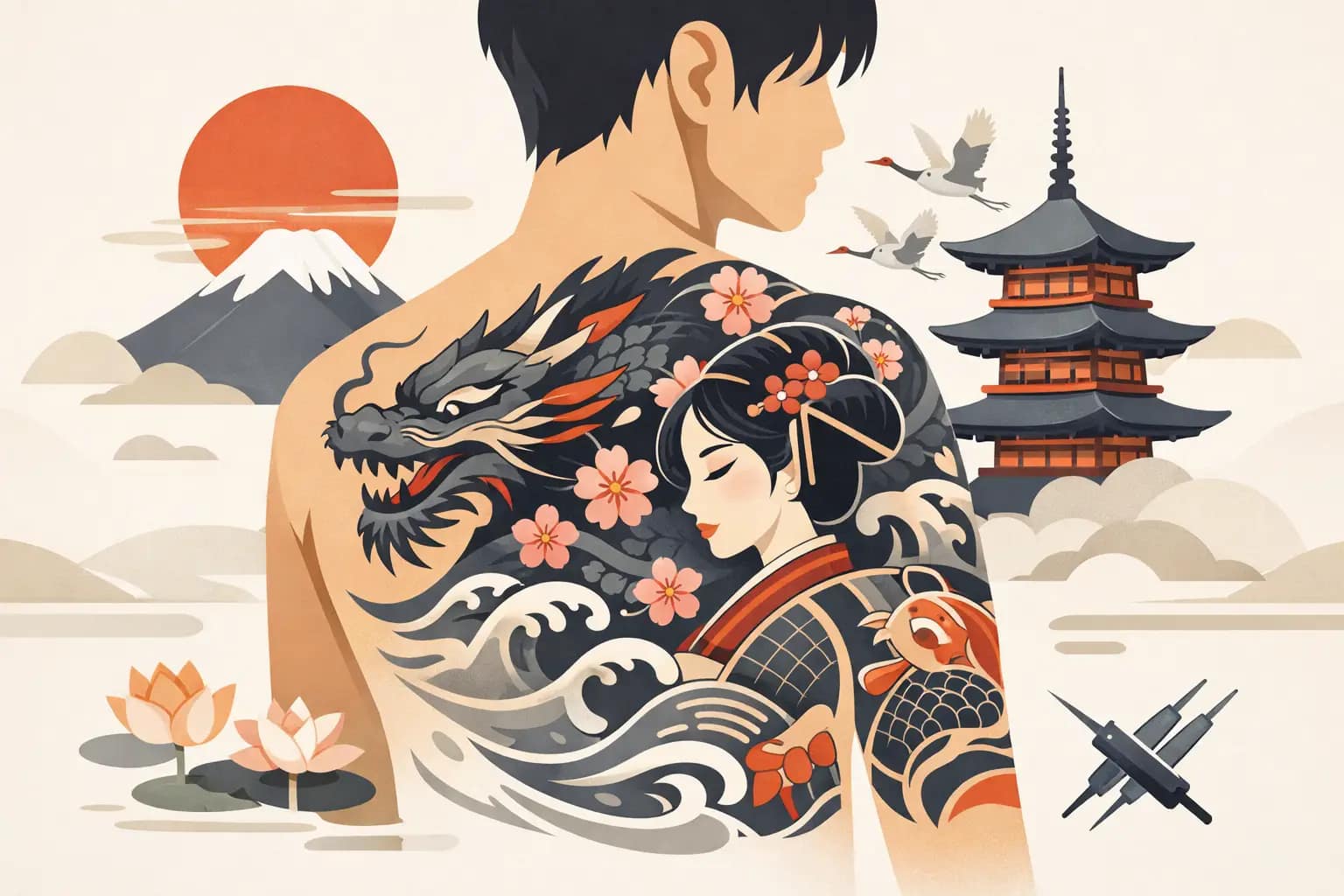

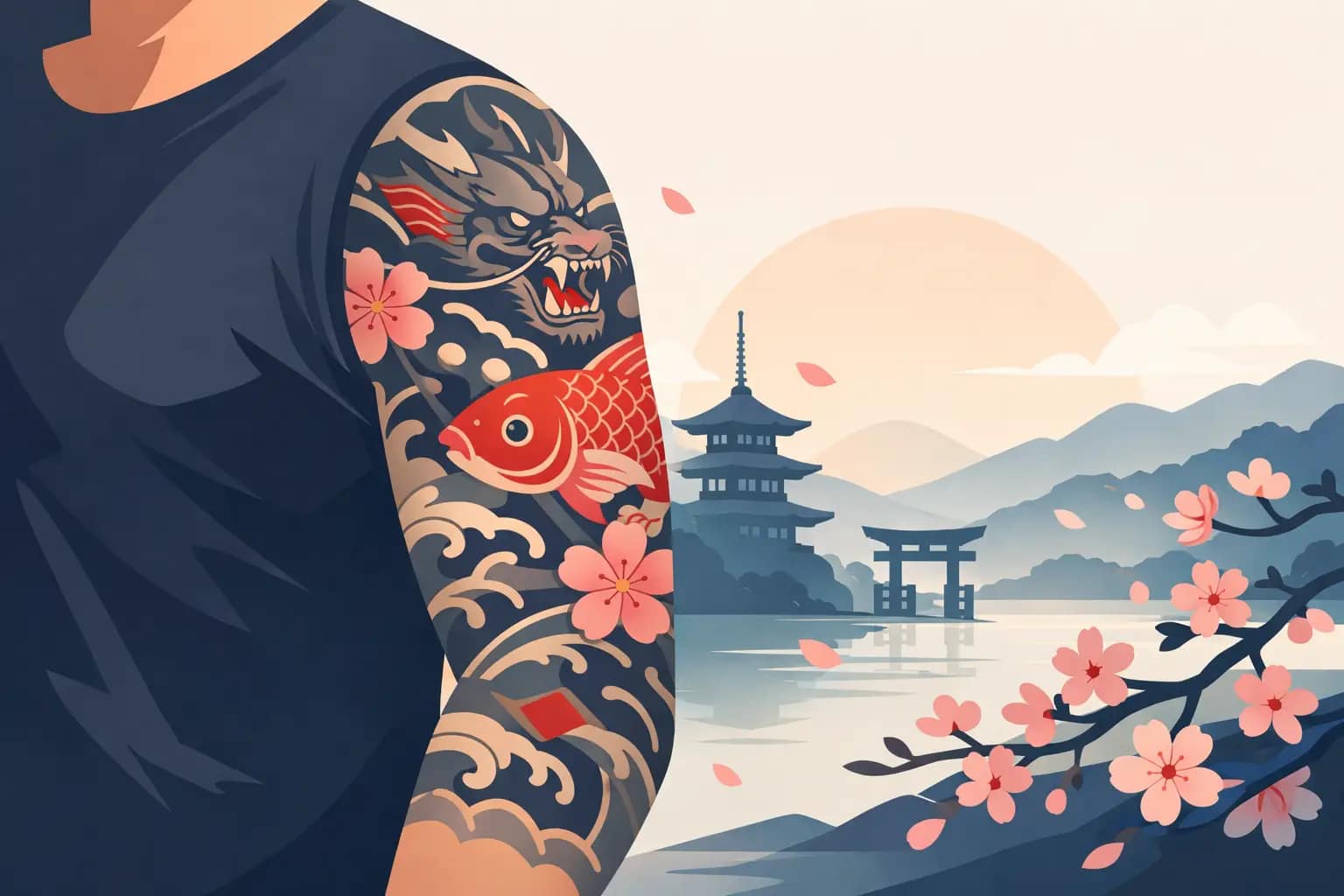
A great japanese tattoos sleeve is not just a collection of strong images wrapped around the arm. It is composition, movement, symbolism, and restraint working together so the piece reads well from every angle and still holds its presence years later. That is why sleeve planning matters as much as the tattooing itself.
What makes a japanese tattoos sleeve work
Japanese-inspired sleeve work has a very different rhythm than patchwork or isolated pieces. The arm is treated as one connected space, not a series of separate panels. Main subjects carry the narrative, while wind bars, waves, smoke, flowers, and background create flow and give the design room to breathe.
That balance is where many sleeves either become timeless or start to feel crowded. A dragon, koi, tiger, phoenix, hannya, or samurai can all anchor a sleeve beautifully, but the surrounding composition is what gives the piece authority. Without proper spacing, contrast, and body flow, even a strong concept can lose impact.
A well-built sleeve also respects how the arm moves. The outer bicep, inner arm, shoulder cap, elbow, forearm, and wrist all read differently. What looks balanced on paper may not feel balanced once it wraps around muscle and bends with the body. This is where custom design matters. The best work is not dropped onto the arm. It is built for it.
Start with one clear story
The strongest sleeves usually begin with one dominant idea. That does not mean every symbol has to be literal or overly explained. It means the piece should have a center of gravity.
If someone chooses a koi, for example, the direction of movement matters. A koi moving upward often suggests perseverance, progress, or overcoming adversity. A descending koi can create a different emotional tone and different visual energy. Add maple leaves, peonies, or crashing water, and now the sleeve starts to speak with more specificity.
The same applies to dragons. A dragon sleeve can feel regal, protective, chaotic, or disciplined depending on posture, expression, background, and color palette. A tiger can read as raw strength or quiet control. A hannya can carry emotional weight that needs to be handled thoughtfully rather than used as decoration alone.
The point is not to overcomplicate meaning. The point is to make intentional choices. A japanese tattoos sleeve lands best when the imagery feels connected instead of assembled.
Japanese sleeve motifs and how they change the mood
Certain subjects return again and again because they carry visual power and adapt beautifully to the arm. But each one changes the overall mood of the piece.
Koi sleeves tend to create movement and resilience. They pair naturally with water, chrysanthemums, cherry blossoms, lotus flowers, and maple leaves. Dragons bring scale, drama, and authority. They can fill the upper arm and shoulder with incredible motion, especially when surrounded by clouds, wind, or waves.
Tigers create a muscular, grounded sleeve that reads well on the forearm and outer arm. Snakes offer elegant movement and can tie awkward areas together. Phoenix designs often feel more vertical and sweeping, which can be especially effective on long arms. Floral elements such as peonies, chrysanthemums, and cherry blossoms do more than decorate. They soften transitions, shape negative space, and help the sleeve breathe.
This is where experience shows. The right motif is not just the one you like most. It is the one that fits your story, your arm, and the visual tone you want to live with long term.
Why background matters more than people expect
Clients often focus first on the hero image, which makes sense. That is usually the emotional entry point. But in Japanese tattooing, background is not filler. It is structure.
Wind bars, water, smoke, rocks, and negative space control pacing. They frame the major subject, guide the eye, and keep the sleeve from becoming visually flat. They also create the contrast that lets bold shapes stay readable from a distance.
A sleeve with weak background can feel fragmented even when the main drawing is strong. A sleeve with smart background design feels unified and intentional. This is especially important when the arm is viewed in motion, not just straight on in a mirror.
Background also affects how the piece ages. Clean separation between major forms, strong black fields, and controlled use of detail all help the sleeve remain legible over time. Fine details can be beautiful, but if everything is detailed at the same intensity, nothing leads.
Color or black and gray depends on the goal
There is no single correct answer here. It depends on the style direction, your skin tone, the imagery, and how you want the sleeve to wear over time.
Full color Japanese sleeves can be striking in a way few tattoo styles can match. Rich reds, deep greens, gold tones, blues, and muted secondary colors can make the design feel alive. But color works best when it is disciplined. Too many competing tones can muddy the hierarchy of the piece.
Black and gray, or black-forward sleeves with selective color, often feel more severe and graphic. They can emphasize shape, contrast, and texture in a very powerful way. For some subjects, that restraint adds sophistication. For others, especially floral-heavy concepts, color may bring the piece closer to its full potential.
This is one of those areas where reference images only help so much. What looks great on someone else may not be the strongest choice for your arm and your concept. A custom approach considers how the palette supports the composition rather than treating color as an afterthought.
Full sleeve, half sleeve, or ongoing body suit direction
A sleeve should be planned with future expansion in mind, even if you only intend to tattoo one arm right now. Japanese work has a natural architecture, and that architecture can either make future additions easier or create awkward stopping points.
A half sleeve can be a strong standalone piece, especially if it is designed with a clean finish line and complete composition. A full sleeve offers more room for narrative and movement, which is why many collectors end up there eventually. If there is any chance you may want to connect into the chest, back, or hand later, it helps to think about those transitions early.
This does not mean overcommitting. It means planning intelligently. A sleeve built with foresight looks complete today and still leaves room for tomorrow.
The consultation matters more than the trend
A lot of people arrive with saved images and a general direction. That is useful, but reference is only the starting point. The real work happens in the conversation around what you want the sleeve to say, how bold or refined you want it to feel, and what kind of visual weight suits you.
A serious custom sleeve is collaborative by nature. The client brings story, preferences, and trust. The artist brings design judgment, technical understanding, and the ability to translate an idea into something that actually belongs on the body. That process should feel thoughtful, not rushed.
At Dani Olmos Tattoo, that collaborative approach is central to the work. The goal is not to force a formula onto every client. It is to build something original that carries the strength of Japanese-inspired design while fitting the individual wearing it.
What people underestimate about sleeve tattoos
Time, healing, and patience. A sleeve is a commitment, not only in hours but in pacing. Some areas are more sensitive than others. Some sessions are best spent laying in structure, while others focus on depth, saturation, and finishing details. The best result usually comes from respecting the process rather than trying to race through it.
People also underestimate how much open skin matters. Leaving room in the right places is not missing detail. It is what gives the eye rest and keeps the major forms readable. In sleeve work, confidence often shows up as restraint.
And finally, taste changes. That is another reason trend-chasing can fall flat. A well-designed Japanese sleeve does not need gimmicks to feel personal. Strong symbolism, balanced composition, and technical precision tend to outlast whatever style is having a moment online.
Choosing the right artist for a japanese tattoos sleeve
If you are investing in a sleeve, specialization matters. Japanese-inspired tattooing has its own design logic, pacing, and visual language. You want an artist who understands not just the symbols, but how those symbols should move across the body and interact with background, negative space, and long-term wear.
Look for consistency, not one standout photo. Look at healed work when possible. Pay attention to whether the sleeves feel composed or simply busy. Most of all, choose someone whose artistic point of view you trust. A custom sleeve works best when you are not micromanaging every inch, but working with an artist who knows how to build a complete piece.
The right sleeve should feel powerful on day one, but it should also feel right five or ten years from now. That comes from craftsmanship, clarity, and a design that was made for you instead of pulled from a trend cycle.
If you are thinking about a Japanese sleeve, start with the idea that matters most to you, then let the design be shaped by flow, symbolism, and the body itself. That is where a tattoo stops being impressive for the moment and starts becoming part of your story.