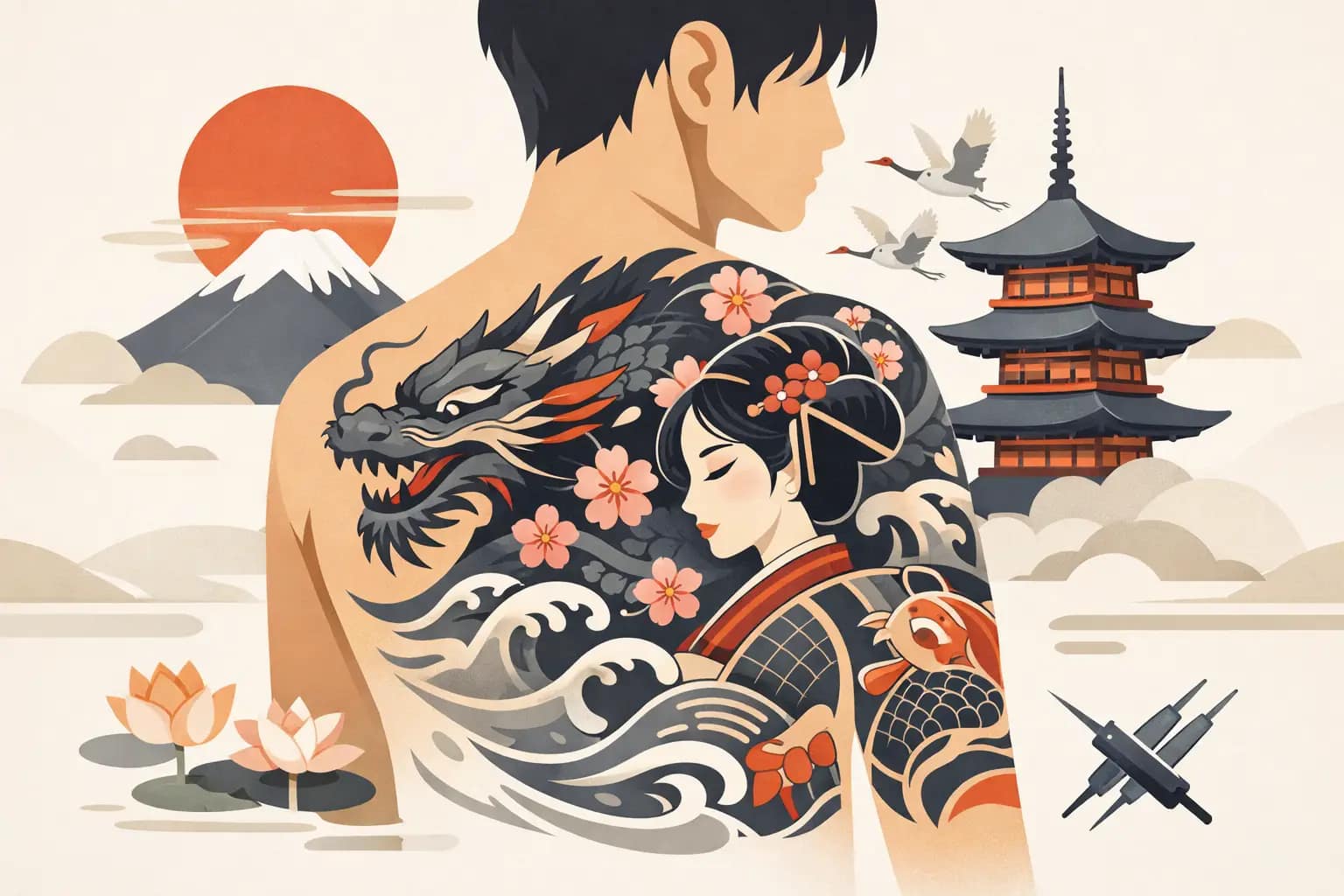

A great Japanese tattoo does not start with a trend board. It starts with a strong motif, a clear flow on the body, and a design built to hold up for years. If you are collecting japanese tattoos ideas, the goal is not just finding something that looks impressive in a photo. It is choosing imagery that carries weight, fits your story, and reads beautifully over time.
Japanese and Irezumi-inspired work has earned its reputation for a reason. The imagery is bold, the movement is intentional, and the relationship between subject, background, and placement matters as much as the subject itself. That gives you a lot of creative range, but it also means the best designs are rarely copied straight from a reference. They are interpreted, balanced, and built around you.
Japanese tattoos ideas that actually fit the body
The strongest Japanese tattoo concepts are not isolated stickers placed on skin. They are compositions. A dragon wrapping through a sleeve, a koi turning with the curve of a calf, wind bars pushing a mask across the shoulder – these choices work because they move with the body instead of fighting it.
That is why placement should come early in the design conversation. A back piece can support layered storytelling and larger contrasts. A sleeve needs rhythm, transitions, and moments of visual rest. A chest panel has a different kind of drama than a thigh piece. The same subject can feel elegant, aggressive, or ceremonial depending on where it lives.
If you are planning a larger tattoo, think beyond the main image. Background elements like waves, smoke, wind, peonies, maple leaves, or rocks can turn a good idea into a complete piece. They also help unify future additions if you want to expand later.
Dragons
A Japanese dragon is one of the most requested motifs for good reason. It has movement, presence, and enough anatomical flexibility to work on sleeves, backs, ribs, and legs. It can symbolize wisdom, protection, strength, or controlled power, depending on the direction of the design and the surrounding elements.
The trade-off is that dragons demand thoughtful drawing. A rushed dragon can turn into visual noise fast. The head, claws, scales, and body flow all have to stay readable from a distance. If you want a dragon tattoo that ages well, clarity matters more than cramming in detail for its own sake.
Koi fish
Koi are classic for clients who want motion and symbolism without the intensity of a dragon or mask. They are often connected with perseverance, transformation, and resilience. In visual terms, they also pair beautifully with water, waves, lotus flowers, or maple leaves.
Koi can work in color or black and gray, but color often gives them a strong traditional presence. One thing to consider is direction. A koi swimming upward can suggest striving and effort, while downward movement may create a calmer, more resolved tone. Neither is automatically better. It depends on the story you want the piece to tell.
Hannya masks
Hannya masks have emotional force. They are dramatic, expressive, and instantly recognizable. While often associated with jealousy and anger in theatrical tradition, tattoo design can frame them more broadly – as symbols of intensity, protection, pain, transformation, or the complexity of human emotion.
This is where custom design matters. A Hannya paired with flowers reads differently than one surrounded by flames or wind. The expression, horn shape, and level of stylization can shift the tone from ominous to elegant. If you love the look, make sure the final concept reflects more than surface attitude.
Tigers
A tiger brings power, confidence, and clean visual impact. In Japanese tattooing, tigers often represent courage, protection, and the ability to face hardship. They also hold up well as tattoos because their forms are bold and their contrast can be pushed without losing readability.
Tigers are especially strong on larger placements where the body can stretch and turn naturally. Shoulder caps, ribs, thighs, and full sleeves all give a tiger room to breathe. With smaller tattoos, the face can still work well, but the design needs restraint. Over-detailing can flatten the piece.
Phoenix
If you are drawn to imagery of rebirth, change, or personal reinvention, a phoenix can be a powerful choice. Japanese-style phoenix designs often carry a sense of movement and elegance that feels different from the heavier energy of a dragon or tiger.
Phoenix tattoos usually shine in placements that allow for feather flow and open composition, such as the back, thigh, or side body. They can be striking in color, especially with reds, golds, and warm accents, but they also work in a darker palette when the goal is drama rather than brightness.
More japanese tattoos ideas with strong symbolism
Some of the best concepts are not always the loudest. Japanese tattooing has a rich visual language, and smaller supporting symbols can become central ideas when handled with confidence.
Peonies, chrysanthemums, and cherry blossoms
Floral motifs are not filler. In Japanese tattooing, flowers carry meaning, seasonality, and emotional tone. Peonies often suggest wealth, beauty, and boldness. Chrysanthemums can signal longevity and refinement. Cherry blossoms speak to impermanence and the fleeting nature of life.
Flowers can stand on their own or shape the mood of a larger composition. A tiger with peonies feels different from a tiger with bamboo. That is the kind of decision that gives the tattoo character.
Samurai and warrior imagery
For clients who want a piece rooted in discipline, loyalty, and inner strength, samurai imagery can be deeply compelling. Helmets, armor, swords, and warrior portraits all create opportunities for strong structure and storytelling.
These designs do ask for more planning. Faces, armor texture, and historical styling need care. If the piece is too small, the visual impact can get muddy. Larger formats usually serve this subject best.
Oni masks
Oni tattoos carry a different energy than Hannya masks. They often feel more aggressive, supernatural, and confrontational. For some clients, that is exactly the appeal. They can represent protection against evil, a fierce personality, or a willingness to confront darker themes directly.
As with any mask design, line weight and expression are everything. A well-built Oni can read instantly across the room. A weak one falls apart fast.
Snakes
Snakes are versatile and underrated in Japanese-inspired work. They wrap naturally around arms and legs, create excellent movement, and can symbolize protection, wisdom, change, or recovery. They also pair well with flowers, skulls, masks, and weapons.
A snake is a smart option if you want something dynamic without committing to the scale of a dragon. It can also anchor a larger composition later if you plan to build out a sleeve.
Choosing between bold tradition and personal symbolism
One of the biggest questions clients have is whether to stay close to traditional imagery or make the design more personal. The honest answer is that the best work usually does both.
Traditional Japanese tattooing gives you a strong visual foundation. The motifs have lasted because they work. But a custom piece becomes memorable when it reflects something specific to the wearer – a chapter of life, a value, a hard-earned shift, or even a contrast in personality. The trick is not forcing symbolism so hard that the tattoo loses visual strength.
For example, if resilience matters to you, a koi might make more sense than trying to cram five different life symbols into one sleeve. If you want a piece about duality, a dragon and tiger pairing could communicate that more clearly than a pile of disconnected references. Strong tattoo design is selective.
Color or black and gray?
There is no universal right answer here. Japanese tattoos in full color can feel rich, traditional, and alive in a way few styles can match. When applied well, they hold strong visual impact for years. Black and gray, on the other hand, can feel more understated, dramatic, and timeless in a different way.
Skin tone, placement, lifestyle, and personal taste all matter. So does the size of the tattoo. Some subjects really come alive in color, while others gain intensity from a limited palette. This is one of those places where a consultation is more useful than broad internet advice.
What makes a Japanese tattoo age well
Good aging is not an accident. It comes from design choices. Clear line work, smart spacing, strong contrast, and proper scale all help a tattoo stay readable as the skin changes over time. That matters even more in Japanese work, where complex compositions can either mature beautifully or blur if they were packed too tightly.
This is why custom planning matters so much. A sleeve should not only look finished on day one. It should still have structure years later. The same goes for color choices, background density, and where the eye lands first.
At Dani Olmos Tattoo, that long-view approach is part of the craft. The goal is not just to make something impressive for now. It is to build a piece with weight, balance, and staying power.
If you are narrowing down ideas, start with the motif that genuinely stays with you. Not the one that is popular this month, but the one that still feels right after the excitement settles. That is usually where the best tattoo begins.