

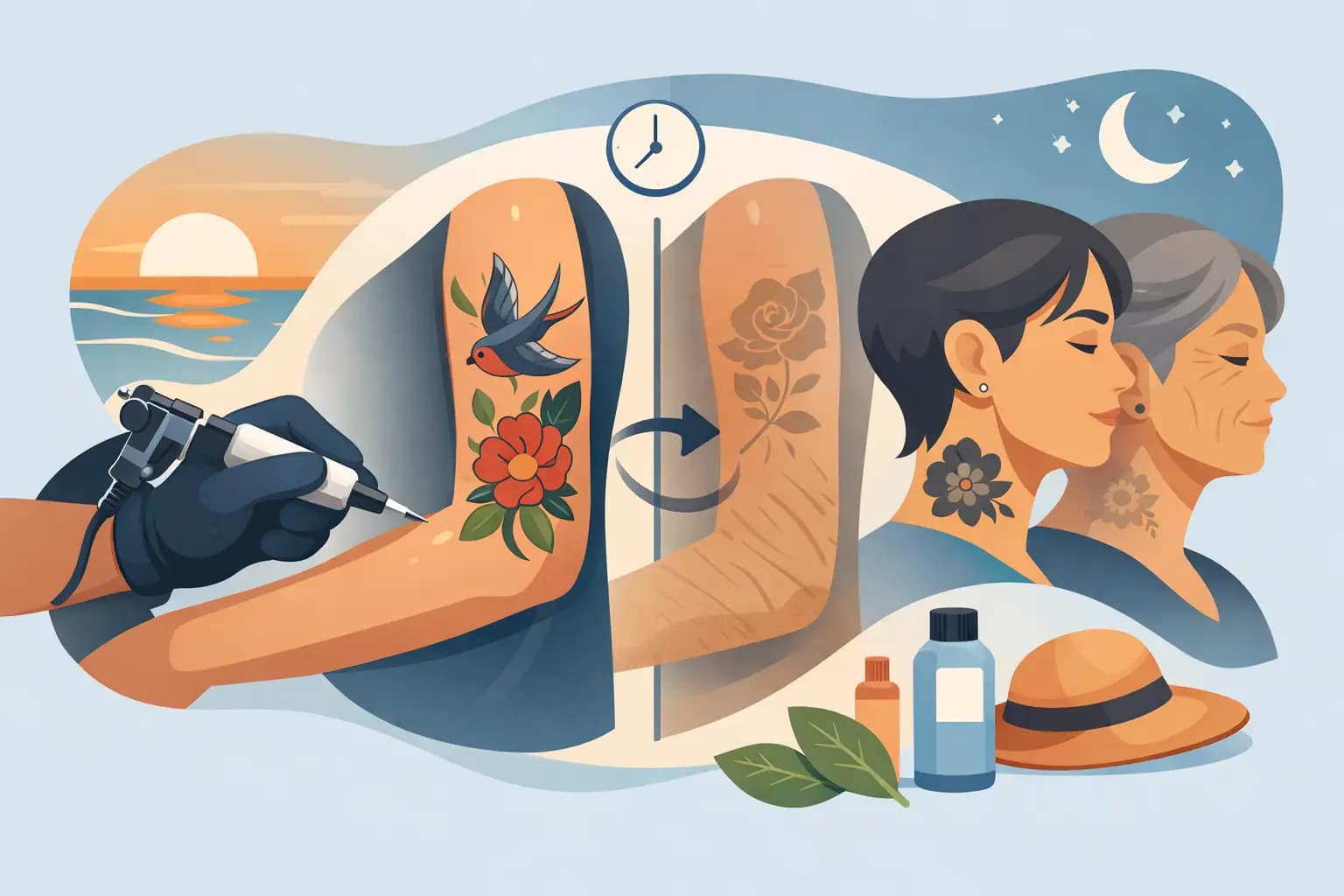
A tattoo can look incredible on day one and still lose its edge if the design was never built for the long haul. That is the real answer behind what makes tattoos age well – not luck, not trends, and not a single miracle product, but a combination of smart design, skilled application, and how the piece lives on your body over time.
If you are investing in custom work, this matters. A strong tattoo should not just photograph well when it is fresh. It should still read clearly years later, with shape, contrast, and intention intact. That is where craftsmanship shows.
What makes tattoos age well in the first place?
Aging well is really about readability. Over time, all tattoos soften a bit. Lines spread slightly in the skin, very small details can blur together, and areas with weak contrast may flatten out. The tattoos that hold up best are the ones designed with that reality in mind from the start.
That usually means clear composition, enough breathing room between elements, strong value contrast, and a deliberate approach to line weight. It also means placing the tattoo on a part of the body where the skin is more stable and choosing an artist who knows how to build for longevity instead of chasing a trendy, ultra-fine look that may not last.
A well-aged tattoo is not frozen in time. It matures. Good work settles into the skin in a way that still feels bold and intentional.
Design matters more than most people think
When people picture a tattoo aging badly, they often blame aftercare or sun exposure first. Those do matter, but design is usually the deeper issue. If a piece starts with too much tiny information packed into too little space, time is not going to be kind to it.
The best long-term tattoos are designed with skin as the canvas, not paper or a phone screen. Skin moves, stretches, heals, and changes. A design that looks perfect in a digital mockup can become crowded once it is actually translated into the body.
This is one reason Japanese and Neo-Traditional work tend to age so gracefully when done well. These styles often rely on bold structure, intentional flow, readable shapes, and contrast that holds together over time. That does not mean every tattoo needs heavy lines and large black fields. It means the design needs hierarchy. Your eye should know where to land, even years later.
Size and spacing are not small details
Clients sometimes want maximum detail in minimum space. The problem is simple – skin is not a static surface, and ink does not stay razor-sharp forever. If every petal, scale, or facial feature is packed tightly together, those details may eventually merge.
A larger tattoo usually has a better chance of aging well because it gives the design room to breathe. Negative space helps just as much as linework does. When an artist leaves intentional separation between forms, the tattoo keeps its clarity longer.
That trade-off is worth understanding early. Smaller can be elegant, but smaller is not always better if longevity is the goal.
Technique is where longevity is earned
A great concept can still fail if the application is weak. Tattooing is a technical craft, and skin rewards consistency. Saturation, line confidence, depth control, and smooth shading all affect how a tattoo heals and how it looks years later.
Lines that are too light or inconsistent may disappear unevenly. Overworked skin can heal rough or patchy. Poorly packed black and color can lose impact faster than work that was applied cleanly and intentionally.
This is where experience matters. An artist who understands how ink settles over time makes different choices than one who only focuses on the fresh result. They know when to simplify, when to push contrast, and when to tell a client that a certain idea needs more space or a different placement to really last.
That kind of honesty is part of the service, not a limitation.
Placement changes everything
One of the biggest factors in what makes tattoos age well is where they live on the body. Some areas simply hold detail better because the skin is thicker, more stable, and less exposed to daily friction.
Outer arms, shoulders, backs, thighs, and calves often age well because they are relatively durable surfaces. Hands, fingers, feet, and areas with constant rubbing or sun exposure tend to break down faster. That does not mean those spots are off-limits. It just means expectations should be realistic.
A finely detailed design on the fingers is not going to age the same way a larger, well-structured piece on the upper arm will. The body is part of the design equation. Ignoring that usually leads to disappointment.
Movement and sun both matter
Areas that stretch and flex constantly can soften faster. Areas that see years of direct sunlight can fade more noticeably. If you spend a lot of time outdoors in Northern California, that is not a minor issue. UV exposure gradually reduces contrast, especially in lighter colors and more delicate work.
A tattoo placed in a lower-impact area often keeps its crispness longer. If placement is important for personal reasons, that is completely valid. The key is matching the design style and level of detail to the reality of that spot.
Color, blackwork, and contrast
People often ask whether black and gray tattoos age better than color. The honest answer is that it depends on the design, the pigments used, the client’s skin, and how much contrast the tattoo has overall.
Black tends to hold its presence well because it creates strong visual structure. Black and gray work can age beautifully when it has enough range from dark to light and does not rely on overly soft transitions alone. Color can also age exceptionally well, especially when it is built around strong outlines, smart value contrast, and a palette that suits the concept.
What tends to struggle is low-contrast work. If everything sits in the same tonal range, the tattoo can flatten as it settles. A strong tattoo needs separation between major elements. That is true whether the piece is full color, black and gray, or somewhere in between.
Aftercare helps, but it cannot fix bad planning
Good healing matters. Follow aftercare instructions, avoid picking, keep the tattoo clean, and do not cook it in the sun while it is fresh. After that, long-term care is mostly about skin health and sun protection.
Moisturized skin generally shows tattoos better. Sunscreen helps preserve contrast. Major weight changes, friction, and repeated unprotected sun exposure can all affect how the tattoo looks over time.
Still, aftercare is not magic. If the original design was too small, too crowded, or applied poorly, perfect aftercare will not turn it into a long-term success. The best results come from good choices before the machine ever touches skin.
Choosing the right artist is part of the answer
A portfolio should show more than fresh tattoos. You want to see consistency in composition, line quality, and healed results if available. You also want to work with someone who designs for the body, not just for social media close-ups.
Custom tattooing should include conversation. A strong artist asks how you want the piece to feel in ten years, not just next week. They think about flow, placement, scale, readability, and how your idea translates into a timeless design language.
That approach is especially important for larger Japanese and Neo-Traditional work, where movement, balance, and long-term structure are everything. At Dani Olmos Tattoo, that kind of planning is part of the point. The tattoo is not treated like a quick graphic dropped onto skin. It is built to belong to your body and stay visually strong as it matures.
The tattoos that last are usually the ones with restraint
This is the part many people do not expect. Tattoos that age well are not always the most complicated ones. They are often the ones with the clearest decisions.
Strong silhouettes. Intentional contrast. Smart placement. Enough space. A design style that respects how skin changes. An artist confident enough to edit, simplify, or scale up when needed.
That can feel less flashy in the planning stage, but it pays off over time. The goal is not to make a tattoo that only looks impressive under perfect lighting right after it is finished. The goal is to create something that still carries weight, beauty, and identity after years of living in real skin.
If you want a tattoo with staying power, think beyond the appointment itself. The best pieces are not just designed to be worn. They are designed to keep speaking clearly long after the first heal.