
A tattoo can be visually striking on the day it is finished and still feel disconnected from you a few years later. The difference is rarely whether a design is trendy. It is whether the image has a reason to live on your skin. Learning how to choose tattoo symbolism means looking beyond a single literal meaning and building a piece that carries your story, fits your body, and holds its visual strength over time.
For custom work, symbolism is not a worksheet where one animal equals one personality trait. It is a creative language. Your memories, values, heritage, turning points, and future intentions can all shape the design, but they need to be translated through an artist’s visual point of view. The strongest tattoos feel personal without needing to explain every detail to every person who sees them.
Start With the Story, Not the Image
Many people begin with a symbol they saw online: a dragon for strength, a flower for growth, a snake for transformation. Those associations can be a useful starting point, but they are not yet a complete tattoo concept. Ask yourself what the image is meant to honor, protect, remember, or represent in your life.
A meaningful answer is usually more specific than a single word. “Strength” might actually mean recovering after a difficult period, staying grounded for your family, or choosing discipline over chaos. “Freedom” may be about leaving a place, returning to yourself, or taking ownership of your identity. That added context gives an artist material to work with and prevents the final design from feeling generic.
Try describing the feeling before naming the object. You may discover that the right tattoo is not the obvious symbol. Someone drawn to a wolf because of loyalty, for example, may find that a paired bird motif, guardian figure, or composition built around an enduring bond tells the story with more originality.
Let One Meaning Lead
A large tattoo can contain layers, but it should have a clear emotional center. When every part of the design is expected to carry a separate life event, the composition can become crowded and visually scattered. Choose the one idea that matters most, then let supporting elements reinforce it.
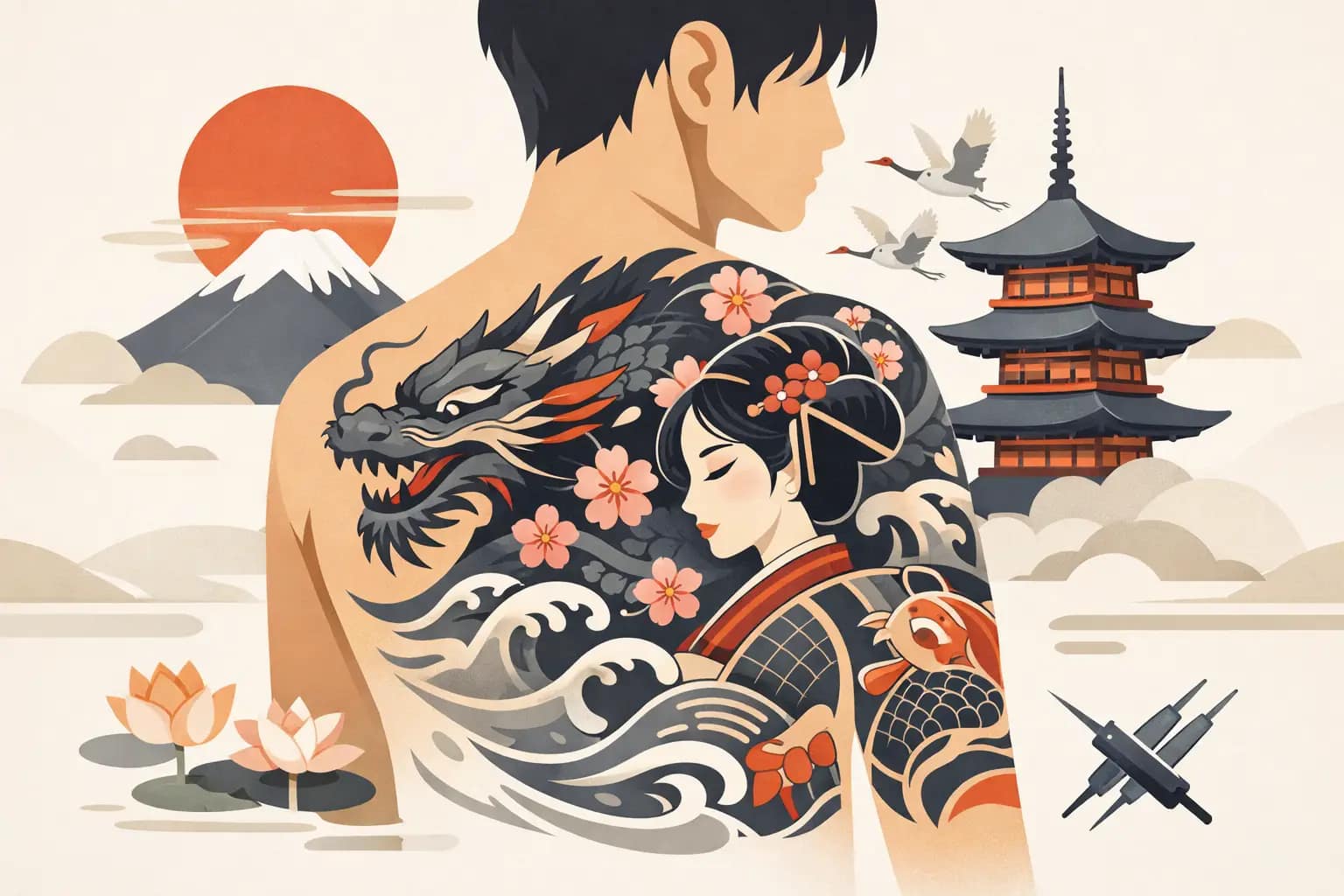
For instance, a Japanese-inspired sleeve might center on perseverance, with a koi as the primary figure and water, wind bars, and seasonal flowers shaping the mood around it. The surrounding imagery does not need to introduce five unrelated messages. Its role is to create movement, contrast, and a coherent world for the main subject.
Research Tattoo Symbolism With Respect
Symbolism has history. This matters especially when you are drawn to Japanese, Irezumi-inspired, or traditional imagery. A motif may have broad popular associations, but its cultural context, artistic pairing, and visual treatment can change what it communicates.
Koi are often connected to perseverance and ambition, yet their direction, environment, and relationship to other subjects can alter the story. Tigers can suggest courage, protection, and a force of nature. Snakes may represent renewal, protection, wisdom, or danger, depending on the composition. Peonies bring softness, abundance, and beauty, but in traditional tattoo imagery they also create a powerful contrast when paired with formidable subjects such as lions, dragons, or snakes.
The goal is not to memorize a fixed dictionary of tattoo meanings. It is to approach established motifs with curiosity and care. If you want Japanese-inspired work, choose an artist who understands the visual language rather than simply applying a Japanese-looking image to the body. Cultural depth shows up in the details: the pairing of subjects, the seasonal elements, the flow, the background, and the way the composition honors the style.
A personal connection can coexist with traditional imagery, but it should not overwrite the tradition. During a consultation, explain what draws you to the motif and stay open to recommendations about the most appropriate way to build it.
How to Choose Tattoo Symbolism for Your Body
A symbol does not exist separately from placement. The body gives a tattoo movement, scale, and direction. A design that works beautifully as a small square illustration may not make sense across a forearm, shoulder, back, or thigh.
Think about whether your idea needs room to breathe. Faces, animals, serpents, floral clusters, and detailed scenes often benefit from larger placements because their expression and anatomy need space. A dragon can travel naturally across the back, chest, arm, or leg. A compact talisman-like symbol may have greater impact on the inner forearm, calf, or upper arm.
Flow matters as much as size. A snake can wrap with the curve of a limb. A tiger can move across the shoulder or thigh. Water, clouds, flames, and flowers can connect larger elements while following the natural rhythm of the body. In Japanese-inspired work, these background elements are not filler. They establish atmosphere and make the tattoo feel designed for you rather than placed on you.
Consider Visibility Honestly
Placement also affects how often you will see and explain the tattoo. A highly visible hand, neck, or lower-arm piece may feel right for someone who wants their art to be part of their daily presentation. For others, a more private placement allows the tattoo to remain personal while still being substantial.
Neither choice is more meaningful. The trade-off is practical: visibility can make a tattoo feel integrated with your identity, while privacy may give you more flexibility in professional or personal settings. Choose based on your real life, not just the strongest photo reference in the moment.
Separate Personal Meaning From Literal Illustration
You do not have to tattoo every detail of a memory for the tattoo to represent it. In fact, symbolic work is often stronger when it leaves room for interpretation. A tattoo about a parent might use a seasonal flower connected to a shared memory rather than a portrait. A piece honoring a move to Northern California might evoke its landscape through wind, water, mountains, or a creature associated with the feeling of the place.
This is where custom design becomes valuable. An artist can turn a private idea into visual decisions that read clearly from a distance: contrast, silhouette, color, direction, and spacing. The meaning stays with you, while the tattoo remains compelling as artwork on its own.
It also makes the piece more timeless. A tattoo built around a personal date, quote, or literal object can be deeply appropriate, but those elements need careful consideration. Fine script may become harder to read as it ages. Tiny details may soften. A more symbolic composition can preserve the emotional core without relying on fragile visual information.
Build a Composition, Not a Collection of Symbols
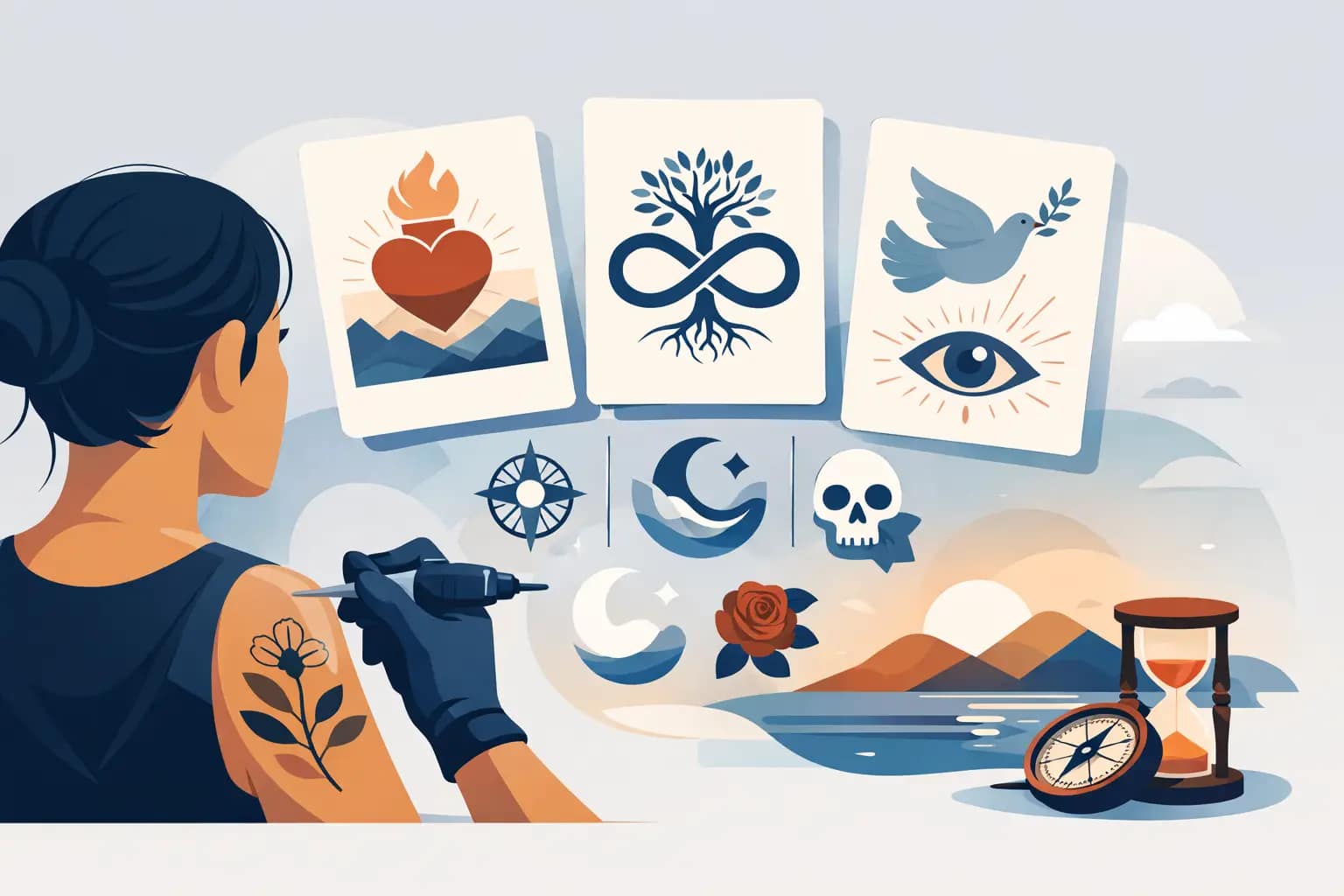
One common mistake is treating a tattoo like a collage of favorite images. A wolf, a clock, a rose, a compass, and a family name may all matter individually, but forcing them into one area can dilute every one of them. Great tattooing has hierarchy. Your eye should know where to land first.
For larger work, think in terms of a main subject, supporting elements, and background. The main subject carries the primary meaning. Supporting elements add contrast or deepen the narrative. Background unifies the composition, creates negative space, and helps the tattoo move with the body.
Color can also carry symbolism, but it should serve the overall design. A limited palette often ages with more clarity than a piece overloaded with competing tones. Black and gray can create drama and longevity, while carefully placed color can bring energy, seasonal meaning, or focal emphasis. It depends on the style, placement, skin tone, and the way you want the tattoo to read from several feet away.
Give the Idea Time Before You Commit
A meaningful tattoo does not need to be solemn, but it should survive more than a passing mood. Live with your idea for a few weeks or months. Write down what you want it to represent, where you imagine it on the body, and which parts feel essential versus optional.
Then test the design in a practical way. Imagine it larger than you first planned. Consider how it could expand if you may want a sleeve, back piece, or leg project later. Look at healed tattoos, not only fresh ones, to understand how line weight, detail, and contrast will settle into the skin.
Do not confuse indecision with a lack of commitment. Refining an idea is part of respecting the process. The right concept often becomes clearer when you stop searching for a perfect universal meaning and focus on what genuinely feels like yours.
Bring a Clear Brief and an Open Mind
A consultation works best when you bring the story, references for mood or style, preferred placement, and any non-negotiable elements. You do not need to arrive with a finished sketch. In fact, leaving room for the artist’s composition and technical judgment usually leads to a stronger tattoo.
At Dani Olmos Tattoo, custom design begins with that conversation: your vision, the symbolism behind it, and the style that can bring it to life with intention. A specialist should be willing to explain why a motif needs more space, why a different angle will flow better, or why a supporting element would elevate the whole piece. That guidance is not a departure from your idea. It is how your idea becomes art built to last.
Choose symbolism that gives you something to return to, not something you feel obligated to explain. The best tattoo can hold a private story, a cultural reference, and a powerful visual presence all at once – then keep revealing new details as you grow with it.