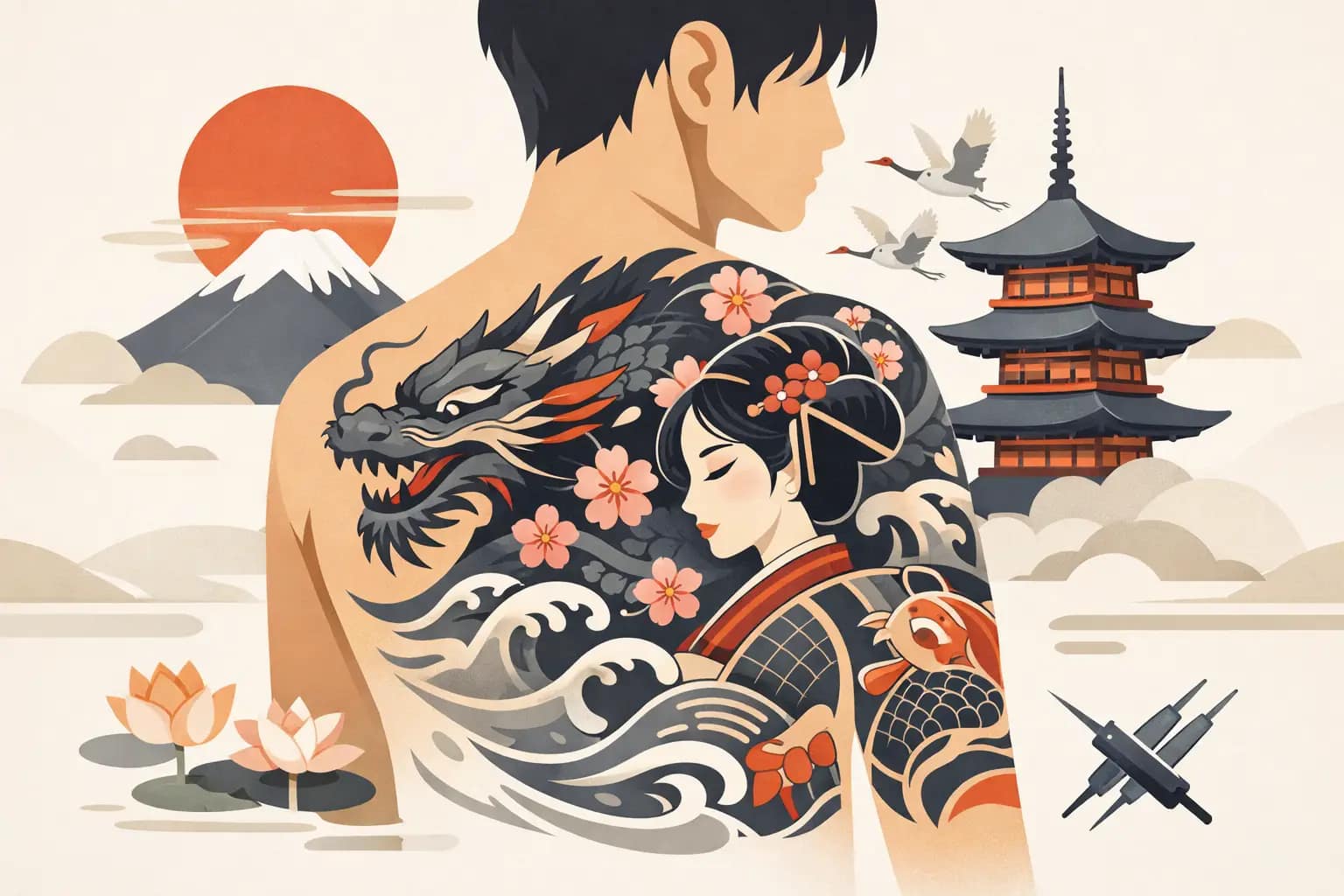

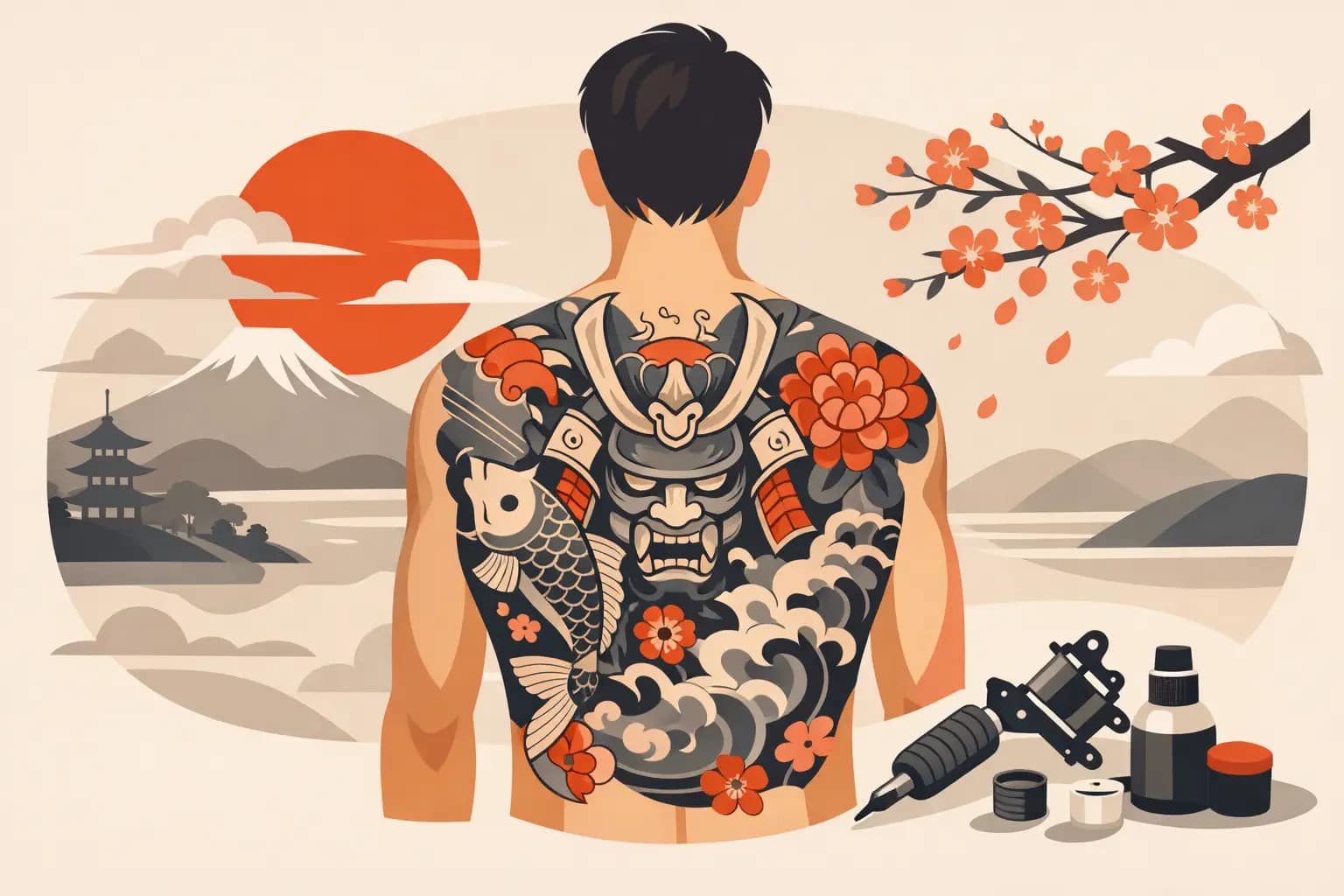
A backpiece is not simply a large tattoo placed on the back. It is a full composition that has to move with your shoulders, spine, ribs, and waist while still telling a clear story from across the room. This Japanese backpiece tattoo guide is for clients who want to plan the piece with intention, respect for the visual tradition, and a long view of how the work will wear over decades.
Japanese-inspired tattooing is built on relationships: one subject informs the next, background supports the focal point, and the body itself determines the movement of the design. The strongest backpieces feel complete because every element has a purpose, not because every open space has been filled.
Japanese Backpiece Tattoo Guide: Start With Flow
The back gives an artist a rare amount of room, but it also reveals weak composition quickly. A design that looks impressive as a flat drawing can lose its impact if it ignores the natural lines of the body. Shoulder blades shift, the spine creates a centerline, and the lower back narrows. A successful backpiece uses those realities rather than fighting them.
Most Japanese backpieces begin with a primary subject that establishes the visual direction. A dragon may coil upward through the shoulder and across the back. A koi can swim against a current, with its body creating a strong diagonal. A tiger often benefits from a broad, grounded placement that uses the shoulder blades and upper back for power. The subject should have room to breathe, but it should never feel stranded in a blank field.
Background is what turns a large tattoo into a unified garment. Wind bars, waves, clouds, maple leaves, peonies, chrysanthemum, rocks, smoke, and water can frame the central image while guiding the eye across the body. This is where experience matters. Background should create rhythm and depth without competing with the main subject.
A full backpiece can be designed as an independent statement, or it can be planned as the anchor of a larger bodysuit. If you may eventually add sleeves, chest panels, or leg work, say so during the first consultation. The artist can build clean transitions now instead of forcing disconnected pieces together later.
Choose Symbolism That Means Something to You
Japanese tattoo imagery carries visual and cultural weight. Choosing a subject only because it is popular can leave a large, permanent piece feeling generic. You do not need a dramatic life story to earn a backpiece, but you should have a genuine connection to the energy, symbolism, or visual character of the imagery.
A dragon is often associated with wisdom, protection, and command over natural forces. Koi are commonly connected to perseverance and transformation, especially when shown moving upstream. Tigers represent courage and protection. Hannya masks can speak to intense emotion, jealousy, grief, or the complexity of human nature. Floral elements also shift the meaning and mood of a composition: peonies can bring richness and boldness, while maple leaves may suggest transition or the passing of time.
These meanings are not rigid rules. Context matters, and personal interpretation matters too. A custom design can honor traditional visual language while reflecting your own story. The goal is not to assemble a catalog of symbols. It is to create one coherent piece where the subject, setting, season, and movement belong together.
Respect the Difference Between Traditional and Inspired Work
Irezumi has a long, specific history in Japan. A knowledgeable artist should be able to discuss the visual conventions of Japanese tattooing without reducing that history to decoration. Many modern clients choose Japanese-inspired work or Neo-Traditional interpretations that borrow from the composition, contrast, and storytelling of the style while bringing in a more personal or contemporary approach.
That distinction is useful because it gives the design room to be honest. If you want a classic approach, the composition can follow established motifs and visual rules closely. If you want a personal interpretation, the artist can adapt the palette, facial expressions, linework, or supporting imagery while preserving the bold readability that makes Japanese tattooing so enduring.
Decide How Much Back You Want to Commit To
“Backpiece” can mean several different commitments. A full back traditionally runs from the upper back to the waist or upper buttocks, often leaving a narrow strip of untattooed skin along the spine in some classic layouts. A full-back design creates the greatest visual impact and gives the artist the most room for dramatic scale, detail, and background.
A half-back or upper-back composition can still be substantial, especially when it extends over the shoulders. It may be the right choice if you want a major tattoo but need more coverage flexibility for work, family, or lifestyle. The trade-off is that smaller coverage requires tighter editing. A dragon, battle scene, or multiple large figures may need to be simplified to avoid crowding.
Your tolerance for sessions, budget, schedule, and future tattoo plans should all shape the decision. Bigger is not automatically better. The right scale is the one that gives the imagery enough room to remain legible and powerful.
Color, Black and Gray, and Long-Term Readability
Traditional Japanese tattooing is celebrated for rich color, particularly reds, golds, greens, blues, and warm skin breaks that create contrast. A color backpiece can feel alive from a distance, but it relies on thoughtful value structure. If every area is equally bright, the tattoo can become visually flat.
Black and gray Japanese-inspired work can be equally commanding. It highlights shape, linework, texture, and the movement of wind, clouds, and water. It can also be a smart direction for clients who prefer a more restrained look or want their tattoo to pair easily with existing blackwork.
Either approach can age beautifully when the design has enough contrast and adequate spacing. Fine details are tempting, especially in a large composition, but the backpiece must read as a whole before it rewards close inspection. Strong outlines, clear negative space, and intentional black fields help keep the design visible as the skin changes over time.
Plan for Sessions, Healing, and Real Life
A custom backpiece is a project. The final number of sessions depends on the scale, placement, level of detail, color saturation, your skin, and how your body handles tattooing. Some clients prefer longer appointments spaced farther apart. Others do better with shorter, more frequent sessions. Neither is universally better. Consistency matters more than speed.
Before each appointment, arrive rested, hydrated, and fed. Avoid planning a major session immediately before a vacation, a physically demanding event, or a stretch of long sun exposure. The back is especially easy to irritate through sweat, tight clothing, backpack straps, and sleeping positions, so your schedule deserves as much attention as the artwork.
Healing requires patience. Wear clean, loose clothing, follow your artist’s aftercare instructions closely, avoid soaking the tattoo, and keep it out of direct sun. Do not pick at peeling skin or try to rush the process with heavy products. A well-healed tattoo gives the artist the best surface for the next session and protects the investment you are making in the work.
Build the Piece With the Right Artist
A backpiece is too significant to choose from a single reference image. Look for an artist whose portfolio shows confident large-scale composition, clean saturation, strong backgrounds, and healed work. The design should feel intentional from the shoulders to the waist, not like several separate tattoos placed near each other.
The consultation is where your vision becomes art. Bring your ideas, references, and non-negotiables, but leave room for the artist’s point of view. You are hiring their knowledge of flow, placement, color, and visual storytelling. At Dani Olmos Tattoo, the custom process is built around that collaboration, creating original Japanese and Irezumi-inspired work that is designed for your body rather than copied from someone else’s.
A great backpiece asks for time, trust, and commitment. Give the concept the same care you would give any lasting piece of art, and the result can feel less like an image on your skin and more like a story that has always belonged there.