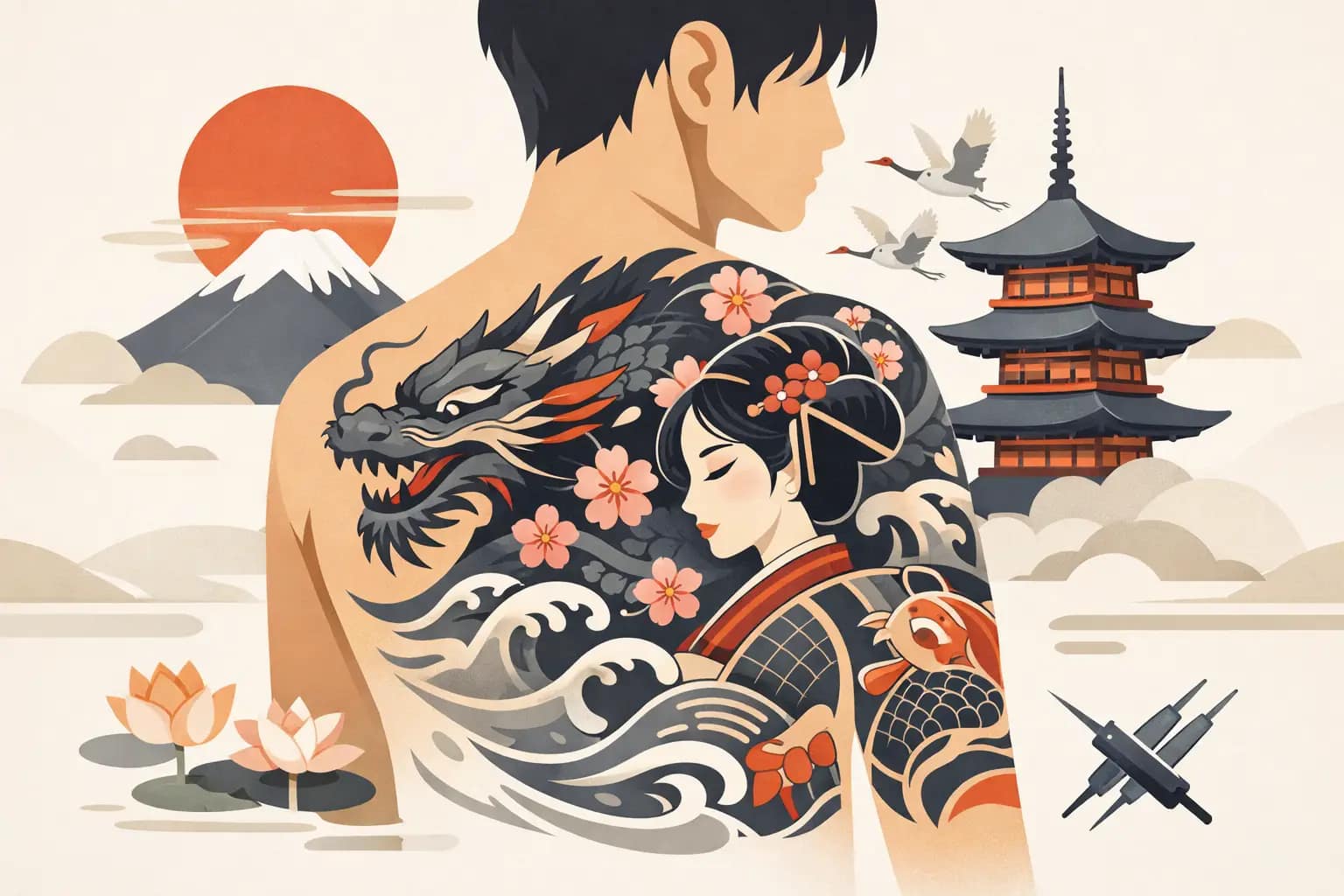

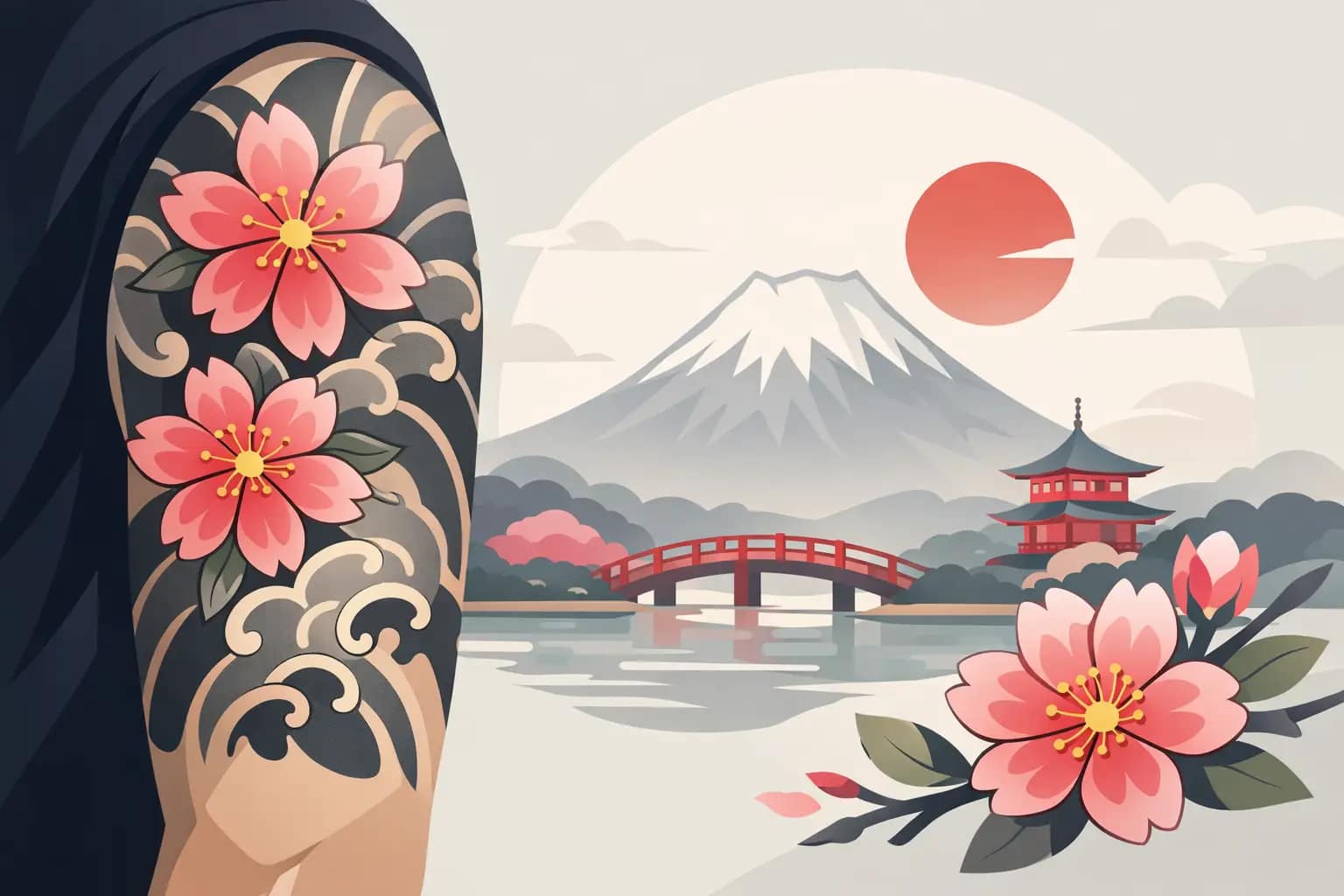
You’ve probably seen it – bold sleeves, flowing backgrounds, a dragon or koi at the center, and a flower woven through the composition that somehow ties the whole piece together. If you’ve been asking what is the flower in Japanese tattoos, the honest answer is that there isn’t just one. In Japanese tattooing, several flowers appear again and again, and each one changes the mood, symbolism, and rhythm of the design.
That matters if you’re planning a custom piece. In Irezumi-inspired work, the flower is rarely just decoration. It helps tell the story, balance the movement, and shape how the tattoo feels years down the line.
What is the flower in Japanese tattoos, really?
Most people asking this question are usually thinking of cherry blossoms first, because they’re one of the most recognizable elements in Japanese art and tattooing. But cherry blossoms are only one part of a much larger visual language. Peonies, chrysanthemums, lotus flowers, and maple leaves also show up often, each with its own cultural weight and visual role.
So if you’re trying to identify the flower in a Japanese tattoo, the right answer depends on the piece. A soft, drifting flower with delicate petals may point to sakura, or cherry blossom. A full, layered bloom with a rich, rounded shape is often a peony. A structured flower with many narrow petals may be a chrysanthemum. A lotus tends to feel more centered and spiritual, often rising from water themes.
The key is this – in Japanese tattoo design, the flower is chosen for meaning and composition together. It has to fit the story, but it also has to sit naturally with the subject.
The most common flowers in Japanese tattoos
Cherry blossom
Cherry blossoms, or sakura, are probably the most iconic flower in Japanese tattoos. Their meaning is tied to impermanence, beauty, and the brief nature of life. Because the bloom is short-lived, sakura often carries a quiet reminder that nothing lasts forever.
That can make cherry blossoms feel poetic, but they’re not always soft in meaning. In tattooing, they can bring contrast to powerful imagery like tigers, samurai, snakes, or dragons. The tension works because the blossom suggests fragility while the larger subject suggests force, protection, or resilience.
Visually, sakura also creates movement. The petals can be scattered through wind bars, waves, or background flow, which helps the tattoo breathe instead of feeling too dense.
Peony
If cherry blossoms are airy and fleeting, peonies are full-bodied and confident. In Japanese tattooing, the peony is often associated with wealth, honor, bravery, and beauty. It has a strong presence and a classic shape that works especially well in large-scale tattooing.
Peonies are often paired with lions, dragons, or other bold subjects because they can hold their own visually. They bring elegance without looking fragile. For a lot of clients, that balance is exactly the appeal.
A peony-heavy design can read more luxurious and grounded than a sakura-based one. If someone wants a Japanese tattoo that feels rich, timeless, and structurally strong, peonies are often a natural fit.
Chrysanthemum
The chrysanthemum has deep roots in Japanese art and culture. It’s traditionally connected with longevity, nobility, and refinement. In tattooing, it carries a more formal and regal energy than cherry blossoms or peonies.
It also has a very distinct design language. The petals are more numerous and controlled, giving the flower a disciplined look that works beautifully in sleeves, back pieces, and larger compositions.
For some clients, chrysanthemum imagery feels more understated than sakura but more ceremonial than peony. That makes it a strong choice when the goal is symbolism with structure.
Lotus
The lotus appears often in Japanese-inspired tattooing, though its symbolism is also strongly tied to broader Buddhist themes. It usually represents spiritual growth, purity, perseverance, and rising above hardship.
Because the lotus grows from muddy water and blooms clean above the surface, it speaks to transformation. That’s one reason it resonates with clients who want their tattoo to reflect change, healing, or personal evolution.
The lotus is especially effective in designs with water elements. It feels calm, centered, and intentional. Compared with the extroverted visual energy of peonies or chrysanthemums, lotus flowers often carry a quieter kind of strength.
Why flowers matter so much in Japanese tattoo design
In a strong Japanese tattoo, every element has a job. The main figure might carry the central theme, but the supporting elements are what make the tattoo feel complete. Flowers help establish season, emotion, contrast, and flow.
A dragon surrounded by chrysanthemums feels different from a dragon with cherry blossoms. The subject may be the same, but the atmosphere changes. One version may feel stately and composed, while the other feels more fleeting and dramatic.
That’s why flower choice shouldn’t be random. It affects more than symbolism. It changes the visual pacing of the tattoo, how the negative space is handled, and how the eye moves across the piece.
For custom work, this is where collaboration matters. The right flower isn’t always the one with the most obvious meaning. Sometimes it’s the one that best supports the story you want to tell and the body placement you’re working with.
How to choose the right flower for your tattoo
If you’re drawn to Japanese tattooing but unsure which floral element belongs in your piece, start with the feeling you want the tattoo to carry. Do you want it to feel bold and regal, reflective and temporary, spiritual and grounded, or rich and powerful?
Cherry blossoms tend to suit clients who connect with themes of change, mortality, beauty, and motion. Peonies work well when the piece needs confidence, fullness, and visual impact. Chrysanthemums are great for elegance, order, and longevity. Lotus flowers fit tattoos built around resilience, personal growth, or inner calm.
It also depends on scale. A flower that looks beautiful in a sleeve may behave differently in a smaller tattoo. Japanese-style work usually shines when it has enough room for the forms to breathe, especially with petals, background, and supporting imagery all working together.
Color matters too. Some flowers come alive through saturated reds, pinks, golds, or soft gradations. Others can be pushed in a darker or more dramatic direction depending on the overall palette. If long-term readability matters to you, and it should, those choices need to be made with aging in mind, not just first-day impact.
One common mistake people make
A lot of people pick a flower based only on internet symbolism charts. That’s understandable, but it can flatten the design process. Japanese tattooing is more layered than that.
A peony does not mean exactly one thing in every piece. A cherry blossom doesn’t always represent the same emotional message for every wearer. Meaning comes from context – what it’s paired with, how it’s drawn, where it’s placed, and what story the client brings to it.
That’s where working with a specialist makes a real difference. A strong artist doesn’t just ask which flower you like. They help translate your ideas into a piece where symbolism, body flow, and composition all support each other. That’s how a tattoo moves from a collection of references to something that feels personal and built to last.
What is the flower in Japanese tattoos if you want a custom answer?
The best answer is this: the flower in Japanese tattoos is the one that belongs in the story. Sometimes that’s sakura because the piece needs movement and impermanence. Sometimes it’s peony because the tattoo calls for strength with elegance. Sometimes it’s chrysanthemum or lotus because the energy of the design asks for something more measured or spiritual.
At Dani Olmos Tattoo, that kind of decision is part of the art. A well-built Japanese or Neo-Traditional piece isn’t assembled from symbols at random. It’s designed with intention, so every flower, background element, and main subject supports the larger vision.
If you’re planning a Japanese-inspired tattoo, don’t worry about picking the “correct” flower from a chart. Focus on the feeling, the story, and the kind of presence you want the piece to have on the body. The right flower will usually reveal itself once the design starts taking shape.