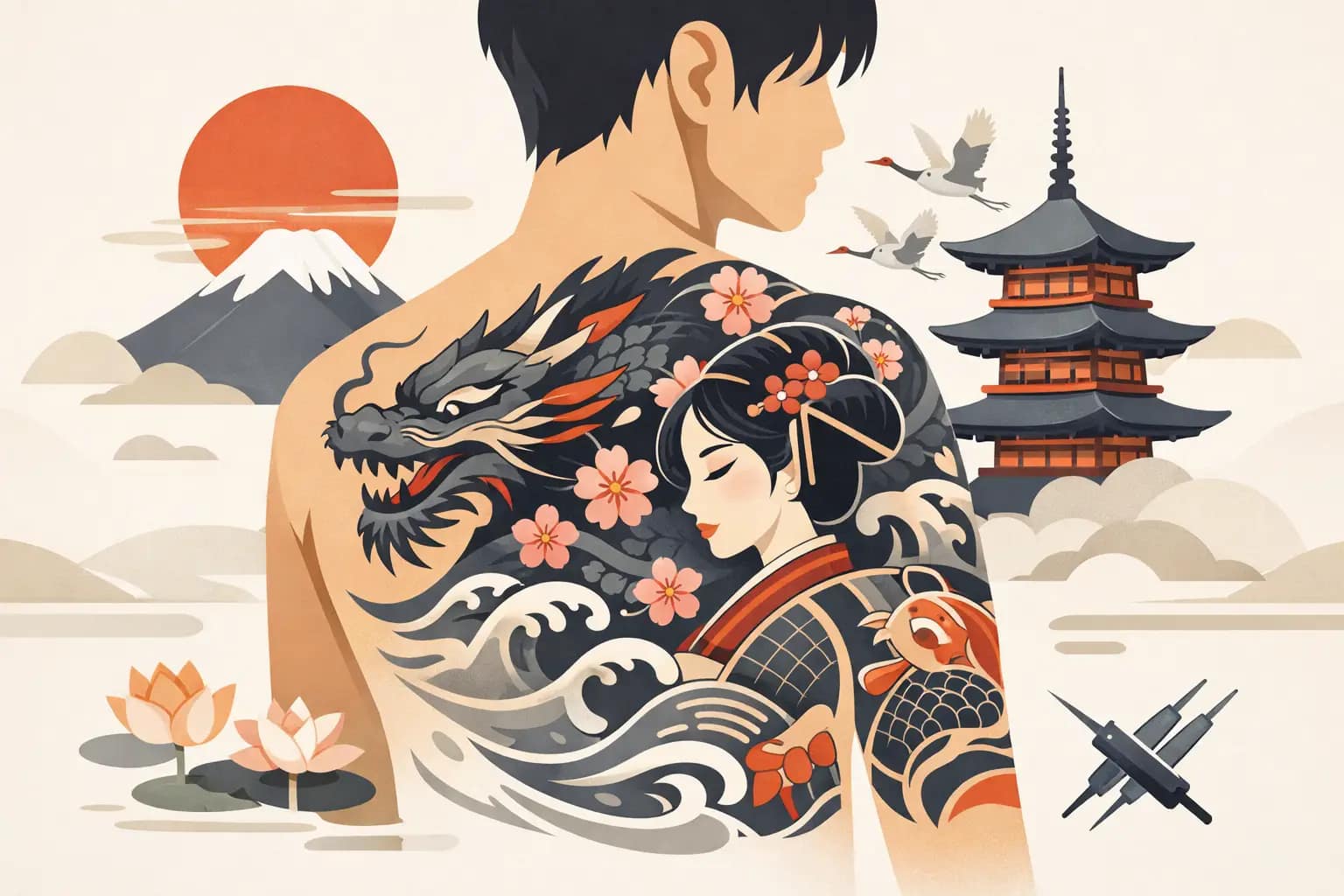

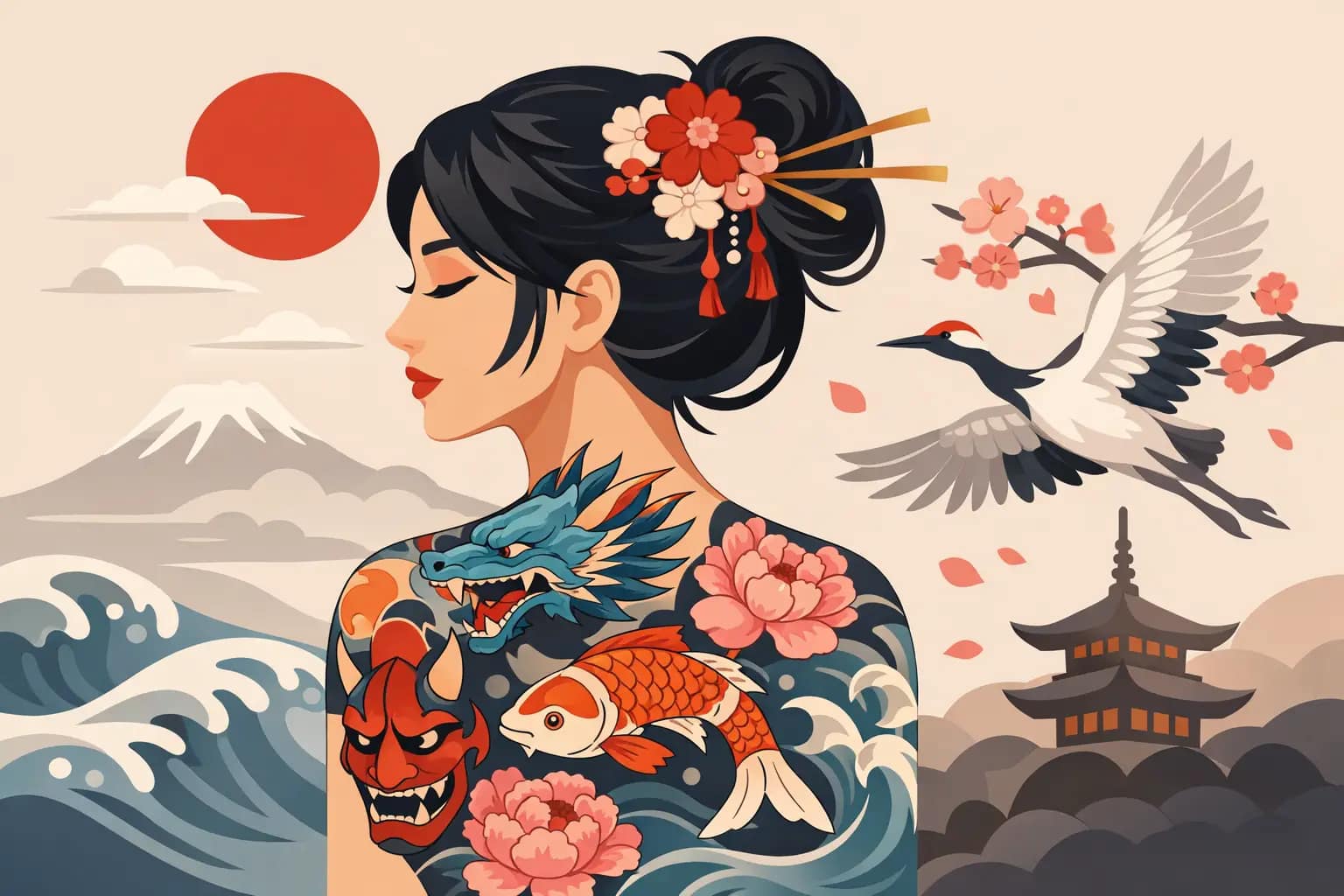
A lot of people know they love Japanese-inspired tattooing before they know the right name for what they are seeing. They notice the movement, the bold flow across the body, the dramatic masks, dragons, koi, snakes, peonies, waves, and wind bars. Then they see a piece that feels more modern, more painterly, or more personalized, and the question comes up fast – what is neo japanese tattoo, exactly?
The short answer is that Neo Japanese tattooing takes the visual language of traditional Japanese tattoo art and reinterprets it through a modern lens. It keeps the power, symbolism, and composition that make Japanese work timeless, but it opens the door to new color palettes, stylized anatomy, contemporary techniques, and more individual design choices. It is rooted in tradition, but it is not locked inside it.
What is neo japanese tattoo in practice?
In practice, Neo Japanese tattooing is less about breaking rules just to be different and more about understanding the rules well enough to evolve them with purpose. Traditional Japanese tattooing, often associated with irezumi, has a deep visual structure. Subjects are not placed randomly. Backgrounds matter. Flow matters. How a tattoo moves with the shoulder, ribs, thigh, or back matters.
Neo Japanese keeps that architectural mindset. A strong artist still thinks about how a dragon wraps, how wind bars direct the eye, how flowers soften or intensify a central figure, and how the full composition will read years from now. The difference is that the final image may push further stylistically. Lines might be more dynamic, color transitions may be richer, expressions more dramatic, and symbolic combinations more personal to the wearer.
That last point is a big reason people are drawn to this style. Neo Japanese work can honor traditional themes while making more room for a client’s own story.
The difference between traditional Japanese and Neo Japanese
Traditional Japanese tattooing is guided by long-established conventions. The subject matter, placement logic, visual rhythm, and even many pairings of imagery come from a historical and cultural framework. That framework gives the work its authority and visual harmony.
Neo Japanese does not ignore that foundation. Good Neo Japanese artists study it closely. But they are also willing to interpret. A tiger may be built with a more aggressive modern shape language. A hannya mask might carry heightened contrast or unusual color choices. A koi sleeve may still follow classic movement, but the rendering can feel more contemporary, with sharper drama or more layered textures.
This is where quality matters. When an artist understands Japanese tattooing deeply, a Neo Japanese piece feels intentional. When that understanding is missing, the work can end up looking like disconnected motifs pasted together under a Japanese label. The style has freedom, but it still needs discipline.
Core traits of Neo Japanese tattoo style
The easiest way to recognize Neo Japanese work is by its balance of tradition and reinterpretation. It usually includes classic Japanese motifs, but the execution has a modern hand.
You will often see stronger experimentation with color. Traditional palettes still show up, especially reds, black, gold, green, and blue, but Neo Japanese artists may push saturation, contrast, and temperature in ways that feel more cinematic. Shading can be smoother or more dramatic. Some pieces lean heavily into bold graphic impact, while others bring in almost illustrative detail.
Another hallmark is customization. Traditional Japanese tattooing already carries symbolic depth, but Neo Japanese often expands the narrative range. Clients may combine culturally rooted imagery with personal themes, life experiences, or visual ideas that would not appear in a stricter traditional approach. That flexibility makes the style especially appealing to people who want something deeply personal without losing the strength of Japanese composition.
The linework also tends to vary more. Some Neo Japanese tattoos keep a heavy, classic outline structure. Others use more refined line weight shifts to create emphasis, motion, or emotional tone. The same goes for background treatment. You may still see waves, clouds, smoke, and wind bars, but they can be stylized in ways that feel distinctly contemporary.
Why people choose Neo Japanese over other styles
For many clients, Neo Japanese hits a rare sweet spot. It has the visual authority of Japanese tattooing, but it offers more room for artistic interpretation. That makes it a strong choice for someone who loves the tradition but does not want a piece that feels overly rigid or expected.
It also works exceptionally well on the body. This matters more than people realize. Japanese-inspired tattooing has lasted for generations partly because it is built around flow. Sleeves, back pieces, chest panels, and leg work can feel unified rather than fragmented. Neo Japanese retains that body-conscious design philosophy, which is one reason large-scale work in this style can look so powerful.
There is also the longevity factor. Bold design, clear contrast, and strong composition tend to age better than tattoos that depend on tiny effects or overly delicate detail. That does not mean every Neo Japanese tattoo has to be heavy and dark. It means the best ones are designed with long-term readability in mind.
What imagery shows up most often?
Some imagery appears again and again because it carries both visual strength and symbolic weight. Dragons represent power, wisdom, and protection. Koi are often tied to perseverance and transformation. Tigers can stand for courage and strength. Snakes, phoenixes, samurai, hannya masks, chrysanthemums, peonies, lotus flowers, and waves all carry their own meanings and moods.
In Neo Japanese tattooing, these motifs may be combined in more flexible ways, but the strongest designs still respect visual balance. A sleeve is not just a collection of cool symbols. It is a composition. The background supports the main elements. Negative space is used deliberately. Movement is built into the layout.
That is why custom design matters so much. The right artist is not simply asking what symbols you like. They are translating those symbols into a tattoo that belongs on your body, in your proportions, with your story behind it.
Is Neo Japanese tattoo authentic?
This is a fair question, and the honest answer is that it depends on what someone means by authentic. If authenticity means exact adherence to traditional Japanese tattoo conventions, then Neo Japanese is, by definition, more interpretive. It is not trying to be a museum-copy version of irezumi.
If authenticity means working from genuine respect for Japanese tattooing, understanding its design logic, and building from that tradition with skill and intention, then yes, Neo Japanese can absolutely be authentic. Respect matters. Study matters. So does knowing when to preserve tradition and when to adapt it.
For clients, the real test is usually visible in the work. Does the tattoo have flow? Does it feel cohesive? Is the symbolism handled thoughtfully? Does the piece look like it was designed as a complete work of art rather than assembled from trend references? Those questions matter more than the label alone.
Who is Neo Japanese tattooing right for?
This style is a strong fit for someone who loves Japanese imagery but wants more artistic range. It is also ideal for clients planning medium-to-large custom work, especially sleeves, back pieces, torso panels, or full leg concepts where composition has room to breathe.
It can be great for experienced collectors and first-time serious clients alike. Collectors often appreciate the blend of tradition and innovation. Newer clients are often drawn to the style because it feels iconic without being generic. There is enough structure to create something timeless and enough flexibility to make it unmistakably personal.
That said, it is not the right choice for everyone. If you want strict historical adherence, a more traditional Japanese approach may be the better path. If you want a very minimal or fine-line aesthetic, Neo Japanese may feel too bold. This style rewards commitment. The more space it has, the more it can do.
Choosing the right artist for a Neo Japanese piece
The biggest mistake people make is choosing based on subject matter alone. Seeing one dragon in an artist’s portfolio does not mean they understand Neo Japanese tattooing. You want to look for consistency in composition, background integration, line confidence, color control, and how the tattoos sit on the body.
A strong artist will also talk with you about fit, not just imagery. They should care about placement, scale, and how the piece may expand over time. If you are building a sleeve, they should be thinking beyond a single session image. They should be designing for the full result.
This is where a custom process makes all the difference. At a specialist studio like Dani Olmos Tattoo, the conversation is not just about what looks cool today. It is about creating something masterful, personal, and built to stay visually strong for years.
Neo Japanese tattooing stands out because it gives tradition room to breathe in the present. If that balance speaks to you, the best next step is not chasing trends. It is finding an artist who can turn your vision into a piece with real structure, real intention, and real staying power.