
A large tattoo can look incredible in a sketch, then feel awkward on the body if the placement is off by just a few inches. That is why the best large scale tattoo placements are never only about size. They are about movement, anatomy, visibility, how the piece ages, and whether the design feels like it belongs to you instead of sitting on top of you.
For custom Japanese, Irezumi-inspired, and Neo-Traditional work, placement matters even more. These styles rely on flow, balance, and the way major shapes wrap with the body. A strong concept needs enough room to breathe, but it also needs the right structure underneath it. The best placement is the one that supports the story, not just the one that looks bold in a mirror.
What makes the best large scale tattoo placements work
The strongest large-scale tattoos feel intentional from every angle. They follow muscle lines, respect natural curves, and create rhythm as the body moves. On paper, a dragon, tiger, koi, mask, or floral composition can be scaled up almost anywhere. On skin, some placements elevate the design while others flatten it.
A good placement gives the tattoo room for clear linework, readable shapes, and strong contrast over time. It also considers how the piece may expand later. Many clients begin with one major tattoo and later want a sleeve, back piece, or body suit direction. Starting in the right location makes that future growth easier and far more cohesive.
Pain and healing matter too, but they should not be the only decision-makers. A placement that is slightly tougher to sit through may produce a far better long-term result than choosing a smaller or less ideal area just for comfort.
Best large scale tattoo placements by body area
Back
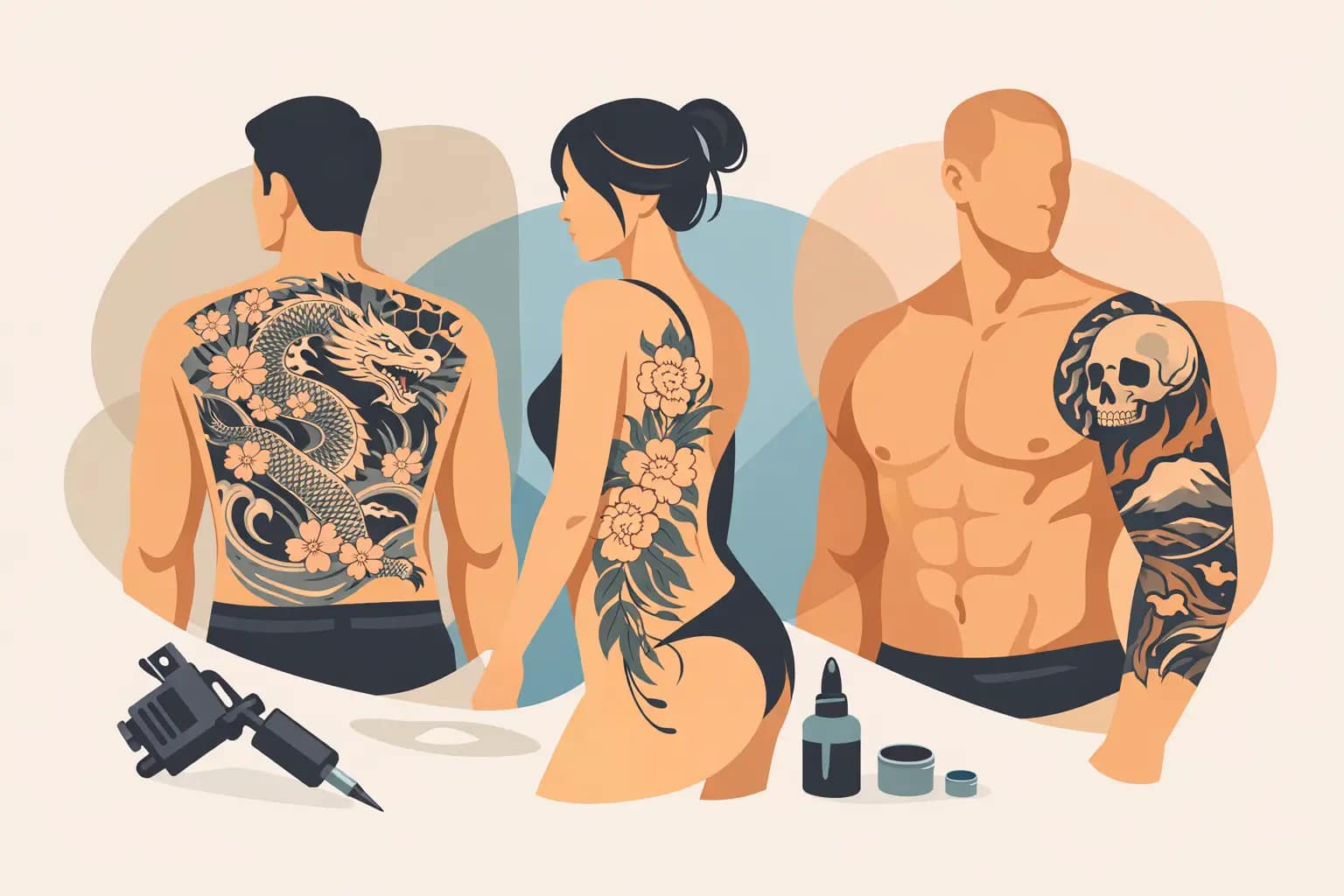
If you want the most classic canvas for a large tattoo, the back is hard to beat. It offers broad, symmetrical space and allows for ambitious compositions with real visual authority. Full-back dragons, battle scenes, phoenixes, protective figures, and layered floral work all have the room they need here.
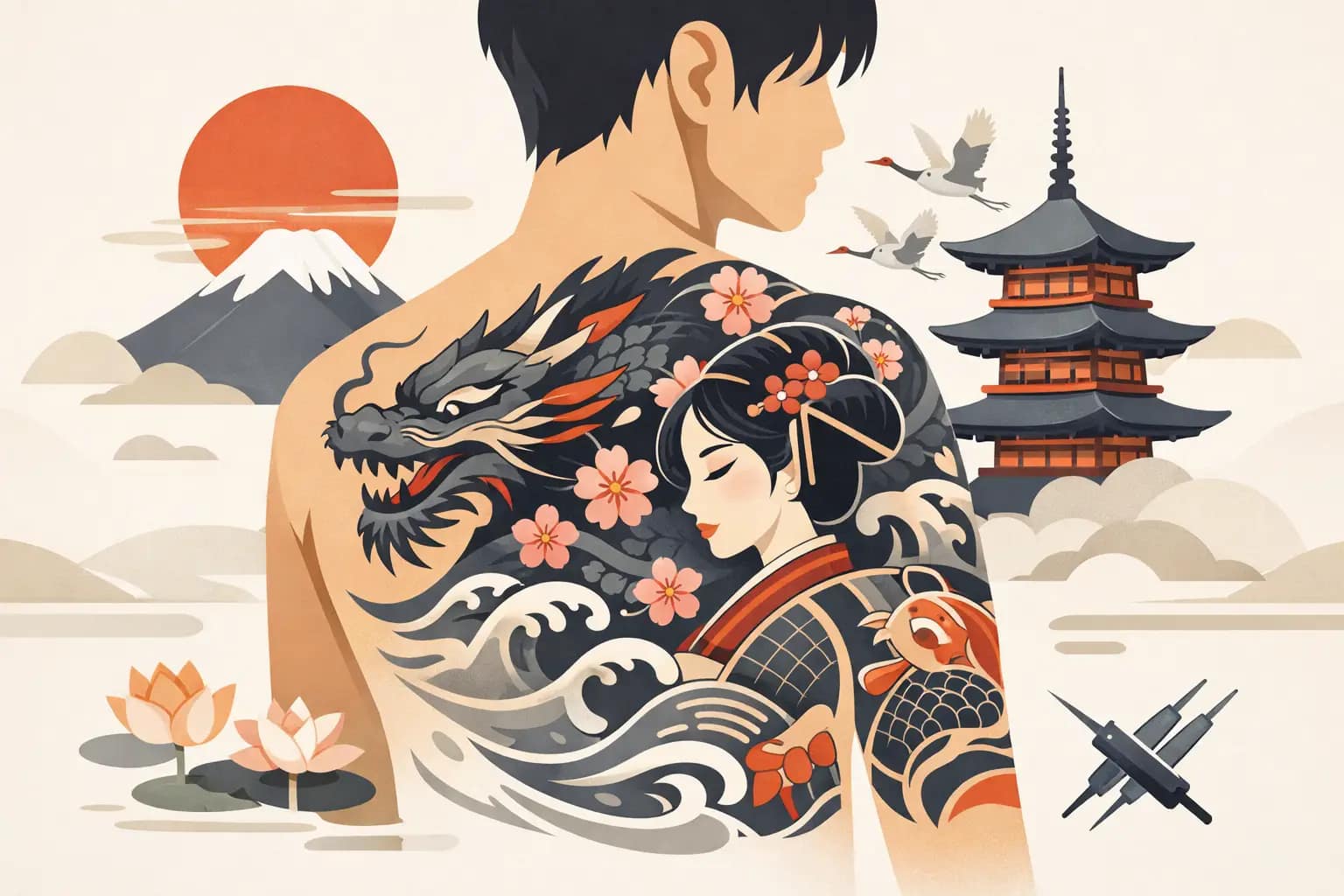
The back works especially well for Japanese-inspired tattooing because the body gives the design natural structure. The spine can act like a centerline, and the shoulders help frame movement outward. It is also one of the best places for long-term readability because there is less daily stretching and sun exposure compared with arms and legs.
The trade-off is visibility. You will not see it easily without a mirror, and some clients want a piece they can enjoy more directly. But if your priority is scale, storytelling, and timeless impact, the back remains one of the strongest choices.
Chest and torso
The chest has presence. It creates an immediate statement and can feel deeply personal because it sits close to the heart and center of the body. Large chest pieces, sternum-centered compositions, and chest panels that extend into the shoulder or ribs can be incredibly powerful.
This area suits bold imagery that benefits from symmetry or central focus. It also pairs beautifully with future expansion into sleeves or a full torso concept. For clients thinking long term, the chest often becomes a key anchor point.
The downside is that the chest and ribs can be more intense to tattoo. Breathing, sensitivity, and healing under clothing all play a role. Still, for clients who want meaningful, high-impact work with strong body flow, this placement often earns the effort.
Full sleeve
A full sleeve is one of the most popular answers to the question of best large scale tattoo placements, and for good reason. The arm offers visible real estate, great movement, and a natural vertical structure that suits snakes, dragons, wind bars, waves, florals, masks, and layered Neo-Traditional imagery.
A sleeve can wrap in a way that reveals different moments from different angles. That makes it ideal for storytelling and for pieces that need motion rather than a single flat focal point. It is also easier to live with day to day because you can show it or cover it depending on your lifestyle.
Not every sleeve should start at the wrist and fill upward. Sometimes the shoulder cap is the better entry point. Sometimes the upper arm gives the strongest anchor and leaves room to build naturally. This is where artist planning matters. A sleeve should be designed as a body composition, not a collection of separate tattoos trying to share space.
Thigh
The thigh is one of the most underrated large-scale placements. It offers substantial space, handles bold shapes well, and gives artists a strong surface for detailed work. Tigers, peonies, hannya masks, samurai themes, and large floral arrangements all sit beautifully here.
For clients who want a large tattoo with a little more privacy, the thigh is a smart choice. It also tends to heal well and is often more manageable than rib-heavy placements. The curve of the leg gives designs a dynamic quality without forcing them to wrap too aggressively.
The main consideration is visibility and clothing. If you want your tattoo seen often, the thigh may feel less satisfying than an arm or lower leg placement. But if you care most about giving the design enough room and preserving a clean composition, it is an excellent option.
Leg sleeve
A full leg sleeve creates serious impact. The thigh, knee, calf, and shin together offer a long, powerful canvas with room for layered storytelling. This placement is especially strong for clients who already have arm work or who want a major piece without committing to highly visible upper-body coverage.
The leg has a different rhythm than the arm. The front, side, and back planes are more distinct, which can help create dramatic reveals in the design. A skilled composition can use those planes to build tension, movement, and depth.
The challenge is that some areas, especially the knee and shin, can be rougher to tattoo. Leg sleeves also ask for serious planning. If the imagery is not unified, the result can feel segmented fast. Done well, though, a leg sleeve has weight and elegance.
How style affects placement
Large-scale placement is not only about body area. It is also about how the style behaves on skin.
Japanese and Irezumi-inspired work tends to thrive in placements that allow flow around the body. Sleeves, backs, chest panels, and thigh pieces make sense because they support movement and background structure. Wind, waves, smoke, and florals need room to frame the main subject properly.
Neo-Traditional work can be a bit more flexible, especially when the composition centers on one dominant image with supporting elements. But even then, the best results still come from respecting anatomy. A bold panther head or floral dagger composition may technically fit in several places, yet only one or two will make it feel balanced and alive.
That is why custom design matters. The body should guide the artwork from the beginning, not force last-minute adjustments after the drawing is finished.
What clients often overlook when choosing placement
The first thing many people think about is pain. The second is visibility. Both matter, but neither should lead the whole decision.
A better question is how you want the piece to live on your body five or ten years from now. Will you want to build around it? Do you want it to stand alone as a major statement? Does the design need width, height, or wrap? Will your work environment affect how often you want it visible?
Another factor is aging. Areas with better structure and less friction often preserve clarity more gracefully. That does not mean hands, feet, or ribs are bad placements. It means large-scale work usually performs best where there is enough stable space for line, contrast, and composition to hold over time.
This is also where an experienced artist will sometimes recommend a placement you did not expect. Not to steer you away from your idea, but to protect the design. At Dani Olmos Tattoo, that conversation is part of the custom process because the goal is not to simply place a tattoo somewhere it fits. The goal is to place it where it belongs.
Choosing the right placement for your story
The best large scale tattoo placements are the ones that give your concept authority, flow, and longevity. If you want maximum canvas and classic power, the back leads. If you want presence and strong expansion options, the chest and torso are excellent. If visibility and movement matter most, a sleeve may be the right call. If you want room without constant exposure, the thigh or leg sleeve can be the smarter choice.
The right answer depends on your design, your goals, and how you want the tattoo to grow with you. A great large-scale piece should feel inevitable on the body, like it was always meant to land there. Start there, and the tattoo has a much better chance of becoming the kind of work you are proud to wear for life.