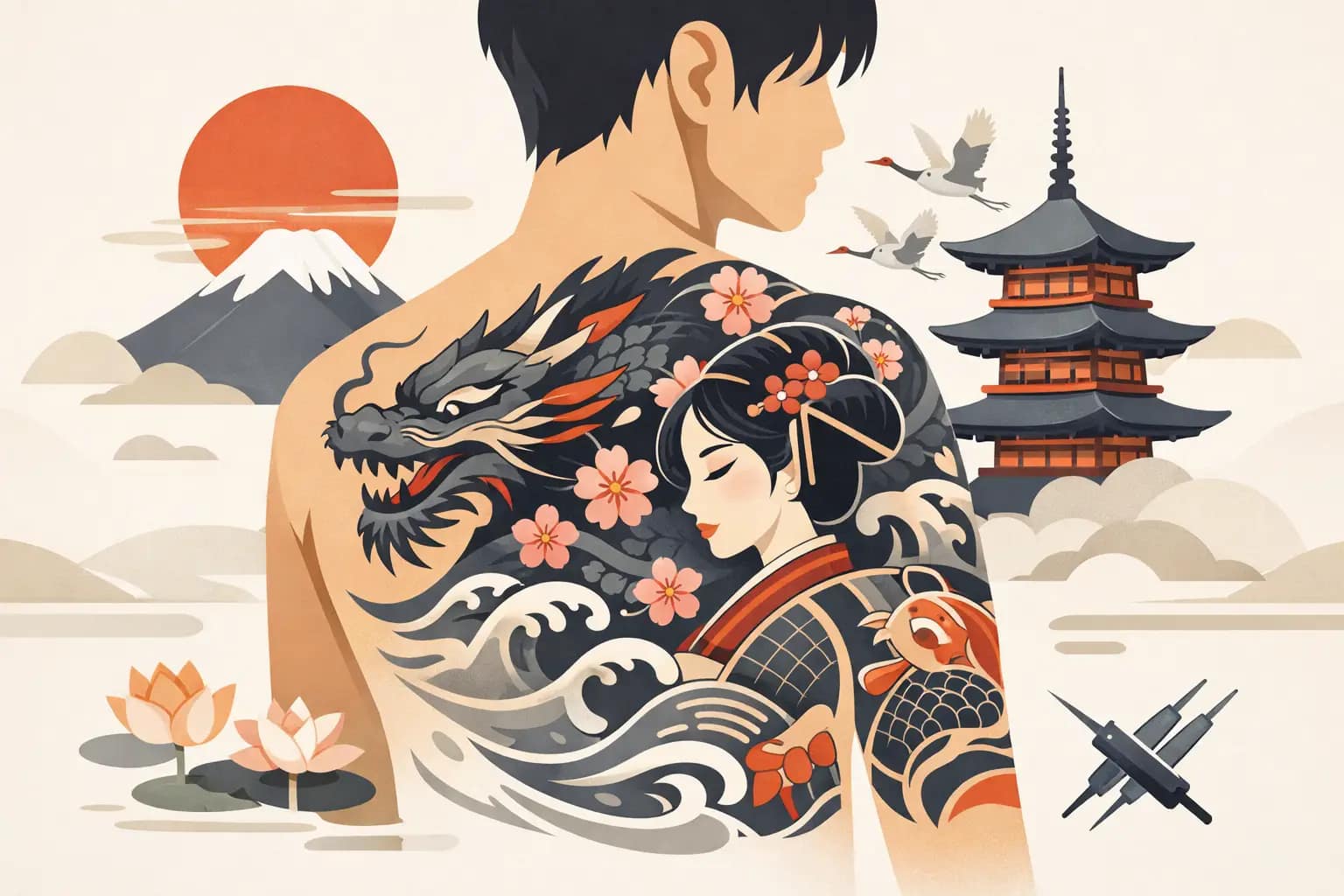

Placement can make a strong Japanese tattoo feel effortless – or make a great design fight the body every day. If you are looking for a japanese tattoo placement guide, the real question is not just where the tattoo goes. It is how the design will move, age, and read from every angle once it becomes part of you.
Japanese-inspired tattooing has always had a relationship with the body that is more architectural than decorative. Large-scale work is not usually treated as a sticker placed on skin. It is built to wrap muscle, follow motion, and create balance between the subject, background, and negative space. That matters whether you want a full bodysuit approach or a single dragon that still feels grounded in the tradition.
Why placement matters in Japanese tattooing
In many styles, placement is mostly about visibility. In Japanese work, placement also shapes the story. A koi climbing up the arm creates a very different feeling than a koi placed horizontally across the thigh. The same subject can feel powerful, calm, aggressive, or elegant depending on direction, scale, and how the background supports it.
This is why a japanese tattoo placement guide should never be reduced to a chart of pain levels or a simple list of body parts. Pain matters, of course. So does lifestyle. But with Irezumi-inspired work, placement affects composition more than most clients expect. Wind bars, waves, flowers, clouds, snakes, masks, and dragons all need room to breathe. If the body area is too small or shaped awkwardly for the concept, the tattoo may still look good on day one but lose impact over time.
The best placements usually do three things at once. They flatter the anatomy, support the subject matter, and leave enough space for the design to age clearly.
The best placements for Japanese tattoo flow
Arms and sleeves
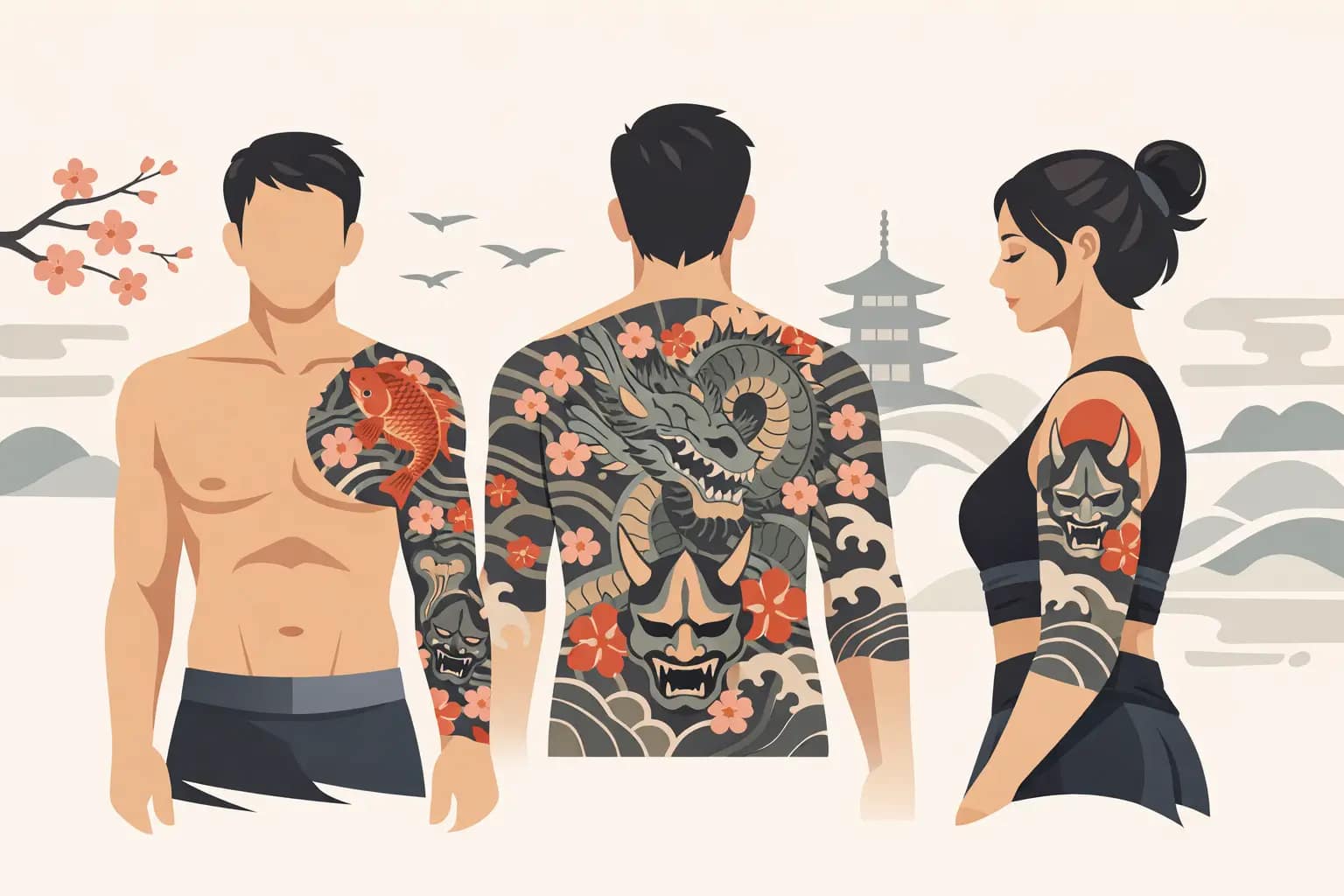
The arm is one of the most natural homes for Japanese tattooing because it already has direction. The shoulder cap, outer bicep, forearm, and wrist create a path the eye can follow. Dragons, snakes, koi, and wind-heavy compositions work especially well here because they can coil and descend or climb in a way that feels alive.
A full sleeve gives the artist enough room to build proper background and transitions. A half sleeve can also work beautifully, but it needs to stop in a deliberate place. A cutoff that ignores the shape of the arm can make even strong artwork feel incomplete. If you think you may eventually want a full sleeve, it is smart to design with that future expansion in mind.
For clients who want something visible but still flexible with work or daily life, the upper arm is often the safest starting point. It carries bold imagery well and can later connect into chest, back, or forearm work without forcing awkward additions.
Chest panels and chest-to-sleeve work
The chest has presence. It is one of the strongest placements for clients who want a tattoo to feel personal and powerful, not just public. In Japanese tattooing, chest panels can frame a central image while leaving intentional open skin near the sternum or centerline, depending on the style and overall plan.
This area works especially well for fierce imagery like hannya masks, tigers, dragons, and phoenix elements. It can also support floral and wave-heavy compositions that connect into a sleeve. The trade-off is comfort. The chest can be a more intense area to sit through, especially near the collarbone and sternum. Still, for visual impact, it is hard to beat.
Back pieces
If you want the most complete canvas, the back is it. This is where Japanese tattooing can fully breathe. Large dragons, battle scenes, deities, koi, and layered seasonal motifs all benefit from the width and symmetry of the back.
Back pieces feel less like single images and more like worlds. They allow the artist to create hierarchy, movement, and atmosphere in a way smaller placements simply cannot. They also age well because there is room to keep forms bold and readable.
The obvious trade-off is visibility. A back piece is more private unless you are at the beach, in the gym, or intentionally showing it. For some clients, that privacy is part of the appeal. For others, it makes more sense to start somewhere they can enjoy daily.
Thighs and full legs
The leg is often underrated in Japanese tattooing, but it offers excellent options. The thigh gives broad, stable space for larger subjects, while the calf adds strong vertical movement. Full leg sleeves can be incredibly dynamic, especially for koi, dragons, peonies, chrysanthemums, and wave-based backgrounds.
Leg placement also suits clients who want large-scale work without putting everything on the arms. It can be easier to conceal in professional settings, and the muscle structure gives the design a strong frame. The challenge is that some leg areas distort more in motion, so composition has to be planned carefully. A design that looks centered while standing may wrap differently when walking or seated.
Ribs, side body, and torso panels
These placements can look striking, especially for flowing subjects and elongated compositions. The side body allows for vertical storytelling and dramatic movement. A dragon along the ribs or a snake with wind bars can feel very elegant here.
But this area is not always the best first choice. The ribs can be demanding to sit through, and the narrow shape requires disciplined design. Too much detail crammed into a long, thin space can muddy over time. Done well, though, side-body Japanese work has a refined, high-end look that stands apart.
Matching subject matter to placement
Some subjects are flexible. Others really benefit from specific body areas.
Dragons do well on the back, arm, chest, or full leg because they need room to coil and change direction. Koi fit naturally on limbs because the body shape supports upward or downward motion. Tigers tend to read best on broad areas like the chest, thigh, back, or outer arm where their face and body can hold power without compression. Floral elements such as peonies, cherry blossoms, and chrysanthemums can adapt almost anywhere, but they usually work best as part of a larger composition rather than floating without context.
This is where experience matters. A concept may sound perfect in conversation and still need adjustment once it is mapped onto the body. Sometimes the right answer is changing the size. Sometimes it is changing the angle. Sometimes it means admitting that the calf is not the right home for the tiger you imagined.
Visibility, lifestyle, and future expansion
A good placement decision is artistic, but it is also practical. Think about how often you want to see the tattoo, how easy it should be to conceal, and whether you may want to build into a larger project later.
Arms offer daily visibility and straightforward expansion. Backs offer the most ambitious artistic potential. Legs give scale with more privacy. Chest and torso placements feel intimate and bold, but they ask for commitment in both discomfort and planning.
Future expansion matters more than people think. Japanese work often grows. A single upper-arm piece can become a sleeve. A chest panel can call for balance on the other side. A back piece can lead into buttock, thigh, or body-suit planning. That does not mean you need to commit to a full suit now. It just means your first placement should not trap the design in a way that limits clean growth later.
A few common mistakes
The biggest mistake is choosing placement based only on where a tattoo will be seen in photos. Japanese tattooing is built for the body in real life, not just a straight-on picture. Another common issue is sizing the piece too small for the subject. A dragon, koi, or mask with heavy background needs enough room to stay bold over time.
Clients also sometimes choose placements without considering balance. A large Japanese tattoo has weight. Put that weight in the wrong spot, or isolate it without support, and the whole piece can feel visually stranded. Strong composition fixes that before the stencil ever touches skin.
How to choose the right placement for your piece
Start with the subject, then think about scale, then think about lifestyle. That order helps. If you reverse it and pick placement first, you may end up forcing the design into a space that does not serve it.
Bring references for mood, not just copied layouts. A skilled artist can look at your body structure, the movement of the concept, and your long-term goals to recommend a placement that feels intentional. At a custom-focused studio like Dani Olmos Tattoo, that conversation is part of the design process, not an afterthought.
The right placement should make the tattoo feel like it belongs to you specifically. Not just because it fits your schedule or pain tolerance, but because it works with your shape, your story, and the way you want the art to live on your body for years.
A strong Japanese tattoo does not just sit on skin. It travels with the body, and the best placement is the one that lets it move with purpose.