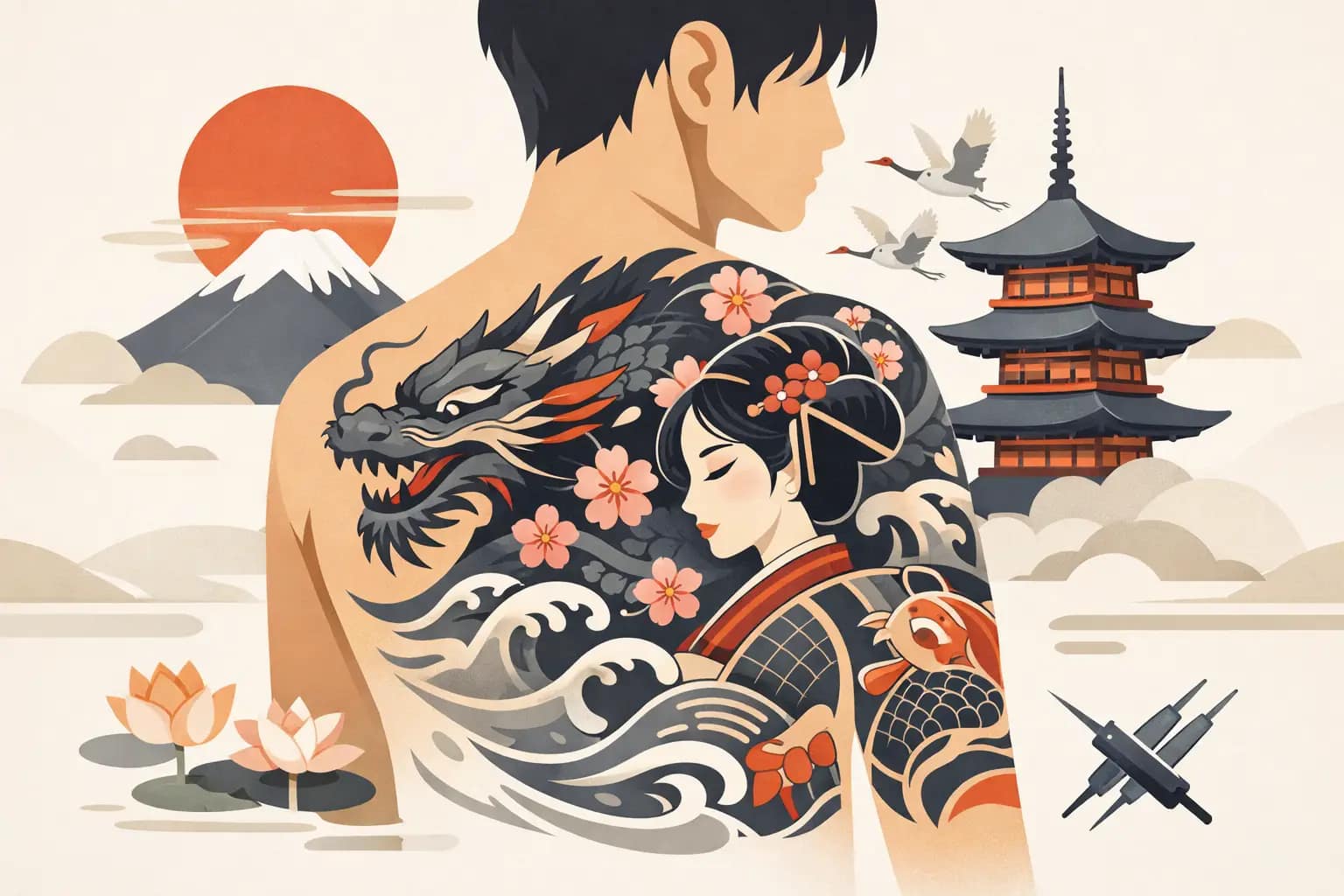

A strong Japanese tattoo is not just a cool subject with bold lines. It is a composition. If you are figuring out how to design Japanese tattoo work that feels powerful, personal, and built to last, the real question is not only what you want tattooed. It is how every element moves together across the body.
That is where many people get stuck. They know they love dragons, koi, tigers, snakes, peonies, cherry blossoms, or waves. But Japanese tattooing is not about picking one image off a menu and dropping it on skin. The strength of the piece comes from flow, balance, negative space, background, and symbolism that works as one complete design.
How to design Japanese tattoo pieces with intention
The first step is deciding what the tattoo needs to say. Not in a vague way, and not in a Pinterest-caption way. Think about the story, mood, or energy you want the piece to carry. Strength and protection feel different from perseverance. Discipline feels different from transformation. Two people may both want a dragon, but one may want dominance and authority while the other wants wisdom and guardianship.
That distinction matters because Japanese-inspired design works best when the concept has a clear center. Once the meaning is clear, the imagery has direction. Without that, the design can end up looking busy instead of intentional.
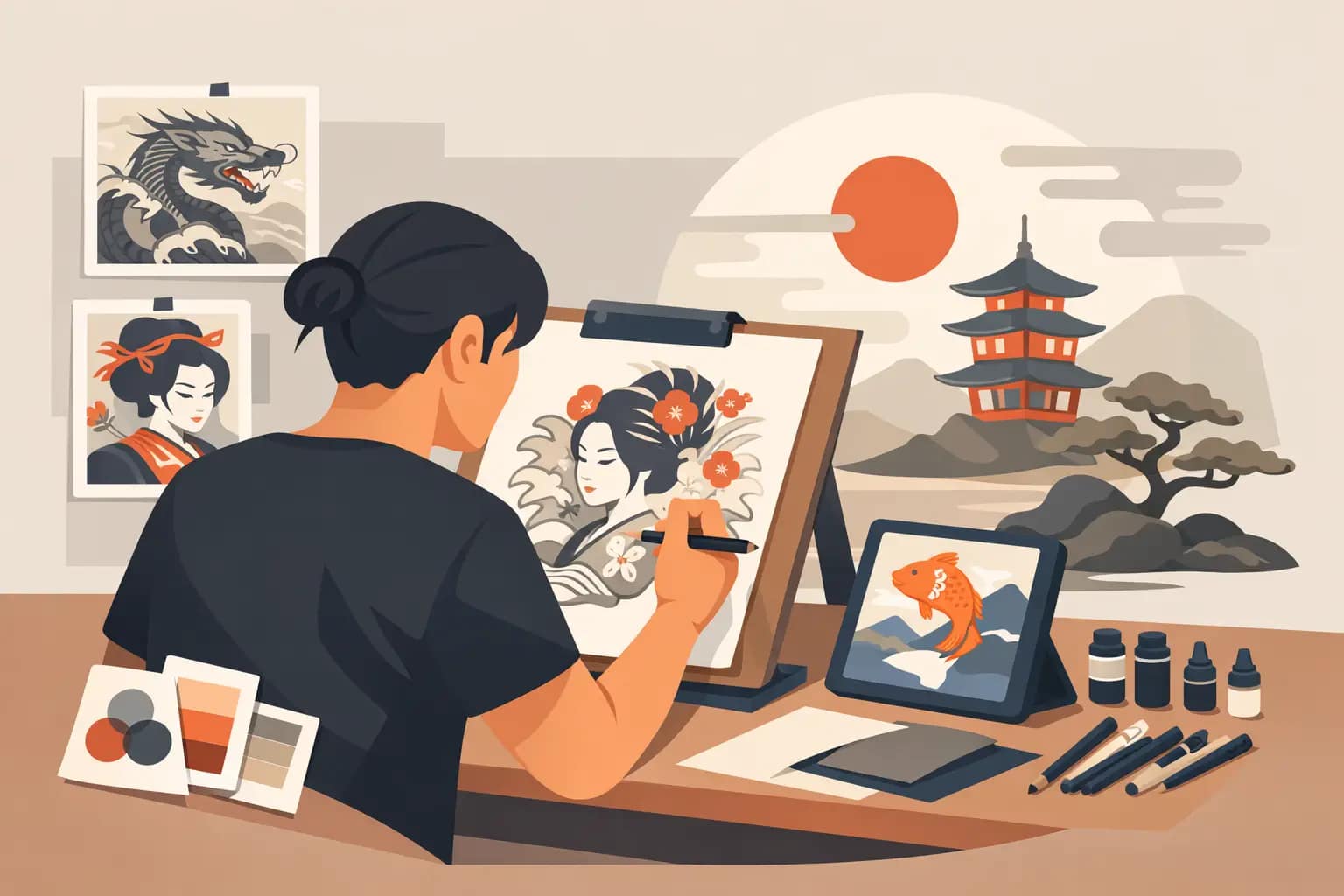
This is also where a good artist-led process makes a difference. Custom Japanese work should not feel generic. The subject matter may be traditional, but the way it is arranged, framed, and personalized is what makes it yours.
Start with the main subject
Every successful Japanese tattoo has a lead element. That could be a dragon, koi, hannya mask, samurai, phoenix, tiger, oni, geisha, or another motif rooted in the broader visual language of Japanese tattooing. The main subject sets the emotional tone and gives the rest of the design something to support.
Pick one primary subject first. This keeps the composition focused. If you begin by trying to include five symbolic ideas at once, the piece often loses impact.
There is also a trade-off here. A highly symbolic piece with multiple subjects can be rich and layered, but only if the body placement is large enough to support it. On a sleeve, back, or thigh panel, there is room for complexity. On a forearm or calf, the design usually benefits from a cleaner hierarchy.
Choose supporting elements, not random filler
In Japanese tattooing, the background is never just decoration. Wind bars, water, smoke, rocks, clouds, maple leaves, chrysanthemums, peonies, and cherry blossoms all help create movement and seasonality. They frame the main subject and guide the eye.
This is one of the biggest misconceptions clients have. They sometimes think background means filler. It does not. The background is part of the structure. It gives the tattoo rhythm and makes the composition feel complete.
A koi with water and maple leaves creates a different emotional atmosphere than a koi with peonies and soft wind bars. A tiger with bamboo has a different presence than a tiger surrounded by storm elements. These choices affect how the tattoo reads from across the room and how it feels up close.
Body flow matters more than most people expect
A Japanese tattoo should look like it belongs to the body, not like it was pasted onto it. That means placement is not a final decision made after the design is finished. Placement is part of the design from the beginning.
When thinking about how to design Japanese tattoo sleeves, back pieces, or leg work, flow is everything. A dragon can wrap. A snake can curve. Water can push directionally. Floral elements can soften transitions. The shape of the shoulder, chest, ribcage, thigh, and calf all change how a design should be drawn.
This is why the same concept should not be copied from one body to another. A design that works beautifully on one person’s arm may feel cramped or awkward on someone else. Good custom work takes anatomy seriously.
Design for the full area, even if you tattoo in stages
A lot of clients start with one session in mind. That is normal. But if the long-term goal is a full sleeve or larger panel, it helps to design with the final shape in mind from day one.
For example, a single koi on the outer forearm may look fine as a stand-alone tattoo. But if you later decide to turn it into a sleeve, that first placement may create avoidable problems with spacing, direction, or overall balance. Planning ahead protects the integrity of the larger composition.
It does not mean you need to commit to a full body suit. It simply means the design should respect future possibilities.
Symbolism matters, but clarity matters more
Japanese tattooing carries deep symbolic traditions, and that deserves respect. But symbolism should support the tattoo, not overwhelm it.
Clients sometimes over-research meaning to the point where the design becomes forced. They want every flower, animal, and background detail to represent a separate life lesson. The result can feel crowded, both visually and conceptually.
A better approach is to choose one clear central theme and let the symbolism reinforce it. If your tattoo is about resilience, maybe a koi is enough. If it is about power through adversity, perhaps a dragon with storm elements says it better. If it is about beauty and impermanence, floral elements may carry more weight than an overloaded character scene.
There is room for nuance here. Traditional meanings are valuable, but personal interpretation also matters. The goal is not to create a museum label. The goal is to build a piece that feels honest and visually strong.
Color, black and gray, and long-term readability
One of the smartest design decisions you can make is thinking beyond the first week and into the next ten years. A Japanese tattoo should age with strength. That comes from contrast, clear shapes, and enough breathing room in the composition.
Color can be incredibly powerful in Japanese work. Reds, golds, greens, and muted blues can give a piece life and hierarchy. But more color does not automatically mean better design. Sometimes black and gray creates a more timeless mood, especially if you want a heavier, more dramatic result.
It depends on the subject and the placement. A colorful sleeve can feel energetic and classic. A black and gray dragon with controlled negative space can feel severe and elegant. Both can work if the composition is built properly.
The mistake is chasing detail that will not read well over time. Tiny textures, overpacked secondary elements, and too many competing focal points can flatten out as the tattoo ages. Strong design is confident enough to let important shapes stay visible.
Reference images help, but they are not the design
Bring references. They are useful. They show mood, posture, color direction, level of aggression, and the kind of flow you respond to. But references should guide the conversation, not replace the creative process.
The best custom Japanese tattoos are not assembled by copying pieces from different images and stitching them together. They are drawn as complete compositions for a specific body and a specific client.
That distinction matters if you care about originality. It also matters if you want the tattoo to feel coherent. A sleeve is not a collage. It is a unified design.
For clients looking for custom Japanese work, this is where trust becomes important. The consultation is not just about approving a subject. It is about shaping a piece with an artist who understands how Japanese-inspired composition actually works in skin.
How to design Japanese tattoo art that feels timeless
Timeless does not mean old-fashioned. It means the tattoo still has authority years from now because it was designed with discipline.
That usually comes down to a few core choices. Pick a strong main subject. Build around body flow. Use supporting elements with purpose. Respect symbolism without overcomplicating it. Leave enough space for contrast and readability. Think bigger than a single isolated image if the work may expand later.
At a studio like Dani Olmos Tattoo, that process is less about selling you a pre-made idea and more about translating your vision into a piece with real structure. That is what separates decorative tattooing from lasting custom work.
If you are serious about Japanese tattoo design, take your time on the concept. The right piece should feel bold on day one, but it should also make even more sense once it becomes part of you.