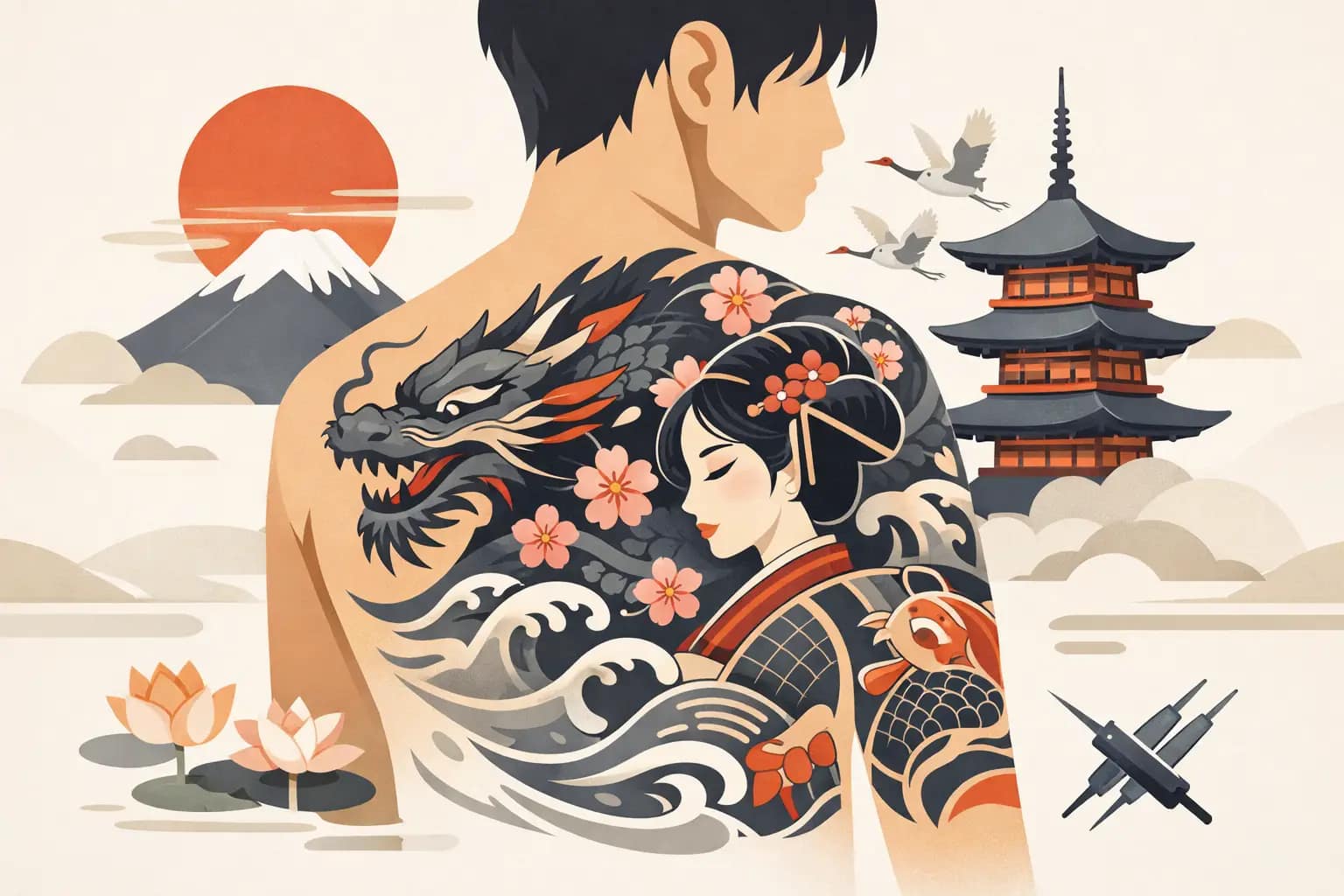

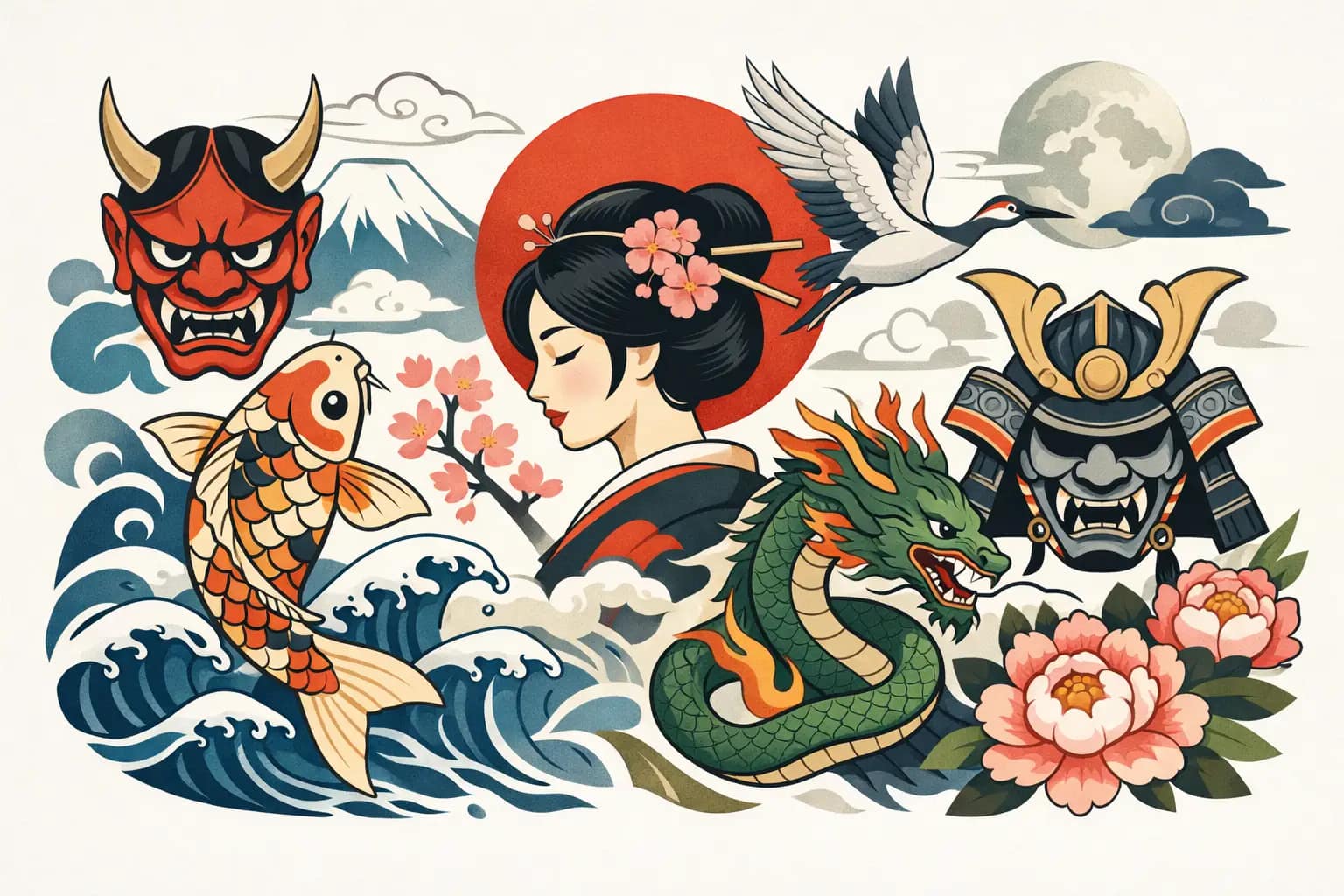
A great Japanese tattoo is not just a beautiful image placed on skin. It has rhythm, symbolism, and movement. When clients ask about the best japanese tattoo motifs, they are usually asking two things at once: what looks powerful, and what will still feel meaningful years from now.
That is where good design matters. In Japanese-inspired tattooing, the motif is only part of the story. Scale, body placement, background, flow, and personal symbolism all shape whether a piece feels timeless or forced. Some motifs carry bold, unmistakable energy. Others are quieter and more reflective. The best choice depends on the story you want the tattoo to tell and how you want it to live on the body.
What makes the best Japanese tattoo motifs work
The strongest Japanese motifs do more than fill space. They hold visual weight and emotional meaning at the same time. A dragon can suggest strength and wisdom, but it also creates natural motion across the back, arm, or leg. A koi can represent perseverance, but it also lends itself to dynamic composition through water, wind bars, and background texture.
This is why motif choice should never be treated like picking a decal off a wall. Some designs look incredible in a sleeve but lose impact in a small standalone piece. Others need room to breathe. The best tattoos come from matching the motif to the person and to the body, not just to a trend.
Best Japanese tattoo motifs and what they express
Dragon
The dragon is one of the most iconic choices in Japanese tattooing for good reason. It carries authority without feeling static. In Japanese tradition, dragons are often associated with wisdom, protection, and balance rather than pure destruction.
From a design standpoint, dragons are incredibly versatile. They can wrap naturally around the arm, move across the chest, or dominate a back piece with dramatic flow. If you want a tattoo with presence, complexity, and long-term visual strength, the dragon is hard to beat.
Koi fish
Koi remain one of the best Japanese tattoo motifs because the symbolism is clear and the imagery is flexible. They are often tied to perseverance, ambition, and personal transformation. For many people, that meaning feels earned rather than decorative.
Koi also work well in different scales. A single koi can be powerful in a half sleeve, while multiple koi can create movement in larger compositions. Color choices matter here. Black and gray koi can feel more restrained and grounded, while bold color can push the piece toward a more vibrant, heroic tone.
Tiger
A tiger brings immediate intensity. In Japanese-inspired work, it often represents courage, protection, and command over adversity. Visually, it offers something different from the fluid, serpentine motion of a dragon. A tiger feels grounded, muscular, and direct.
This makes it especially strong for clients who want a design with aggressive clarity. It works beautifully on the thigh, upper arm, shoulder, or chest. The trade-off is that a tiger usually needs strong composition and enough space to avoid looking cramped.
Phoenix
The phoenix is often chosen for rebirth, resilience, and renewal. That meaning speaks to many clients, especially those marking a major transition or rebuilding period in life. It can be dramatic without feeling heavy-handed if the design is handled well.
A phoenix also gives an artist a lot to work with. The feathers, fire, and sweeping body lines create elegant motion across larger areas. It tends to shine in full sleeves, back pieces, and side-body work where the wings and tail can really expand.
Hannya mask
The Hannya mask is one of the most emotionally charged motifs in Japanese tattooing. Traditionally, it reflects jealousy, rage, sorrow, and transformation. That complexity is part of what makes it compelling. It is not a simple good-versus-evil image.
For clients who want a tattoo that carries psychological depth, the Hannya has real power. It also pairs well with flowers, snakes, daggers, or background elements that soften or intensify the mood. This motif works best when the wearer connects with its layered meaning rather than choosing it just because it looks fierce.
Oni
Oni designs carry force, conflict, and spiritual tension. Depending on the composition, they can represent punishment, protection, chaos, or confrontation with darker aspects of the self. They have a heavier visual presence than many other motifs and often create a strong focal point.
Because Oni imagery is bold and highly expressive, it tends to work best in medium-to-large pieces. It is a strong option for clients who want dramatic storytelling, especially when paired with secondary motifs that add context.
Snake
The snake is one of the most underrated choices in Japanese-inspired tattooing. It can symbolize protection, wisdom, healing, or transformation. It also has one major design advantage: movement.
A snake can wrap, coil, and redirect the eye in ways that make almost any placement more interesting. It fits the forearm, sleeve, ribs, thigh, or leg exceptionally well. It also pairs naturally with flowers, skulls, masks, and waves. If you want something elegant but still powerful, the snake deserves serious consideration.
Peony
Peonies are often called the king of flowers in Japanese tattooing, and they bring richness without weakness. They can symbolize prosperity, beauty, bravery, and the fleeting nature of life. In larger compositions, peonies often balance more aggressive motifs like dragons, tigers, or masks.
This is where experienced design really matters. A peony should not be treated as filler. It can anchor an entire piece, soften transitions, and create visual contrast that makes the whole tattoo stronger.
Cherry blossoms
Cherry blossoms carry a quieter kind of power. They are tied to impermanence, beauty, and the brief nature of life. For some clients, that symbolism feels deeply personal. For others, the appeal is visual – soft petals against stronger imagery create contrast that keeps a tattoo from feeling one-note.
They are especially effective as supporting elements, though they can also be central in a more restrained design. The key is not overusing them. Too many blossoms without structure can make a piece lose definition over time.
Wave and water motifs
Waves are sometimes treated as background, but in Japanese tattooing they are a motif in their own right. Water suggests movement, endurance, change, and force. It gives life to koi, dragons, snakes, and other major subjects.
Strong wave work can make or break a Japanese sleeve or bodysuit composition. It creates flow between major images and helps the tattoo feel connected to the body rather than pasted onto it. If your main motif needs energy, water is often the answer.
Crane
The crane represents longevity, grace, and good fortune. It has a refined quality that appeals to clients who want something elegant but still rooted in tradition. Compared to tigers or Oni, a crane feels more restrained, but not less meaningful.
It works especially well in compositions that emphasize space, balance, and lighter movement. A crane can be beautiful as a focal point or as part of a broader nature-based piece.
Samurai
Samurai imagery speaks to discipline, honor, duty, and resolve. It tends to attract clients who want a more narrative design with human presence rather than purely symbolic animals or floral themes.
Done well, a samurai tattoo can be striking and deeply personal. Done poorly, it can become stiff or overly illustrative. This is one of those motifs where artistic interpretation matters a lot. The goal is not just accuracy, but impact and flow on the body.
How to choose the right motif for your tattoo
The best Japanese tattoo motifs are not automatically the most popular ones. A dragon may be perfect for one client and completely wrong for another. The better question is what kind of energy, symbolism, and composition fits you.
Start with meaning, but do not stop there. Think about placement, scale, and whether you want a single strong subject or a larger evolving piece. A motif that feels right emotionally still needs to work physically. Japanese-inspired tattooing shines when the design follows the contours of the body and leaves room for the tattoo to age with clarity.
This is also where collaboration matters. A custom tattoo should not feel like a preselected emblem dropped into place. It should feel built around your story, your anatomy, and the visual language of the style. That is often the difference between a tattoo you like and one you are proud to wear for life.
Why motif choice matters more in large-scale Japanese work
In sleeves, back pieces, and larger custom projects, motif choice affects everything that follows. It shapes the background, dictates the movement, and influences how future work can connect. Choosing a motif because it is trendy can create problems later if you want to expand the piece.
For clients investing in serious custom work, this matters. An experienced artist will look at the motif as part of a full composition, not as an isolated image. At Dani Olmos Tattoo, that custom-first approach is what turns a strong concept into a piece with lasting power.
The right motif should feel good on day one, but it should also keep revealing something to you years later. That is usually the sign you chose well.