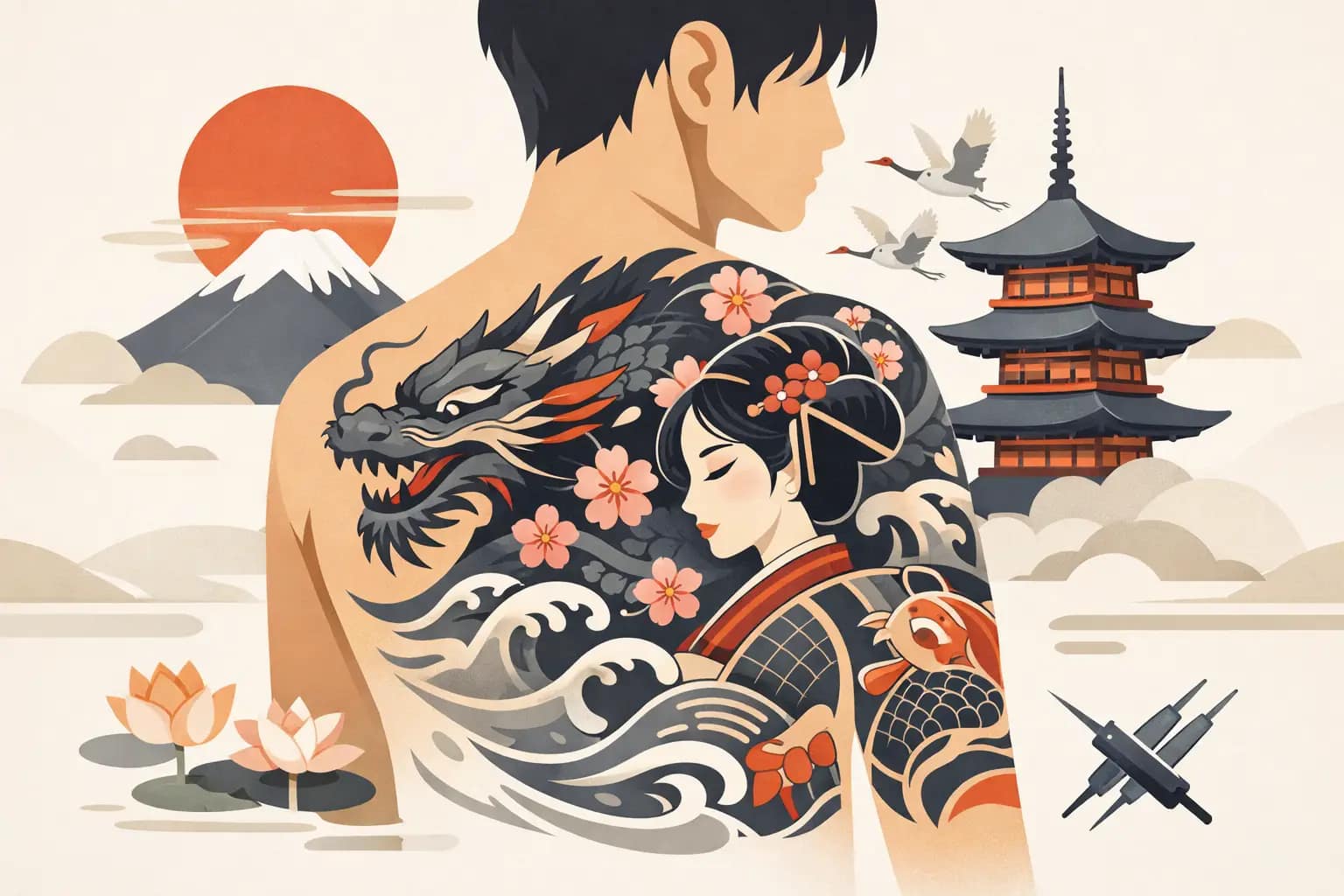

A strong Japanese tattoo rarely starts with a single image. It usually starts with a bigger question: what story should live on the body, and how should it move with it? That is the heart of how japanese tattoo planning works. The process is less about picking a cool motif off a wall and more about building a composition that feels intentional from every angle.
For clients who are drawn to Irezumi-inspired work, this is often the first real shift in mindset. You are not just choosing a dragon, koi, tiger, or peony. You are shaping a visual narrative with rules, traditions, and design logic behind it. That planning stage matters because Japanese tattooing depends on harmony – between subject and background, symbolism and anatomy, bold impact and long-term readability.
How japanese tattoo planning works in practice
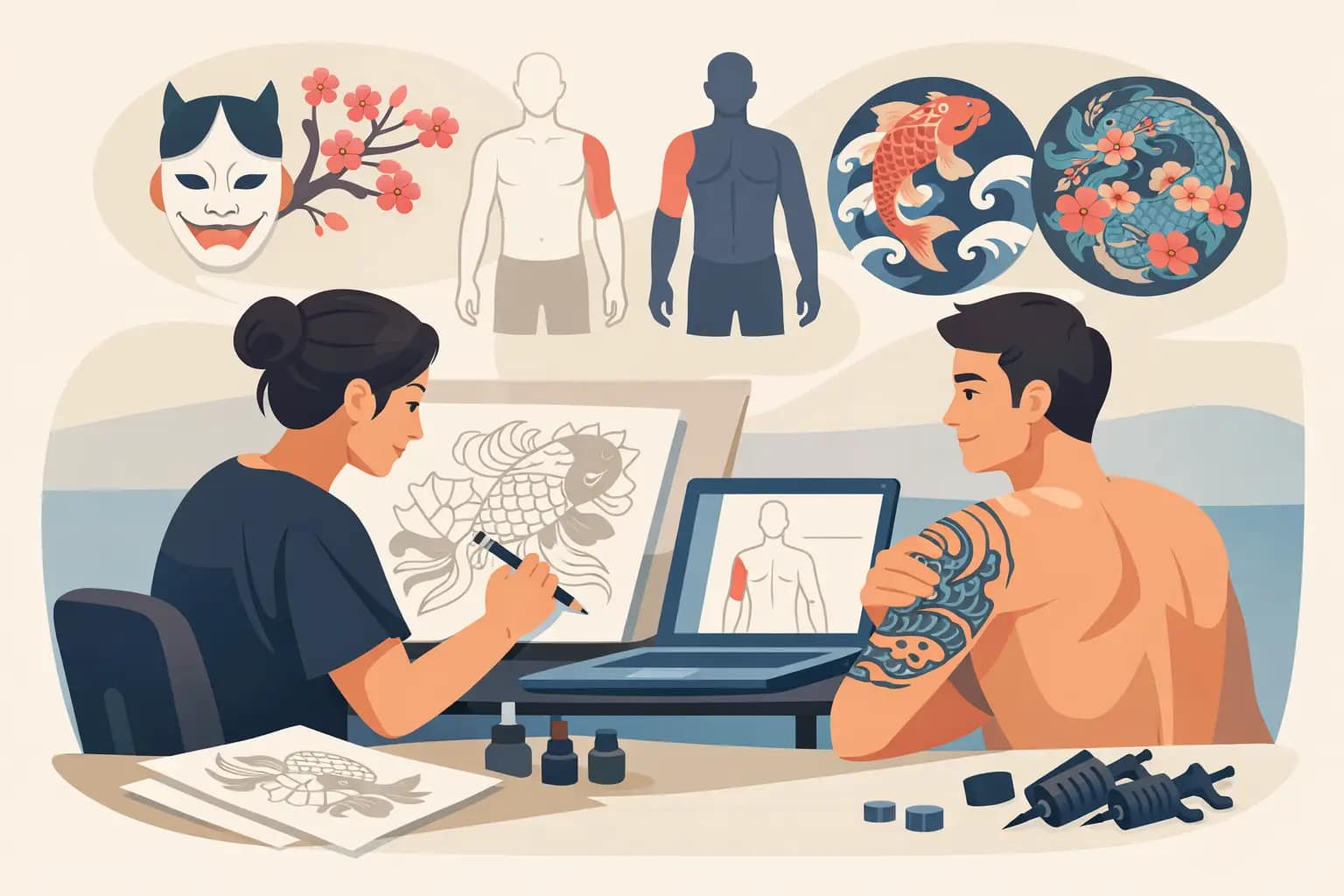
The first step is usually not drawing. It is conversation. A skilled artist needs to understand what you are drawn to visually, what the tattoo needs to express, where it will sit, and whether this is a standalone piece or part of a larger body plan.
That distinction changes everything. A back piece can carry an entirely different level of drama and storytelling than a forearm tattoo. A sleeve needs movement and transitions. A chest panel has to respect the lines of the torso. If a client eventually wants multiple large-scale pieces, planning ahead helps avoid the disconnected, patchwork feeling that can happen when every tattoo is treated like its own island.
This is one reason Japanese work benefits so much from a custom process. The design is not only about the central subject. It is about how wind bars, waves, clouds, flowers, smoke, or background texture support that subject and create flow across the body. A well-planned tattoo feels like it belongs exactly where it is.
Theme comes before details
One of the most common mistakes people make is focusing too early on small design details. They ask about exact flower types, whether the eyes should be red, or how many scales a dragon should show before the main concept is settled. Those choices matter, but they matter later.
The stronger place to begin is theme. Is the piece meant to feel protective, fierce, patient, resilient, chaotic, grounded, spiritual, or celebratory? Japanese imagery is rich with symbolism, but symbolism is not one-size-fits-all. A koi can suggest perseverance and transformation. A tiger can carry strength and protection. A dragon may read as wisdom, balance, power, or guardianship depending on the larger composition.
There is no single correct meaning for every image, and a good artist will not force a rigid interpretation where it does not fit. Instead, the planning process usually narrows the emotional direction first, then chooses imagery that supports it honestly.
Placement changes the design
Placement is not a technical footnote. It is one of the biggest creative decisions in the entire process.
Japanese tattoo planning works best when the body is treated as part of the composition. Muscles, joints, curves, and movement all affect how a design reads. A snake wrapping a forearm behaves differently than one built for the thigh. A mask on the shoulder needs to account for the cap of the deltoid. A large phoenix across the back needs enough open space to breathe, or it loses presence.
This is where experience shows. An artist who specializes in Japanese and Neo-Traditional work will think beyond a flat sketch. They will think about how the tattoo opens when you stand naturally, how it compresses when you bend, and how major shapes hold up from a distance.
Sometimes the best idea for a body part is not the first idea a client brings in. That is not a rejection of the concept. It is a refinement. Certain subjects simply belong better in certain placements if the goal is a powerful, balanced result.
Large-scale work requires patience
A sleeve, torso panel, or back piece is not planned like a small single-session tattoo. It needs pacing. Sessions may be spaced out over months. The order of linework, shading, color, and background has to make sense. The client also has to be realistic about endurance, healing, scheduling, and budget.
That does not mean large Japanese work is only for heavily tattooed collectors. It means commitment should match the scale of the idea. A serious piece deserves enough time to be designed and executed well.
Main subject and background have to support each other
In strong Japanese tattooing, background is not filler. It is structure.
Wind, water, smoke, rocks, maple leaves, cherry blossoms, chrysanthemums, and peonies are often used to create rhythm and contrast, but they also help establish season, mood, and visual balance. A dragon with no environmental support can feel unfinished. A koi without well-built water can lose energy. Flowers without enough negative space can crowd the composition.
This is one of the biggest differences between custom Japanese planning and simple image selection. You are not ordering separate visual ingredients and hoping they work together. The artist is building a unified piece where each element earns its place.
Trade-offs come into play here. Clients sometimes want multiple major subjects in one area – a dragon, a hannya mask, a tiger, waves, flowers, and a temple gate all in one sleeve. On paper that sounds dramatic. On skin it can become noisy fast. Strong planning often means editing. Leaving room is part of making the tattoo look more powerful, not less.
Tradition matters, but so does interpretation
Japanese-inspired tattooing has a deep visual language, and respecting that matters. Pairings, seasonal references, body flow, and compositional hierarchy are not random. They developed for reasons tied to storytelling and visual harmony.
At the same time, not every client is seeking a museum-style historical recreation. Many want work that is rooted in Japanese aesthetics while still reflecting their own life, taste, and body. That is where artist-led interpretation becomes valuable.
A thoughtful artist can preserve the discipline that makes the style strong while adapting the piece for a modern client. Maybe the symbolism is personal rather than literal. Maybe the line quality leans more contemporary. Maybe the color palette is adjusted for skin tone and long-term wear. That balance is part of the craft.
Reference helps, but it should not dictate
Clients often bring references, and that can be useful. It shows tone, level of detail, color direction, or subject matter they respond to. But a reference should act as a conversation starter, not a final blueprint.
Copying another tattoo usually leads to a weaker result, especially in Japanese work where placement and flow are so specific. The better route is to identify what you actually like about the reference – the aggression, calmness, movement, density, palette, or composition – and then build something original from there.
That is how your vision becomes art instead of imitation.
Planning for longevity is part of the design
The best Japanese tattoos do not just look impressive fresh. They stay readable over time.
That requires discipline during planning. Contrast has to be strong enough. Major forms need room. Fine details should support the design, not bury it. Color choices should make sense for the size of the piece and the client’s skin. Black and gray areas need enough shape and separation to age with clarity.
This is where craftsmanship matters more than trend. A tattoo that is overloaded with tiny visual information may grab attention on day one, but that does not always translate into a strong tattoo five or ten years later. Bold composition usually wins the long game.
For many clients, this is the real value of working with a specialist. You are not just getting a design that looks good in a photo. You are getting a design built to live on the body well.
What a good consultation should do
A strong consultation should leave you with more clarity, not more confusion. You should feel heard, but you should also feel guided.
That means the artist asks smart questions, explains why certain placements or pairings work better than others, and is honest about what should be simplified, resized, or saved for a later project. Good planning is collaborative, but it is not passive. If an artist never challenges a weak idea, that is not always a sign of flexibility. Sometimes it is a sign they are not thinking far enough ahead.
Studios that focus on custom work, including artists like Dani Olmos, tend to approach this stage with a clear point of view. That is a good thing. Expertise should shape the design. The client brings the vision, the story, and the trust. The artist brings the compositional judgment that turns those ideas into a piece with power and staying quality.
The right plan should feel exciting, but it should also feel settled. When the concept, placement, and flow are working together, you can usually tell. It stops feeling like a list of things you want and starts feeling like a tattoo that already belongs to you.
If you are considering Japanese work, give the planning stage the respect it deserves. The final tattoo will only be as strong as the decisions made before the machine ever turns on.