
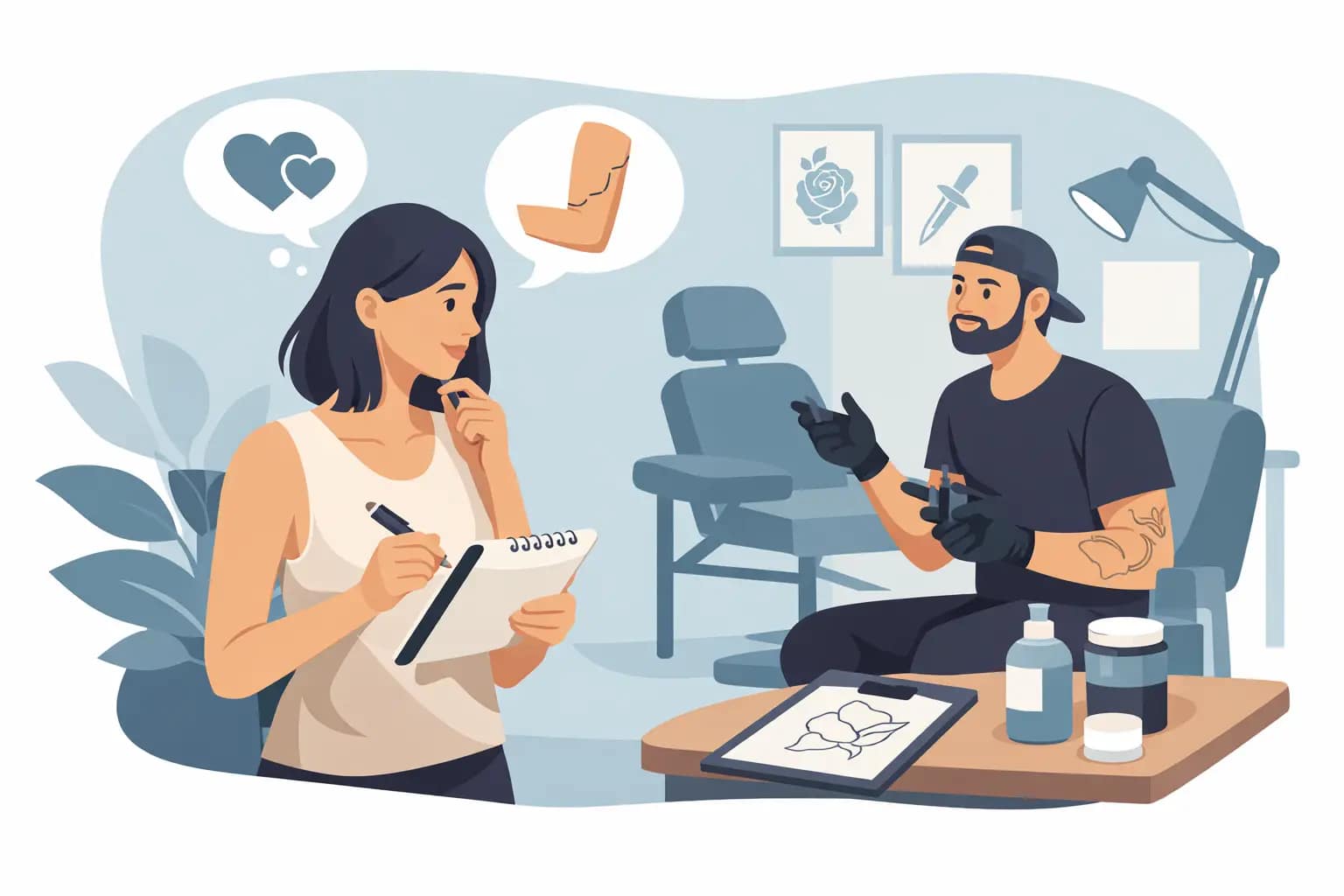
A great tattoo consultation usually starts before you ever sit down with the artist. The clients who get the strongest custom work tend to arrive with clarity, not a finished drawing. If you are wondering how to prepare tattoo consultation conversations the right way, the goal is simple – bring enough direction to guide the design, while leaving room for the artist to do their best work.
That balance matters even more with custom Japanese, Irezumi-inspired, and Neo-Traditional tattooing. These styles are built on flow, structure, symbolism, and longevity. A consultation is not just a quick planning session. It is where your idea starts becoming a piece that belongs on your body, not just on a screen.
What a tattoo consultation is really for
A consultation is where concept, placement, scale, and artistic direction come together. It gives the artist a chance to understand what matters to you, assess whether the idea fits the body well, and decide how to build a design that will age with strength and readability.
This is also where expectations get aligned. Some clients come in thinking they need every detail solved ahead of time. Others show up with only a vague theme and hope the artist will figure out the rest. The best consultations usually land somewhere in the middle. You do not need to design the tattoo yourself, but you do need to communicate what the piece should say, feel, and accomplish.
How to prepare tattoo consultation notes before you go
Start with the meaning, not the image. That sounds backward to some people, especially if they have been saving reference photos for months. But reference is only helpful when it supports a clear idea.
Ask yourself what the tattoo is meant to represent. Is it tied to a life event, a personal value, a family story, a spiritual symbol, or simply a visual style you have loved for years? There is no wrong reason to get tattooed, but your reason affects the design process. A memorial piece needs different handling than a collector-focused sleeve. A dragon meant to symbolize protection may be designed differently than one chosen primarily for movement and impact.
Write down a few sentences that explain the core idea in plain language. Keep it simple. If you can describe what the tattoo means, what mood you want, and what parts are non-negotiable, your artist has something real to build from.
Bring references, but bring the right kind
Reference photos help most when they show direction rather than demand duplication. An artist does not need ten nearly identical tattoos pulled from social media. What helps more is a small set of images that reveal what you are responding to.
You might bring one image for composition, another for color palette, and another for the kind of line weight or energy you like. If you are drawn to Japanese work, it also helps to know whether you prefer bold traditional structure, softer painterly movement, or a Neo-Traditional approach with heavier stylization.
Just as important, note what you do not like. Maybe you love koi but do not want the design to feel too ornamental. Maybe you want a tiger but not an aggressive facial expression. Those details save time and prevent misalignment.
If you have existing tattoos nearby, bring clear photos of those too. A custom piece should work with the body and with the work already there.
Think carefully about placement and scale
Placement is not a minor decision. It changes the entire design. A concept that looks strong on the thigh may fall apart on the forearm. A back piece allows for storytelling and movement in a way a smaller isolated tattoo cannot. Size affects detail, readability, healing, and long-term aging.
Before your consultation, think about where you want the tattoo and why. Consider visibility, professional comfort, pain tolerance, and whether this piece may eventually connect into a larger project. If you know you may want a sleeve later, say that now. Planning ahead can make a huge difference in overall flow.
It also helps to be honest about size. One of the most common issues in consultations is wanting too much information in too little space. An experienced artist may recommend going larger, simplifying the concept, or changing placement altogether. That is not resistance. That is craftsmanship.
Wear the right clothing and take useful photos
If the consultation is in person, wear clothing that makes the placement area easy to access while still keeping you comfortable. That allows the artist to evaluate the body properly. Tattoos are not designed in a vacuum. Muscle shape, joints, curves, and natural movement all matter.
If the consultation is online or begins through a booking form, send clear, well-lit photos of the area from a few angles. Stand naturally. Avoid filters, heavy shadows, or awkward mirror distortions. The better the photo, the more accurate the planning.
Know your budget, but think beyond the first session
Custom tattooing is an investment, especially when the work is large, detailed, or stylistically specialized. Go into the consultation understanding what you can realistically spend, but also understand that quality work is priced around time, design complexity, placement challenges, and experience.
If your idea is ambitious, ask what the project might look like in phases. A sleeve, chest panel, or full back piece may take multiple sessions over time. That does not make it out of reach, but it does mean you should approach it with a long-view mindset.
Being upfront about budget is useful. Trying to force a complex idea into a price that does not support the work usually leads to compromises that weaken the tattoo. Sometimes the answer is adjusting scale, simplifying the concept, or planning the piece in stages rather than rushing into a version that falls short.
Come ready for collaboration, not control
The strongest custom tattoos come from trust. That does not mean staying silent if something feels off. It means understanding the difference between having a vision and trying to micromanage every inch of the design.
An artist who specializes in custom work is thinking about rhythm, contrast, anatomy, negative space, and how the tattoo will read years from now. Those concerns are not always obvious in a screenshot or rough sketch. If the artist suggests changing an element, enlarging the design, or editing the composition, there is usually a reason behind it.
This is especially true in Japanese and Neo-Traditional work, where balance and flow are everything. Background elements, directional movement, and relationship between subject matter all affect whether the piece feels powerful or crowded. Good consultation prep means bringing your story and preferences, then allowing room for artistic judgment.
Questions worth asking during the consultation
A consultation should leave you feeling more confident, not more confused. Ask how the artist sees the concept working best on your body. Ask whether the idea fits the chosen placement and size. Ask if the design should be a standalone piece or part of a longer-term plan.
It is also smart to ask about session structure, healing expectations, and whether any elements of your concept may need to be simplified for longevity. Fine details, tiny text, and overloaded symbolism can all become issues over time if they are not handled carefully.
If you are meeting with a specialist, ask about style-specific considerations too. For example, a Japanese-inspired piece may benefit from a broader composition than you first imagined. A Neo-Traditional design may need stronger hierarchy between the main subject and supporting elements. These are the kinds of insights that separate a basic tattoo appointment from a real design process.
What not to do before the appointment
Do not come in apologizing for not being an expert. That is not your job. Your job is to communicate clearly and stay open.
At the same time, do not arrive with a copied design and expect exact replication. That approach works against custom tattooing. Also avoid sending scattered ideas without context, changing the concept every day, or holding back important details because you are afraid of sounding picky. Clear direction is helpful. Constant contradiction is not.
And if the tattoo has personal or cultural meaning, say so. Context matters. A thoughtful artist will want to understand what should be treated with extra care.
The goal is clarity, not perfection
If you are serious about getting a custom piece, preparing well for the consultation shows respect for the process and gives the design a stronger starting point. You do not need a perfect brief, a finished sketch, or tattoo vocabulary. You need honesty about what you want, flexibility about how it gets translated, and enough preparation to have a real conversation.
That is where strong tattooing begins – not with a random idea on your phone, but with a clear exchange between your vision and the artist’s eye. When that part is handled well, the final piece has a much better chance of feeling personal, intentional, and built to last.