
A sleeve can look impressive on day one and still feel wrong six months later. Usually, that comes down to one thing: the artist knew how to tattoo, but not how to build a piece with the rhythm, symbolism, and staying power people expect from large-scale Japanese work. If you are looking for an irezumi inspired tattoo artist, that distinction matters more than almost anything else.
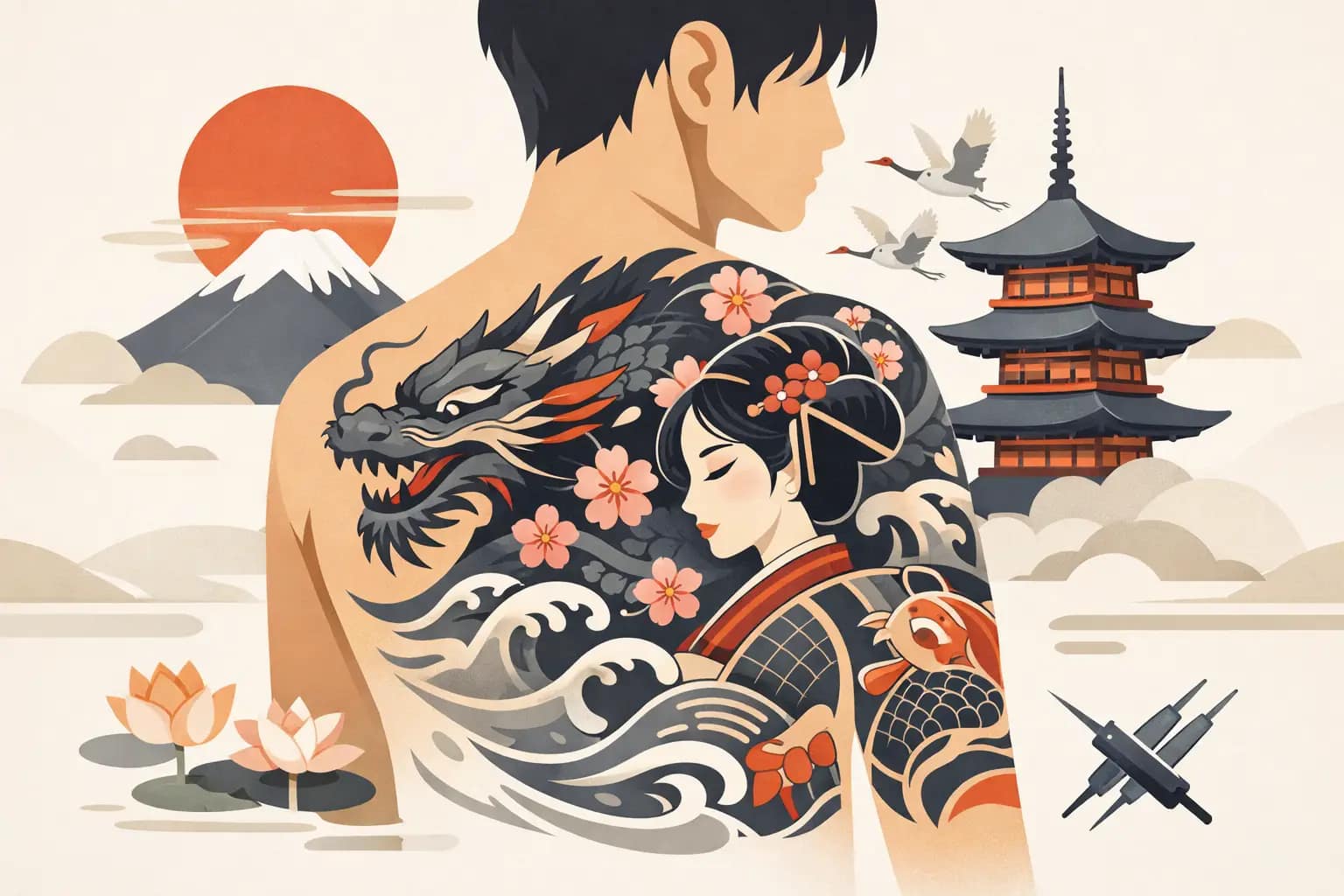
There is a big difference between liking Japanese imagery and understanding how to translate it into a cohesive tattoo. Dragons, koi, peonies, waves, wind bars, and masks are recognizable motifs, but recognition is not the same as fluency. A strong artist in this space is not simply arranging cool elements. They are thinking about body flow, visual hierarchy, balance, negative space, and how the tattoo will read years from now.
What an irezumi inspired tattoo artist actually does
The phrase itself matters. An irezumi inspired tattoo artist is not claiming to replicate traditional Japanese tattooing in a pure historical sense. That would be an oversimplification, and in many cases, not an honest one. Most contemporary artists working in the United States are creating work influenced by Japanese tattoo principles while also bringing in modern technique, individual storytelling, and sometimes Neo-Traditional design decisions.
That inspired-by approach can be a strength when it is handled with respect. It gives the artist room to create something personal instead of copying a familiar layout or relying on stock imagery. It also allows a client to build a piece around their own story while still honoring the visual discipline that makes Japanese-inspired tattooing so powerful.
Done well, the result feels intentional from every angle. The design wraps correctly. The background supports the subject instead of cluttering it. The imagery carries meaning, but it also works as a tattoo first.
Why specialization matters more than general tattoo skill
A good general tattooer may be able to execute clean lines, solid color, and smooth shading. That does not automatically mean they are the right choice for Japanese-inspired work. Large compositions ask for a different kind of thinking.
An experienced irezumi inspired tattoo artist understands that the body is part of the design. A backpiece should not feel like a poster placed on skin. A sleeve should move naturally through the shoulder, elbow, and forearm. Even a single panel tattoo benefits from this mindset. Flow is not decoration. It is structure.
Specialization also affects restraint. In Japanese-inspired tattooing, what gets left out is often just as important as what gets added. Too many focal elements can flatten the piece. Too much texture can muddy the read from a distance. Too little background can make the design feel unfinished. These are not beginner decisions, and they are not minor ones.
If you are investing in a custom piece, especially one meant to grow into a sleeve, chest panel, or bodysuit-style composition, you want an artist who sees the full architecture from the beginning.
How to read a portfolio beyond surface-level style
The easiest mistake a client can make is choosing based on isolated images. A single healed dragon head or a bold koi can catch your eye, but that does not tell you how the artist handles larger storytelling or long-term composition.
Look for consistency first. Does the portfolio show a clear point of view, or does it jump between unrelated styles? When an artist specializes, their work tends to feel unified even when each piece is custom. You should be able to recognize their design discipline before you recognize any single tattoo.
Then look at placement. Are sleeves built with movement, or do they look segmented? Do backgrounds create energy, or do they just fill space? Are major forms readable from a few feet away? Strong Japanese-inspired work has presence at a distance and detail up close.
It is also worth paying attention to healed work if it is available. Fresh tattoos can hide a lot behind redness, ointment, and contrast. Healed tattoos tell the truth. You start to see whether the color choices, line weight, and shading decisions were made for longevity or just immediate impact.
The role of symbolism, and where clients get stuck
Many people come in with one image they love – a tiger, snake, phoenix, oni, chrysanthemum. That is a great starting point, but it is only a starting point. The strongest custom tattoos are not built by forcing every meaningful symbol into one design.
A skilled artist helps refine the idea. Sometimes that means reducing the number of elements so the main subject has room to breathe. Sometimes it means choosing supporting imagery that deepens the story without making the piece too literal. A tattoo does not need to explain everything at once.
This is one area where collaboration really matters. You want an artist who listens carefully, but you also want someone with enough confidence to guide the design. If every client request is accepted without pushback, the final piece can become crowded or visually confused. Good custom work usually involves a little editing, a little trust, and a shared focus on what will make the tattoo stronger.
Choosing an irezumi inspired tattoo artist for custom work
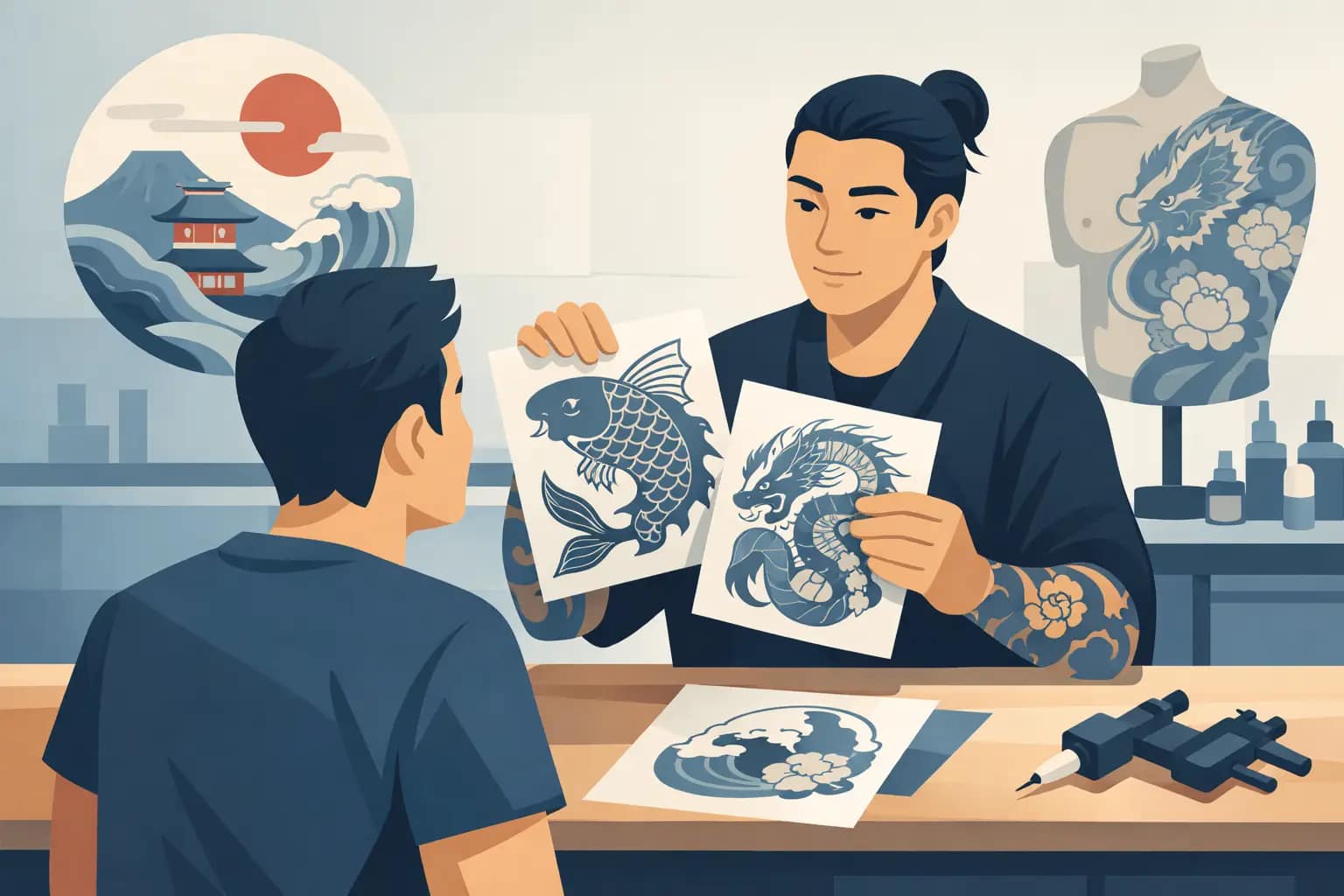
If your goal is a personal piece rather than flash, the consultation process matters almost as much as the portfolio. The right artist will ask questions that go beyond size and placement. They will want to know what draws you to the imagery, what kind of energy you want the tattoo to carry, how visible it should be, and whether this is a standalone piece or part of something bigger.
That conversation reveals a lot. You can usually tell when an artist is building from your story versus fitting you into a pre-made formula. Custom tattooing should feel collaborative, not generic.
It should also feel honest. Not every idea belongs in every placement. Not every body area supports the same level of detail. Not every concept should become a sleeve. A serious artist will explain those trade-offs clearly instead of promising anything just to secure the booking.
For clients in Sacramento and throughout Northern California, this part is especially valuable because many are not looking for a quick tattoo. They are looking for an artist relationship – someone who can develop a concept with care and execute it with consistency over multiple sessions if needed.
Style fit matters as much as technical skill
Two artists can both work in Japanese-inspired tattooing and still be completely wrong for the same client. One may lean bold and graphic. Another may be more painterly. One may favor heavy black structure and dramatic contrast. Another may push more ornamental detail or Neo-Traditional color relationships.
Neither approach is automatically better. It depends on what you want the tattoo to feel like.
This is why style fit is so important. If you are drawn to work that feels timeless, balanced, and built for longevity, choose an artist whose portfolio reflects that consistently. Do not expect someone to abandon their natural visual language for your project. The best results happen when your vision and the artist’s strengths already align.
That alignment is part of what makes custom work worth it. You are not only buying time in a chair. You are commissioning a point of view.
Red flags to pay attention to
Some warning signs are obvious. If the portfolio lacks healed work, if large-scale compositions feel stiff, or if every design looks copied from familiar references, keep looking. Japanese-inspired tattooing asks for more than image recognition.
Other red flags are subtler. Be careful with artists who overpromise exact symbolism without discussing design logic. Be careful with anyone who treats background as an afterthought. And be careful with portfolios where every tattoo is visually loud but nothing actually breathes.
A strong piece needs confidence, not excess.
It is also fair to ask how the artist approaches long-term wear. Bright color, dramatic contrast, and fine detail can all be beautiful, but they need to be used with experience. A tattoo should not only photograph well fresh. It should settle into the skin with strength.
The right artist gives the tattoo room to last
That may be the clearest test of all. A serious irezumi inspired tattoo artist is thinking beyond the appointment. They are designing for movement, aging, readability, and emotional staying power. They know that large-scale tattooing is not just about impact. It is about building something that still feels right after the excitement of getting tattooed has passed.
When the process is done well, the tattoo does more than reference a style. It becomes personal without losing discipline. It feels bold without being chaotic. It carries meaning without having to over-explain itself.
If that is the kind of work you want, take your time choosing. The right artist will not just give you a Japanese-inspired tattoo. They will give your idea structure, clarity, and a form that belongs on your body for the long haul.
The best custom pieces usually start with a simple instinct: you know you want something powerful, but you want it built with intention. That instinct is worth listening to.