

Typing custom tattoo artist near me into a search bar usually happens at a very specific moment. You are not casually browsing. You have an idea that matters, a body placement in mind, and a strong sense that this piece should be done right the first time.
That search can lead you in two very different directions. One path gives you a long list of shops that can tattoo almost anything. The other leads you to an artist whose style, process, and craftsmanship actually fit the piece you want to wear for years. If you are looking for custom work, that difference matters more than most people realize.
What “custom tattoo artist near me” should really mean
A true custom tattoo artist is not just someone willing to redraw a reference image. Custom work starts with interpretation. The artist listens, asks better questions, studies placement, and designs around your story, your anatomy, and the way the tattoo will age.
That matters because a strong custom tattoo is not only about originality. It is also about structure. Flow, readability, contrast, spacing, and line confidence all affect how the tattoo looks after healing and years down the line. A design can feel exciting on a screen and still fail on skin if it was not built with long-term wear in mind.
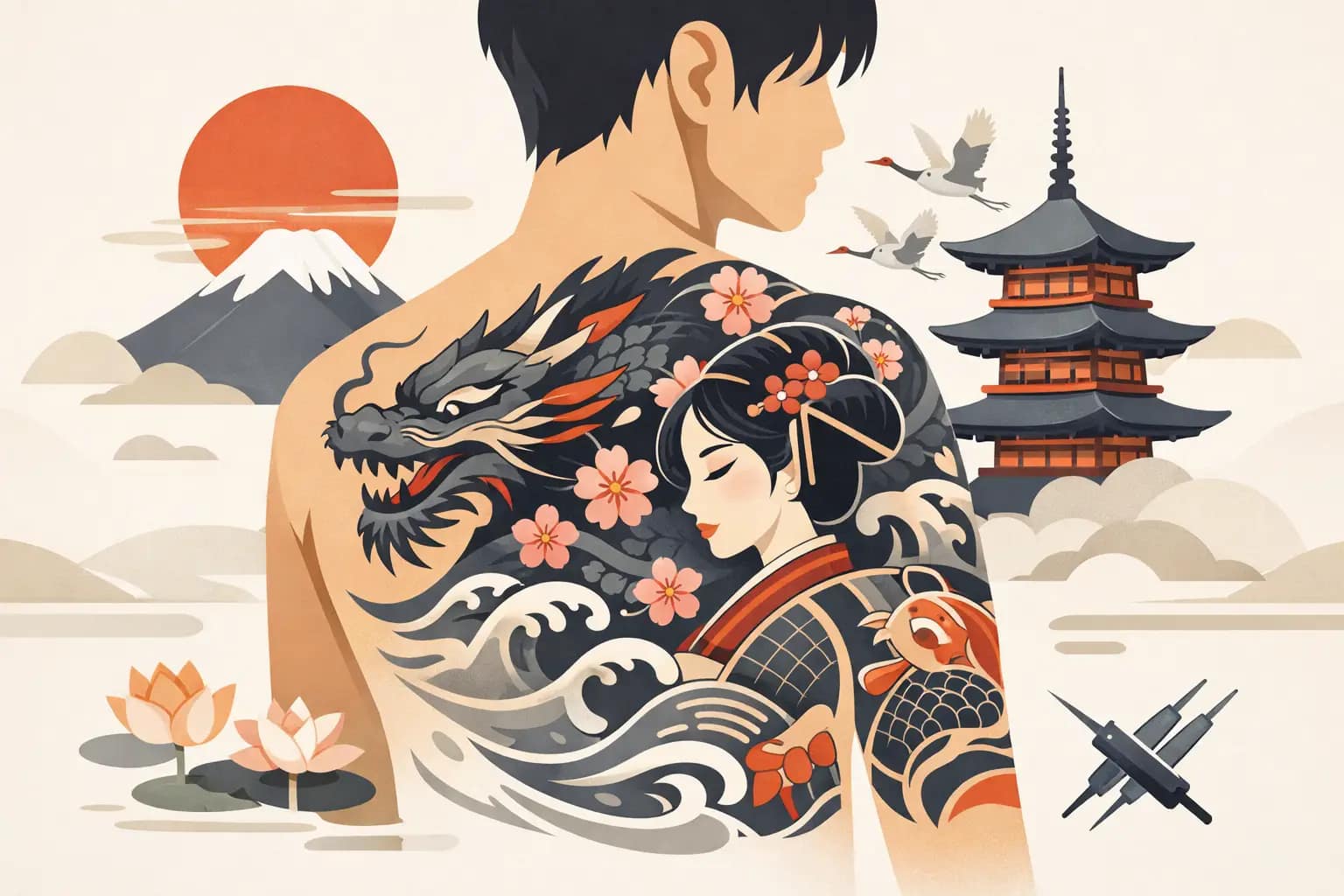
For clients drawn to Japanese, Irezumi-inspired, or Neo-Traditional work, specialization matters even more. These styles carry visual rules, compositional traditions, and symbolic weight. A dragon, koi, tiger, peony, or mask can be powerful, but only when handled with an understanding of movement, balance, and meaning. This is where a specialist stands apart from a generalist.
How to judge a custom tattoo artist near me
The portfolio is still the clearest place to start, but you should look at it differently than most people do. Do not just ask whether the tattoos look cool. Ask whether the artist has a point of view.
A strong custom portfolio has consistency. You can see control in the linework, confidence in the shading, and intentional use of color or black and gray. The pieces should fit the body well rather than sit on top of it awkwardly. Larger work should have rhythm and direction. Smaller work should still feel deliberate, not rushed.
It also helps to look for healed results when available. Fresh tattoos can look bold because everything is crisp and newly saturated. Healed work tells you more about the artist’s discipline. Clean design choices, solid contrast, and thoughtful composition tend to hold up. Overworked skin, muddy values, or overcrowded detail often do not.
Then look at repetition in the best sense of the word. If an artist specializes, you will usually see depth rather than randomness. That is not a limitation. It is often a sign that they have spent years refining a language of tattooing instead of chasing every request that comes through the door.
Style fit is not a small detail
One of the biggest mistakes clients make is choosing based on convenience first and style second. Proximity matters, especially for multi-session work, but style fit should lead the decision.
If you want a Japanese sleeve with movement, symbolism, and bold readability, a talented fine line artist may still be the wrong choice. If you want a Neo-Traditional piece with strong color relationships and graphic impact, an artist known for minimal blackwork may not give you the result you actually want.
This is not about one style being better than another. It is about alignment. The right artist for your tattoo is the one whose strengths already live close to your vision.
The consultation should feel collaborative, not transactional
Custom tattooing works best when there is trust on both sides. A good consultation is not a sales pitch. It is a working conversation.
You should expect the artist to ask about subject matter, placement, size, references, and what the tattoo needs to say visually. They may also challenge parts of the idea. That is usually a good sign. An experienced artist knows when a concept is too crowded, too small for the detail requested, or not suited to the part of the body you chose.
At the same time, you should feel heard. Your input matters, especially when the piece carries personal symbolism. The best custom process does not mean handing over your idea and disappearing. It means building the design with an artist who can translate your intent into something stronger than a literal description.
If the conversation feels rushed, generic, or overly focused on getting you booked before the design has been thoughtfully discussed, it is worth slowing down. Custom work deserves more care than that.
Questions worth asking
You do not need to interrogate the artist, but a few clear questions can tell you a lot. Ask how they approach custom design, whether they specialize in the style you want, and how they think about placement and longevity. Ask what size they recommend for the level of detail you are after.
Their answers should feel informed and direct. Expertise usually sounds calm. It does not need to be flashy.
Cheap and fast usually cost more later
Price matters. Travel time matters. Scheduling matters. But custom tattooing is one of those services where the cheapest option often becomes the most expensive one after touch-ups, cover-ups, or regret.
A well-made tattoo takes time before the machine ever touches skin. Design development, revisions within reason, stencil placement, and careful execution are part of the value. You are not only paying for hours in the chair. You are paying for trained judgment.
This is especially true for larger Japanese and Neo-Traditional work. Sleeves, back pieces, and larger leg compositions require planning beyond one isolated image. They need flow between elements, visual hierarchy, and enough breathing room for the design to stay strong over time. That kind of work is not produced well in a hurry.
There is also a practical side to choosing local versus choosing the best fit within driving distance. For one small tattoo, staying very close to home may be the deciding factor. For a major custom piece, many clients are willing to travel because the quality gap is worth it. Sacramento clients, for example, often look beyond simple convenience when they want artist-led custom work rooted in craftsmanship and style specialization.
Red flags people ignore too often
A few warning signs tend to repeat. One is a portfolio with no clear specialty and no healed work. Another is an artist who promises they can do any style equally well. Versatility exists, but deep specialization usually produces better custom tattoos.
Another red flag is overreliance on copied imagery. If most of the portfolio feels like direct versions of popular designs you have seen a hundred times, the artist may not be building original work in a meaningful way.
Communication also matters. Long delays can happen in busy studios, but vague responses, inconsistent pricing language, or dismissive consultation behavior are not things to brush off. You are entering a collaborative process. Professionalism is part of the artwork.
Why the right artist often makes the idea better
Many clients come in with a concept that is emotionally clear but visually unfinished. That is normal. You may know you want a koi for perseverance, a tiger for protection, chrysanthemums for resilience, or a mask that speaks to transformation. A skilled custom artist takes that raw material and shapes it into a composition that belongs on the body, not just in your head.
That is where custom tattooing becomes more than decoration. It becomes authorship. The artist is not replacing your idea. They are refining it through experience, design knowledge, and technical control.
This is the reason serious collectors and thoughtful first-time clients often end up in the same chair. Both are looking for the same thing in the end – a tattoo with intention, strong execution, and enough integrity to still look right years from now.
For clients seeking Japanese and Neo-Traditional work in Northern California, that level of care is exactly what sets a studio like Dani Olmos Tattoo apart. The focus is not volume. It is original design, masterful craftsmanship, and a process where your vision becomes art without losing the discipline that makes great tattooing last.
When you search custom tattoo artist near me, try reading the results less like a directory and more like a shortlist for a long-term collaboration. The right artist will not just give you a tattoo that fits your idea. They will give your idea the structure, clarity, and presence it needs to live well on skin.