
A personal tattoo should still feel like yours when the story behind it becomes less immediate. The best symbols for personal tattoos are not always the most literal ones. They are the images with enough emotional weight to matter now, enough visual strength to age well, and enough room for an artist to make them unmistakably your own.
That is the difference between choosing a symbol and building a tattoo. A symbol might begin with a memory, a person, a turning point, or a value. The finished piece also needs composition, contrast, placement, and a style that can carry the idea for decades.
What Makes a Symbol Worth Tattooing?
The strongest tattoo symbols do two jobs at once: they say something personal and they create a compelling image from across the room. A meaningful concept that cannot be drawn clearly may work better as part of a larger composition. On the other hand, an image with a well-known meaning can become deeply personal through color choices, accompanying details, and the story you attach to it.
Start with the feeling before settling on the object. If you want to honor resilience, ask what resilience has looked like in your life. Was it a long recovery, protecting your family, leaving a difficult chapter behind, or learning patience? That answer gives a custom artist better material than simply asking for a generic symbol of strength.
Scale matters, too. Tiny details may be important in a sketch but disappear as a tattoo ages. Larger forms, deliberate line weight, open skin, and clear areas of contrast generally hold their presence better. A good design does not need to explain every part of your story. It needs to express it with conviction.
Best Symbols for Personal Tattoos and Their Possibilities
Koi fish for determination and transformation
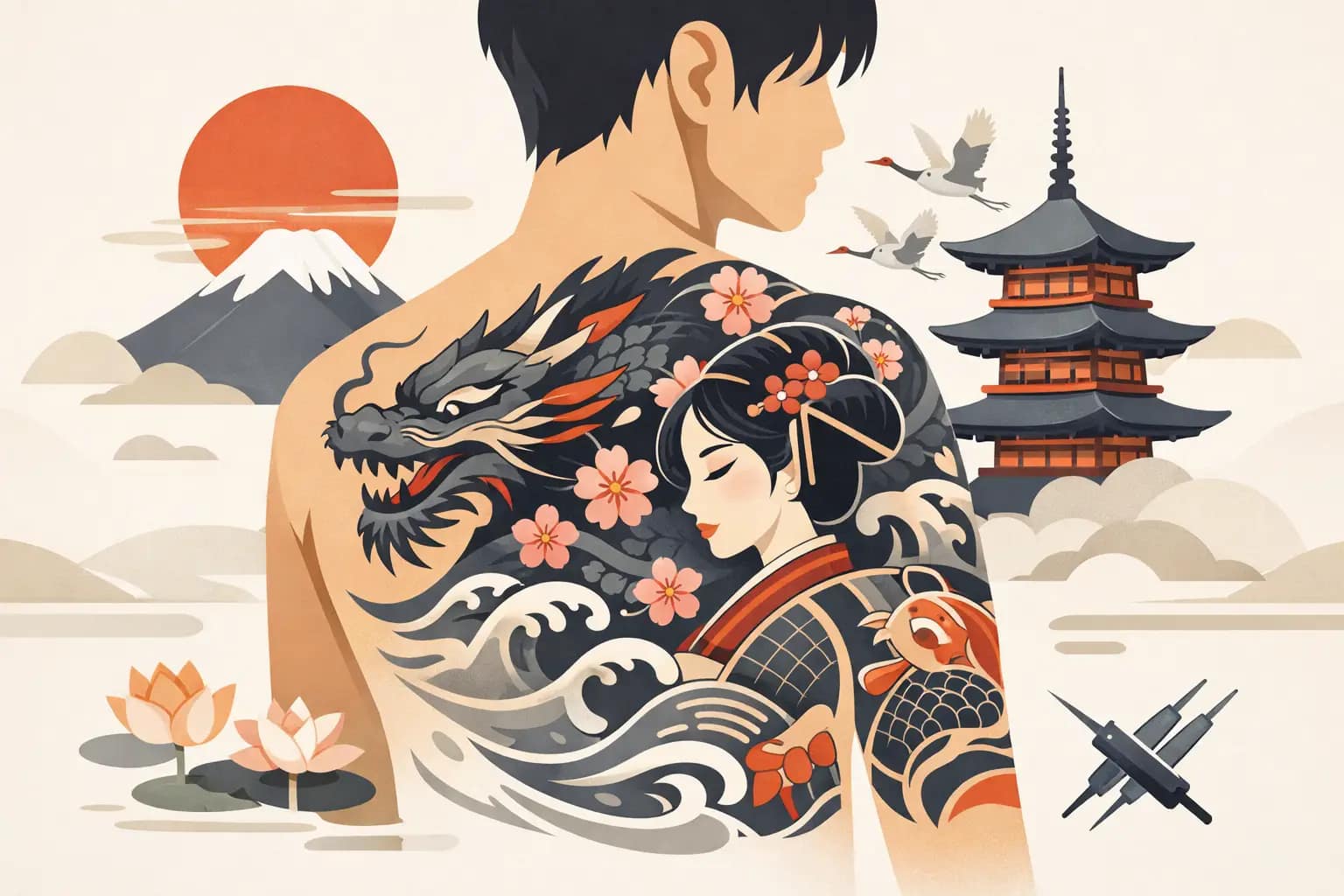
Koi remain one of the most powerful Japanese-inspired tattoo subjects because their movement is built into the design. They can represent persistence through adversity, personal growth, or the willingness to keep moving against a current. Their scales, fins, water, and direction of travel give an artist many ways to shape the tattoo around the body.
A koi swimming upward can suggest effort or an unfinished climb. A koi moving through calm water may feel more reflective, representing a hard-won sense of peace. Pairing one with maple leaves, peonies, waves, or a waterfall changes the emotional temperature without reducing the image to a slogan.
Dragon for protection, wisdom, and personal power
In Japanese tattoo tradition, dragons are complex, revered figures rather than simple symbols of aggression. They can embody protection, intelligence, generosity, and command over natural forces. Their long, flowing anatomy also makes them especially effective for sleeves, backs, chests, and larger leg compositions.
A dragon is a strong choice for someone who wants a tattoo to feel protective or transformational without becoming overly literal. Still, this is not a design to choose just because it looks powerful. Japanese imagery carries cultural and artistic context. Work with an artist who understands the visual language, and approach the subject with respect for where it comes from.
Snake for rebirth, instinct, and protection
A snake sheds its skin, which makes it an enduring symbol of renewal. It can stand for recovery, survival, intuition, or a period of necessary change. In Neo-Traditional work, a snake can be dramatic and graphic, wrapped around a dagger, flower, skull, or heart. In Japanese-inspired work, it can bring movement and tension to a larger scene.
The trade-off is tone. A snake can read as elegant, dangerous, spiritual, or defiant depending on the pose and surrounding imagery. Decide whether you want the tattoo to feel calm and watchful or confrontational and fierce before the drawing begins.
Flowers for memory, change, and love
Flowers are personal without being obvious. A peony can suggest beauty, courage, prosperity, or a connection to Japanese tattoo imagery. Chrysanthemums can carry associations with longevity and perseverance. Cherry blossoms often speak to the brief, precious nature of life, while roses can represent love, grief, devotion, and beauty with thorns intact.
The flower itself is only the beginning. A single bloom, a falling petal, a closed bud, and a full arrangement each tell a different story. Florals also make excellent supporting imagery, softening a bold central subject or connecting separate tattoos into one cohesive sleeve.
Tiger for courage and self-possession
A tiger has immediate visual authority. In Japanese-inspired tattooing, it is often associated with courage, protection, and warding off misfortune. It can also represent the part of a person that refuses to be diminished. A well-designed tiger demands strong anatomy, expressive eyes, and bold contrast, which is why it often works best at a scale that gives the face room to breathe.
For a personal piece, the tiger does not have to mean that you are fearless. It can mean that you learned how to act despite fear. That distinction often leads to a more honest design.
Hannya mask for emotional complexity
The hannya mask is visually striking, but its meaning deserves care. In Japanese Noh theater, it represents a woman transformed by consuming jealousy, grief, and rage. It is not simply a symbol of being a “demon” or having a dark side. Used thoughtfully, it can speak to heartbreak, emotional survival, self-awareness, or the difficult work of facing destructive feelings.
This is an image with serious cultural roots and a specific theatrical history. It works best when chosen for its depth, not as decoration. A skilled artist can balance the fierce expression with flowers, smoke, or other elements that make the piece feel personal and compositionally complete.
Compass, ship, and waves for direction
For people whose story centers on travel, change, service, family migration, or finding their way again, a compass or ship can be more expressive than coordinates alone. Waves bring movement, uncertainty, and endurance. A ship can represent leaving, returning, or carrying yourself through rough conditions.
These motifs translate naturally into Neo-Traditional tattooing because bold shapes and rich color make them readable over time. They also leave room for customization: a particular star, a shoreline, a phrase kept private in the design process, or a flower associated with someone important.
Dagger, heart, and flame for survival
Classic tattoo imagery lasts because it communicates instantly. A dagger through a heart can hold grief, betrayal, sacrifice, or the decision to remain open after being hurt. A flame can represent devotion, a person who changed your life, spiritual conviction, or the refusal to let a hard season extinguish you.
The key is avoiding borrowed meaning. These symbols are common, but the composition does not have to be. Color palette, placement, companion imagery, and the balance between beauty and severity can turn a familiar icon into a personal statement.
Build Meaning Through Composition, Not Just Symbolism
The most memorable custom tattoos often combine two or three symbols rather than asking one image to carry every idea. Someone honoring a parent might choose a peony with a small bird and wind bars, rather than a portrait or a name. Someone marking sobriety might use a koi rising through waves, with the movement of the body reinforcing the idea of forward progress.
This approach is especially valuable for sleeves and larger pieces. Japanese and Neo-Traditional tattoo styles rely on flow. Background elements such as clouds, wind, water, smoke, and florals are not filler when used well. They create rhythm, guide the eye, and allow the tattoo to move with the shoulder, arm, chest, or leg.
It also gives the tattoo room to evolve. A well-planned first piece can become the foundation for a larger collection without looking like separate images placed beside each other.
Questions to Ask Before Your Consultation
Before meeting with your artist, write down the story in plain language. Include what you want to remember, what you want the piece to feel like, and any subjects you definitely do not want. Reference images can help communicate mood, but they should not become a blueprint for copying someone else’s tattoo.
Think about placement honestly. A forearm tattoo is visible every day and can feel like a constant reminder. A back or thigh piece offers more room for detail and privacy. Pain, professional visibility, budget, and the number of sessions are all real parts of the decision. A large custom tattoo is usually stronger when it is built patiently instead of compressed to meet a rushed deadline.
If you are drawn to Japanese motifs, ask about the history and compositional role of the imagery you like. If you prefer Neo-Traditional, discuss how bold outlines, saturated color, and graphic shapes can make the design hold up over time. The right direction depends on your story, skin, placement, and the visual language that genuinely feels like you.
A meaningful tattoo does not need to be understood by everyone who sees it. Bring the real story to the consultation, stay open to an artist’s design perspective, and let the finished piece become a lasting image that carries more than one moment.