
A sleeve is rarely one purchase. It is a long-form piece of art built across appointments, healing periods, design decisions, and the relationship you develop with your artist. Knowing how to plan a tattoo sleeve budget means looking beyond the first session and making room for the full composition your skin deserves.
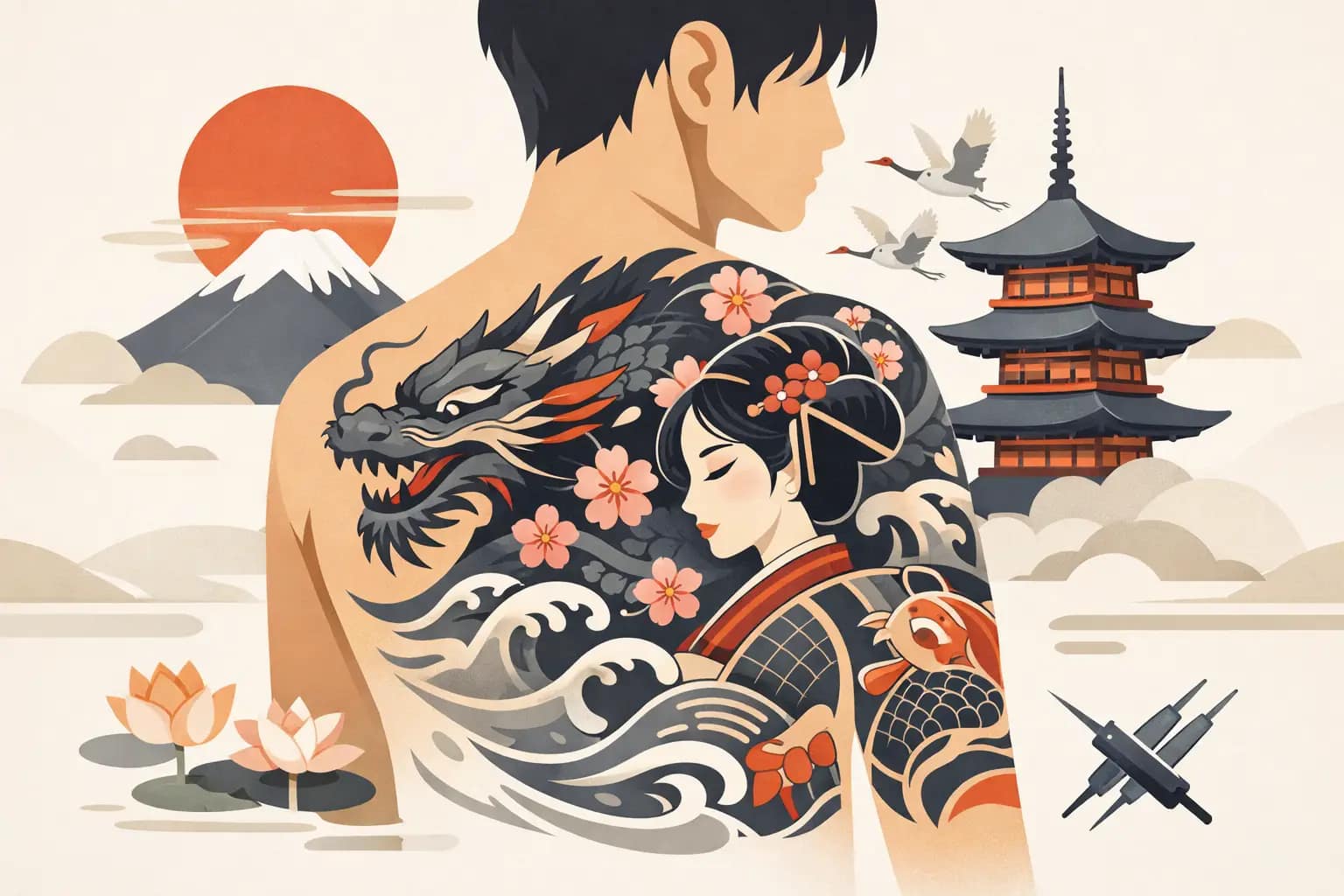
That does not mean you need every dollar set aside before the first outline is applied. It does mean you should begin with an honest plan. A custom Japanese, Irezumi-inspired, or Neo-Traditional sleeve has a visual rhythm that develops over time. Budgeting with that in mind protects the quality of the final work and gives you more freedom to make thoughtful choices along the way.
Start With the Whole Sleeve, Not One Appointment
The most common budgeting mistake is pricing only the tattoo you want to begin with: a dragon on the upper arm, a hannya mask on the forearm, or a floral element near the shoulder. Those images may stand strongly on their own, but a sleeve needs flow. Background, transitions, scale, and placement determine whether individual elements become one cohesive body of work.
At your consultation, talk about the complete vision even if you intend to complete it in stages. Your artist can help identify the major sections of the sleeve, where the focal points should live, and which areas should be approached first. This gives you a more realistic sense of the project’s overall scope.
A full sleeve can involve linework, shading, color, background, and refinements completed across multiple sessions. The number of sessions depends on the style, the amount of coverage, the detail level, your skin, and how the artist works. A black-and-gray sleeve with open skin may require a different commitment than a densely saturated Neo-Traditional piece or an Irezumi-inspired sleeve with extensive wind bars, waves, clouds, or floral backgrounds.
Think in ranges rather than trying to lock in one exact total on day one. A clear range lets you plan responsibly while leaving room for the creative process.
Understand What You Are Paying For
Custom tattoo pricing reflects more than the hours a machine is running. You are investing in the artist’s drawing time, technical experience, visual judgment, sanitation standards, and ability to create a design that will read clearly years from now.
For a large custom sleeve, design is not an afterthought. It is where your references, story, and preferred imagery become a composition designed specifically for your arm. A skilled artist considers movement around the body, how the image changes when your arm bends, how negative space supports readability, and how every new section will connect to the next.
The cost can also vary by session format. Some artists charge by the hour, while others price by the session, day, or project phase. Ask how the studio approaches scheduling and pricing before committing. You do not need to interrogate the process, but you should understand what is included and how to prepare financially for each appointment.
It is tempting to compare a custom sleeve to a lower quote for isolated tattoo elements. That comparison often misses the point. A sleeve succeeds because it is planned as one visual statement. Cutting corners on design, placement, or background can cost more emotionally and financially if you later need extensive reworking or cover-up work.
Build Your Tattoo Sleeve Budget in Phases
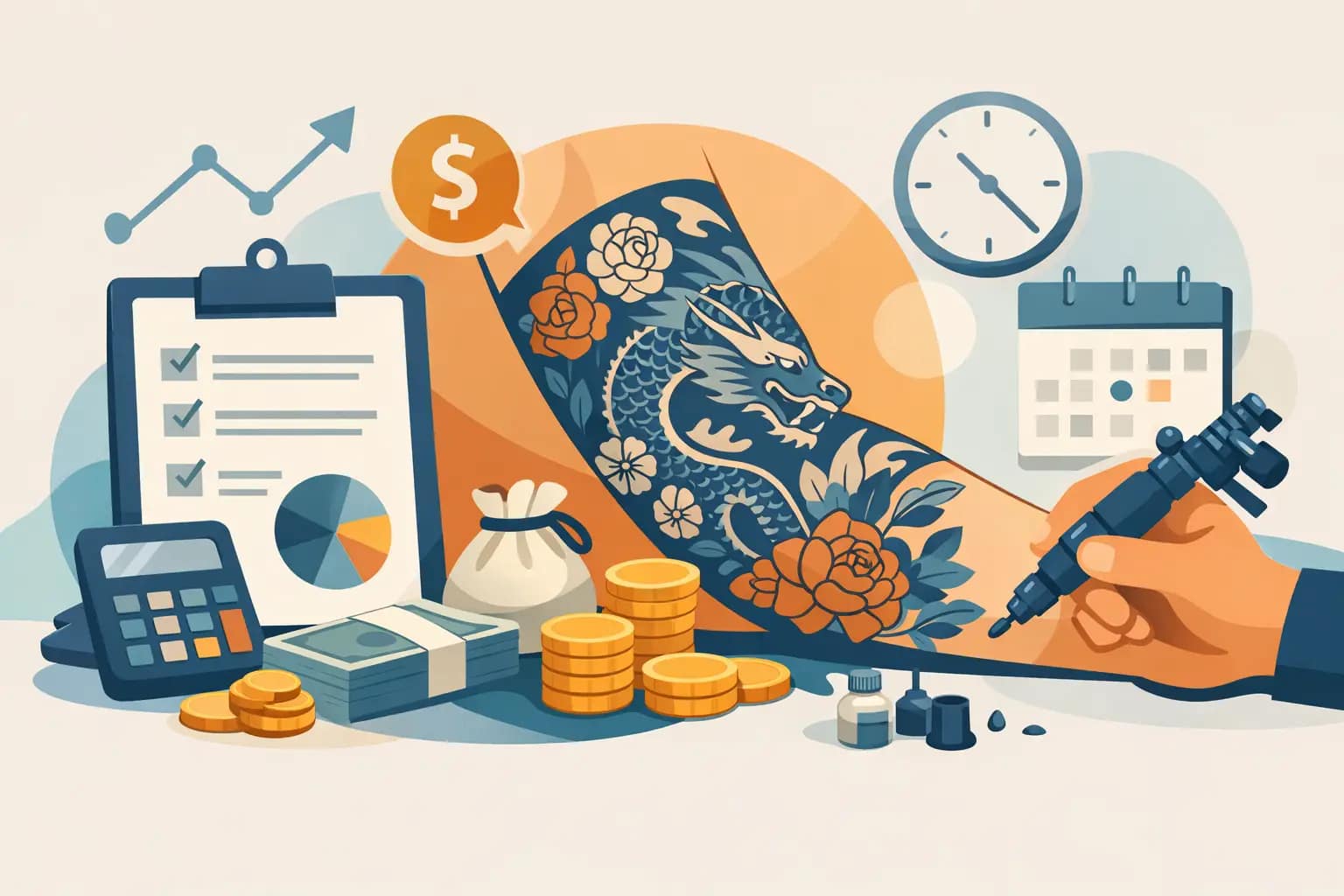
A phased budget makes a large project feel manageable without asking the artist to compromise the work. Start by deciding what you can comfortably dedicate to tattooing each month after essential expenses, savings goals, and unexpected costs are covered.
Then create a simple project fund. Some clients prefer to save for a few sessions before beginning. Others schedule a session, save between appointments, and keep the pace steady. Either approach can work if it respects your finances and your healing time.
Consider these four parts of your budget:
- The initial design and first session: This is often where the concept becomes real and the sleeve’s direction is established.
- Ongoing tattoo sessions: Set aside funds for the expected cadence of appointments rather than assuming the project will be finished quickly.
- Healing and aftercare: Quality aftercare products, clean clothing, time away from activities that may interfere with healing, and sun protection all matter.
- A flexibility reserve: A small cushion helps if the design evolves, a session runs longer than expected, or you need to reschedule because your body needs more recovery time.
The reserve is especially useful for custom work. A strong artist may see an opportunity to improve balance or add a detail that completes the composition. That does not mean the plan is out of control. It means the artist is responding to the actual work on your skin rather than forcing a rigid template onto it.
Choose a Pace You Can Sustain
A sleeve is not a race. You may be excited to finish quickly, but the best schedule is one that works for your budget, pain tolerance, skin recovery, job requirements, travel plans, and daily life.
Some clients schedule closely together when they have the time, funds, and healed skin to do so. Others return every few weeks or every month. A slower pace can be a smart choice when it allows you to pay comfortably and give each area the attention it needs. The tattoo will still become a complete statement. It will simply develop at a pace that supports you.
Be honest with your artist about your preferred timeline. A professional consultation should feel collaborative, not pressured. If you know you can only commit to a certain number of sessions each season, say so. The sleeve can be designed with natural stopping points so it looks intentional at every phase, rather than appearing unfinished between appointments.
For Sacramento clients and those traveling from surrounding Northern California, scheduling may also involve transportation, time off work, and lodging. If travel is part of the experience, include those costs in your plan from the beginning. A tattoo appointment is easier to enjoy when the logistics are already handled.
Do Not Underestimate Background and Coverage
Clients often budget for the main subject and forget the space around it. Yet background is what gives a sleeve its depth, movement, and cohesion. In Japanese-inspired work, elements such as wind, water, clouds, rocks, or peonies can establish the mood and unite the entire arm. In Neo-Traditional work, ornamental framing, foliage, and contrasting color fields can do the same.
Background can also affect time and cost significantly. Dense black, smooth gradients, color saturation, and detailed texture all require deliberate application. Leaving parts of a sleeve open can be a beautiful choice, but it should be a deliberate compositional decision, not just a last-minute budget cut.
Ask your artist where background is essential, where skin breaks can create breathing room, and which details will have the greatest long-term impact. This conversation helps you direct your budget toward the areas that make the design feel complete.
Prioritize Craftsmanship Over a Bargain
A tattoo sleeve stays with you through changing styles, jobs, milestones, and decades of life. That permanence is why the lowest quote is rarely the best value. Technical precision, thoughtful saturation, clean linework, and a composition built for the body all influence how the tattoo ages.
There are practical ways to manage cost without lowering standards. Start with one strong section of the sleeve. Choose a realistic session pace. Save before booking. Be open to an artist’s recommendations about placement and scale, especially when a slightly larger design will read better over time.
What is less helpful is asking an artist to rush, reduce necessary background, copy a design exactly, or fit a large concept into a space too small for it. Those compromises can weaken a piece that should have felt personal and enduring.
At Dani Olmos Tattoo, the goal of a consultation is not to push you into a larger project than you want. It is to understand your vision, explain what the work requires, and create a path toward art that feels worthy of your commitment.
Ask Clear Questions Before You Book
A good consultation should leave you with more clarity than you arrived with. Ask how the artist estimates the number and length of sessions, how far apart appointments should be scheduled, and whether your concept has natural phases. Ask what happens if you need to pause the project for a few months, and what aftercare or preparation you should budget for.
You can also ask which parts of the design should come first. Starting with a focal point can be emotionally satisfying, while starting with layout or background may create a stronger foundation for the whole sleeve. There is no universal answer. It depends on the concept, the artist’s process, and how you want the tattoo to evolve on your body.
A well-planned sleeve budget is not about making the project feel transactional. It is about giving yourself the time, resources, and confidence to let meaningful artwork take shape. Save with intention, communicate openly, and begin when you are ready to give the piece the care it deserves.