

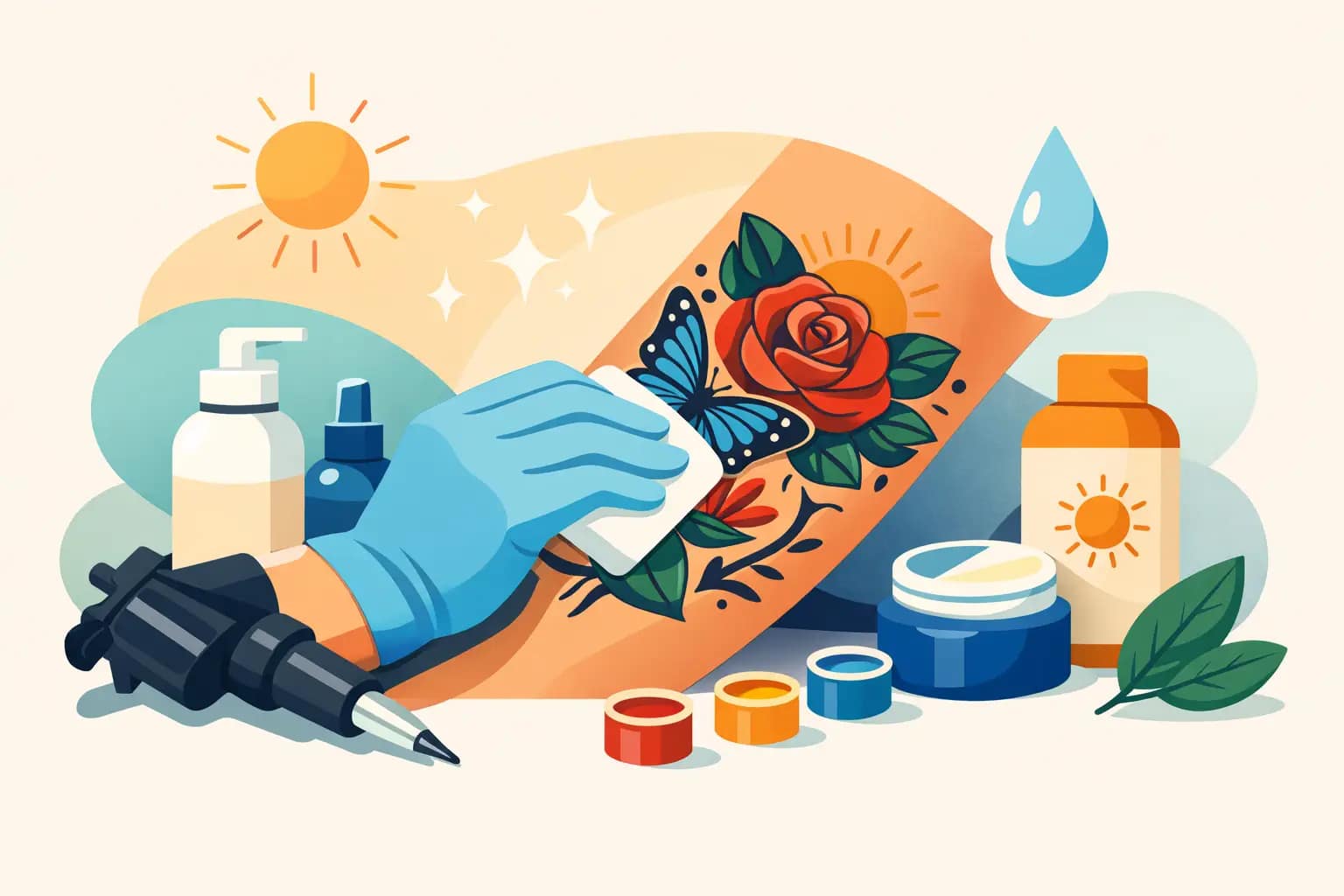
A saturated red peony, deep black wind bars, rich gold scales, or a Neo-Traditional tiger only holds its visual force when the healing process is treated with the same care as the tattoo itself. Tattoo aftercare for bold color is not about chasing a shortcut to brighter ink. It is about giving freshly tattooed skin a clean, calm environment to repair so the color, contrast, and linework settle as intended.
Bold tattoos are built in layers. Solid color packing, strong outlines, and dense blackwork can create a more demanding healing experience than a small, lightly shaded design. Tenderness, warmth, swelling, and a little weeping in the first day or two can be normal. The goal is to protect the piece without suffocating it, overworking it, or mistaking normal healing for a reason to panic.
Tattoo Aftercare for Bold Color Starts With Your Artist’s Plan
Your artist’s instructions come first. Aftercare is not one-size-fits-all because placement, session length, skin response, and the bandage used all affect the right routine. A large upper-arm piece does not heal exactly like a rib tattoo, hand tattoo, or calf panel. If your artist applies an adhesive protective bandage, follow their timeline for removal. If they use a traditional wrap, the instructions may be different.
Once the initial covering is removed, wash your hands before touching the tattoo. Clean the area gently with lukewarm water and a mild, fragrance-free soap. Use your fingertips, not a washcloth, loofah, exfoliating glove, or anything abrasive. Pat it dry with a clean paper towel, then allow it to air dry briefly before applying any aftercare product your artist recommends.
The key word is light. A very thin layer of fragrance-free moisturizer or the specific product recommended by your artist can support comfort as the skin tightens and flakes. A thick, glossy coating is not better. Too much ointment can trap moisture, soften scabs, and make it easier for irritation to develop.
Keep the Healing Environment Clean, Not Complicated
For the first several days, your tattoo may release a mix of plasma, excess ink, and a small amount of blood. This is especially common in larger color work. Gentle washing keeps that residue from drying into heavy crusts. In most cases, washing two or three times daily is enough, unless your artist has directed otherwise.
Overwashing can be just as unhelpful as neglecting the tattoo. Hot water, harsh antibacterial cleansers, alcohol-based products, peroxide, and heavily scented lotions can strip and irritate already stressed skin. The tattoo does not need to be sterilized every hour. It needs to be clean, dry, lightly moisturized when appropriate, and left alone.
Fresh bedding and loose, breathable clothing matter more than people think. A newly tattooed sleeve can rub against a tight shirt; a thigh piece can stick to denim; a back tattoo can spend all night against sheets. Choose clean fabrics with enough room to avoid constant friction. If the tattoo sticks to clothing or bedding, do not pull it free. Wet the fabric with lukewarm water until it releases gently.
Do Not Pick at Flakes or Scabs
Bold color often looks darker and less refined during healing. Then comes the flaky stage, when skin may peel in thin, colored-looking fragments. This can be alarming, but it is usually part of normal surface healing. The ink itself is not peeling out in sheets.
Picking is where avoidable damage happens. Pulling at flakes or scabs can interrupt the skin’s repair process and may leave uneven texture or patchy areas that require a touch-up. Let the tattoo shed at its own pace. The temporary dullness is part of the process, not the final result.
Protect Saturation From Friction, Water, and Sun
The first few weeks are not the time for a beach day, a hot tub, or a long soak in the bath. Showers are fine, but swimming pools, lakes, oceans, saunas, and hot tubs expose healing skin to prolonged moisture and unwanted bacteria. Even a clean-looking pool is not a controlled healing environment.
Exercise requires some judgment. A light walk may be fine if you feel well, but hard training can add sweat, friction, swelling, and contact with shared gym surfaces. If your tattoo sits where clothing, equipment, or body movement repeatedly rubs it, give it more recovery time. For a large, detailed piece, missing a few intense workouts is a reasonable trade for protecting months of design work.
Sun exposure is one of the clearest long-term threats to bold color. While the tattoo is healing, keep it out of direct sun with loose clothing. Do not apply sunscreen to open, peeling, or freshly tattooed skin unless your artist specifically advises it. Once the tattoo is fully healed, broad-spectrum sunscreen becomes part of preserving the clarity of reds, yellows, blues, and the contrast that makes Japanese and Neo-Traditional work read from a distance.
Expect a Healing Process, Not an Instant Reveal
A fresh tattoo can look exceptionally bright because the surface is smooth, hydrated, and freshly inked. As it heals, it may become cloudy, dry, or slightly muted. This stage is sometimes called the “silver skin” phase. The skin is still rebuilding over the tattoo, so the true settled color has not fully revealed itself yet.
Give it time. Many tattoos look substantially healed on the surface within a few weeks, but deeper skin recovery continues longer. Avoid judging the finished result too early, especially in dense color fields or areas that receive a lot of movement and friction. Your artist can tell you when it makes sense to assess whether a touch-up is needed.
A touch-up is not automatically a sign that something went wrong. Skin varies, placement varies, and certain areas are simply harder on pigment. Fingers, feet, elbows, knees, and areas exposed to constant rubbing may need more maintenance than a protected upper arm or thigh. The honest goal is not a promise that every pixel of color behaves identically. It is a well-healed tattoo with strong, intentional visual impact.
Know When to Contact Your Artist or a Medical Professional
Some redness, warmth, and tenderness immediately after a tattoo can be expected. Those symptoms should generally improve, not intensify. If you are unsure whether what you are seeing is normal healing, reach out to your artist with a clear photo and a description of when the symptoms began.
Seek medical guidance promptly if you experience concerning symptoms such as:
- Redness that spreads well beyond the tattoo or gets worse after the first few days
- Increasing swelling, severe pain, or skin that feels intensely hot
- Thick yellow or green discharge, a strong odor, or fever-like symptoms
- Hives, widespread rash, trouble breathing, or signs of a significant allergic reaction
An artist can guide normal tattoo healing, but they cannot diagnose an infection or medical reaction. When your body is signaling that something is not right, timely medical care matters more than trying another aftercare product.
Long-Term Care Is Part of the Artwork
Once your tattoo is fully healed, daily life becomes the aftercare. Hydrated skin helps color look more even and blackwork appear cleaner. Sun protection slows the fading that can soften outlines and flatten the contrast between saturated colors. A stable skincare routine does more for a tattoo’s appearance than constantly switching products or chasing trends.
For custom work designed around your story, longevity is part of the craft. The placement, palette, line weight, and composition are chosen to create impact now and years from now. Your role is simple but meaningful: protect the healing skin, resist the urge to interfere, and give the artwork the time it needs to settle into its full strength.
Treat the first few weeks as part of the tattoo appointment, not the time after it. Patient, consistent care gives bold color the best chance to heal cleanly and carry its intended presence for years.