
A koi on the forearm can feel powerful, but the same design may lose its presence if it is compressed into a space that does not let it move. That is the real question behind how to choose irezumi placement: not simply where a tattoo will fit, but where the composition can breathe, follow the body, and tell its story at the right scale.
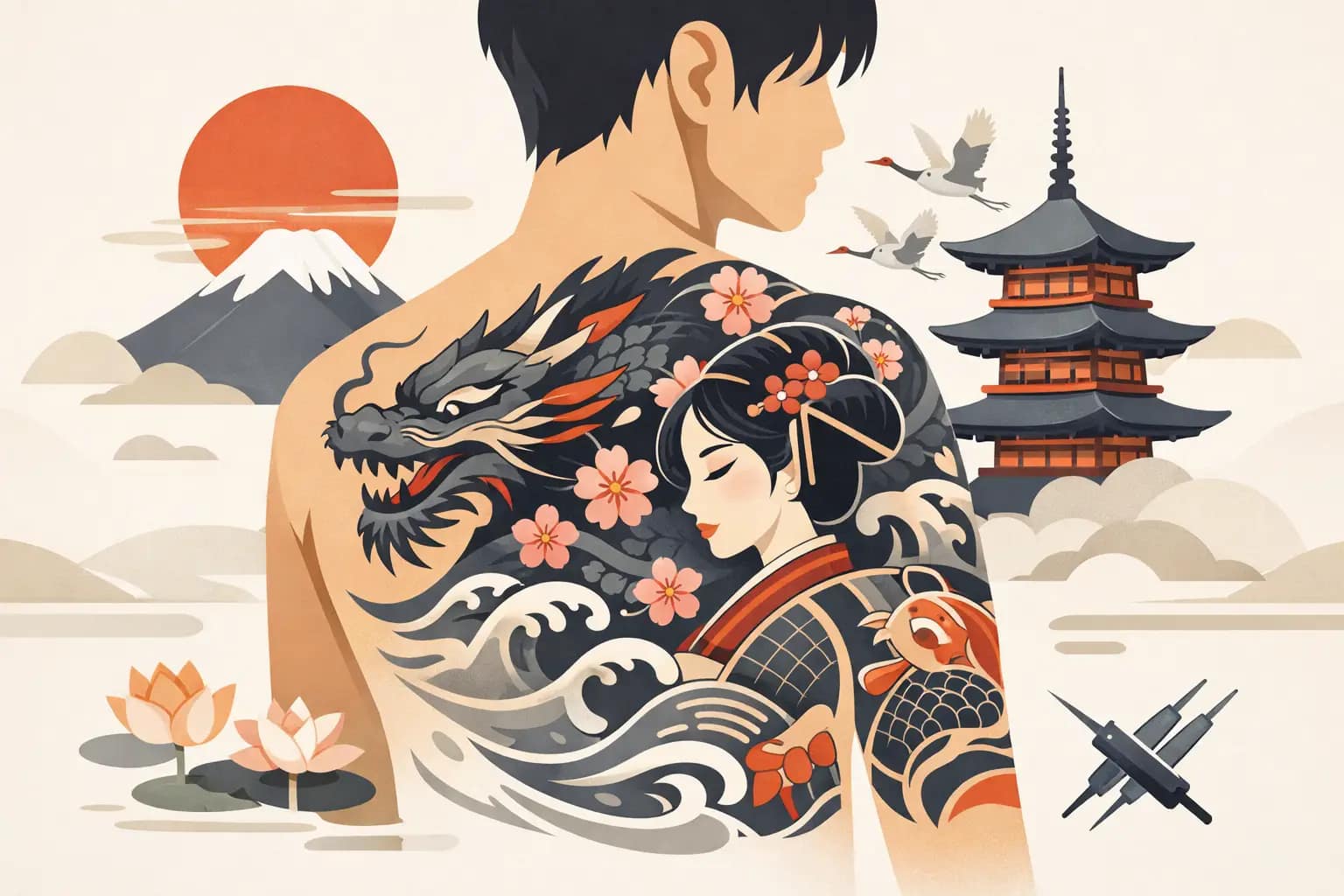
Irezumi-inspired work is built around flow. A dragon curves with the shoulder and ribcage. Wind bars create direction. Waves carry the eye around an arm or leg. Flowers soften transitions while adding season, color, and visual rhythm. Placement is not an afterthought once the artwork is finished. It is part of the design from the first conversation.
How to Choose Irezumi Placement for Your Design
Start with the role you want the tattoo to play. Do you want a piece that is visible every day, a larger private composition, or the beginning of a body suit that can grow over time? None of those choices is more valid than another, but each asks something different of the design.
A highly detailed Japanese-inspired tattoo needs enough room for its focal point, background, and supporting elements to read clearly. A small dragon can be beautifully done, but it will not have the same authority or storytelling potential as a dragon designed to travel across a full sleeve or back panel. If the idea matters deeply, giving it room is often the better long-term decision.
It also helps to think beyond the first appointment. Many clients begin with one meaningful piece and later realize they want a connected collection. Choosing a placement with clean edges and natural expansion points can preserve options. An upper-arm piece can become a sleeve. A thigh composition can extend into a full leg sleeve. A back piece can eventually connect to shoulders, ribs, or hips without looking forced.
Let the body create the movement
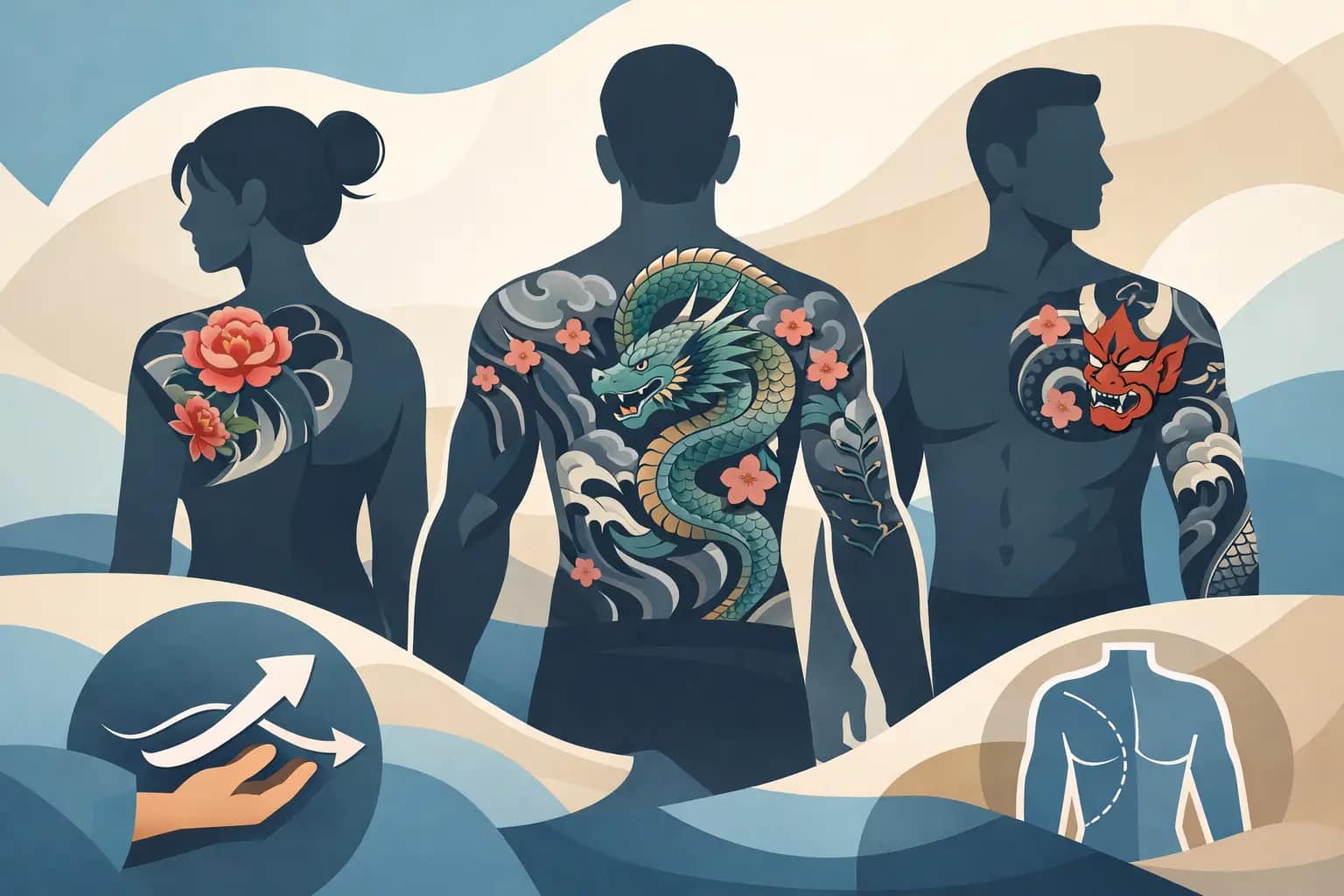
The best placement follows anatomy instead of fighting it. Rounded areas such as shoulders, upper arms, thighs, and calves are especially strong for movement-driven imagery. A snake can coil around the arm. A tiger can climb the thigh. A koi can rise from the wrist toward the shoulder, with water and wind guiding the eye upward.
Flat, broad surfaces offer a different kind of opportunity. The back is one of the most commanding canvases in Japanese tattooing because it allows a complete scene: a central figure, deliberate background, and secondary motifs that create depth without crowding the design. The chest and side body can also carry dramatic work, though they require careful planning because the body changes shape as you breathe and move.
An experienced artist will consider how the tattoo looks at rest and in motion. A design should not only look good in a mirror with your arm posed a certain way. It should hold together while you walk, reach, sit, and live in it.
Choose Scale Before Choosing Detail
Clients sometimes arrive with a long list of meaningful elements: a dragon, peonies, maple leaves, waves, a mask, and a family reference. The symbolism may all be important, but not every idea belongs in the same area of the body.
Strong Irezumi-inspired design uses hierarchy. There is usually a clear main subject, then background and smaller motifs that support it. When too many equally important images compete in a small space, the result can feel crowded on day one and become less readable as the tattoo ages.
A useful rule is to choose the body area first, then decide what level of detail that area can honestly support. For a forearm, one primary motif with intentional background may be more effective than a full scene. For the back, the artist can develop a larger narrative with more atmosphere, contrast, and breathing room.
This is also where color and black-and-gray decisions matter. Bold color can create extraordinary separation between a subject and its background, especially across larger areas. Black-and-gray work can be equally dramatic, but it depends heavily on contrast, line weight, and open skin to keep the composition legible. Either direction can age beautifully when the placement and scale are right.
Think About Visibility With Real Life in Mind
Visibility is personal. A hand, neck, or lower forearm tattoo becomes part of your daily presentation in a way that an upper arm, thigh, or back piece may not. That can be exactly what you want, especially if you have the lifestyle and confidence for visible work. It is still worth making the choice with your actual routine in mind, not only the excitement of the design.
Consider your work environment, formal events, sun exposure, sports, and how often you want to explain the tattoo to strangers. Sacramento summers, beach trips, outdoor work, and regular driving can all mean more sun on certain placements. Sun protection matters for every tattoo, but highly exposed areas often require more consistent care to protect color and contrast.
Visibility also changes how a composition is experienced. A sleeve gives you daily access to the artwork and lets others see it unfold as you move. A back piece can feel more personal and ceremonial, revealed on your terms. There is no wrong answer. The right answer is the one that feels aligned with your life years from now.
Respect Pain, Healing, and Practical Limits
Pain should not make the decision for you, but it belongs in the conversation. The outer upper arm and thigh are often more manageable for longer sessions than ribs, sternum, feet, knees, elbows, or the inner arm. Areas near bone, thin skin, and high nerve density can be more intense, and large work in those locations may need to be broken into shorter sessions.
Healing is equally practical. Hands, feet, elbows, and knees move constantly and face more friction. Waistbands can irritate hip and lower-back tattoos. Footwear can complicate a fresh ankle or foot piece. If you train regularly, work a physical job, or have travel coming up, placement and scheduling should account for that reality.
A good tattoo plan does not treat endurance as a badge of honor. It respects your comfort, healing capacity, and ability to give the artwork the aftercare it deserves. Sometimes the strongest choice is to begin with a placement that lets you heal well and return ready to build the next section.
Consider the Cultural Language of the Motif
Japanese tattoo imagery carries visual traditions, associations, and history. A koi, hannya, oni, dragon, tiger, chrysanthemum, or peony is not just decoration. Each can carry a distinct emotional tone, and the relationship between motifs can change the message of the whole piece.
Placement can reinforce that meaning. An ascending koi may suit an arm or leg where the direction is clear. A guardian-like tiger can work beautifully across a thigh, shoulder, or chest where it has room to stalk forward. A hannya mask often gains intensity when framed by flowers, smoke, or wind rather than isolated as a sticker-like image.
This does not mean every tattoo must follow a single historical formula. Custom work should leave room for your story and your taste. It does mean the design benefits from an artist who understands the visual language well enough to make thoughtful choices rather than assembling symbols at random.
Plan for a Complete Composition, Even if You Start Small
A finished tattoo should feel finished, even when it may later become part of something larger. That is the balance to aim for. A half sleeve can have a deliberate ending near the elbow while still allowing a future extension. A chest panel can stand on its own while leaving the opposite side open for a related design.
Background is especially important here. Waves, clouds, wind bars, smoke, and floral elements are not filler. They create transitions, shape negative space, and help separate one motif from another. When a future expansion is possible, the background can become the visual bridge that makes the entire body of work feel intentional.
During a consultation, bring reference images for mood, placement, and scale, but stay open to the artist’s recommendation. The goal is not to copy a photo onto skin. It is to create an original composition that belongs to your body. At Dani Olmos Tattoo, that collaboration begins with listening to your vision, then shaping it into artwork with lasting presence.
The right placement is the one that gives your idea room to move, leaves space for your future, and still feels like yours when the initial excitement has become part of everyday life.