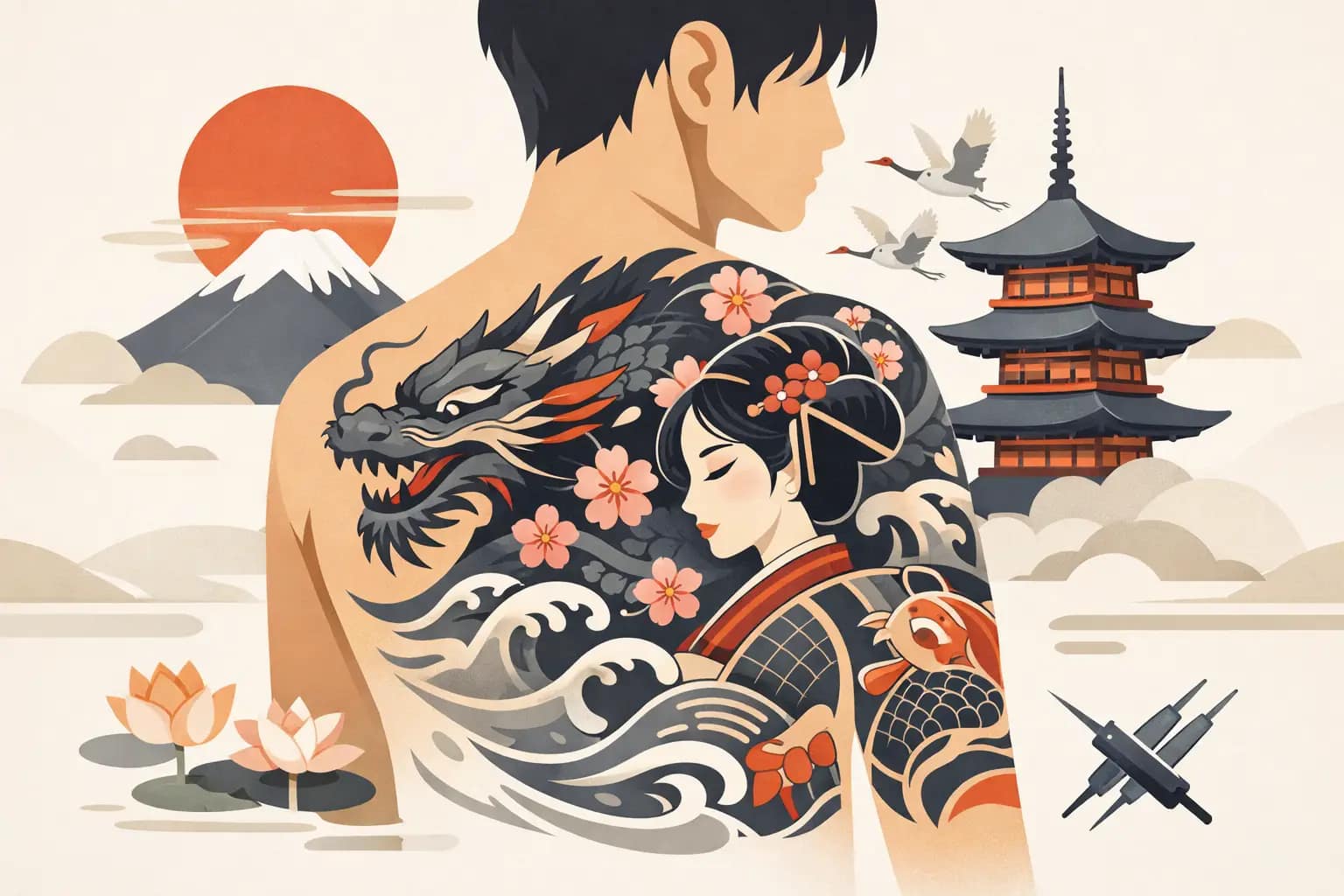


A tattoo can be beautifully applied and still lose clarity sooner than expected if the placement works against the design. The best tattoo placements for longevity are usually areas with steadier skin, less daily friction, and enough room for the artwork to breathe. For custom Japanese, Irezumi-inspired, and Neo-Traditional work, placement is not an afterthought. It is part of what allows the image, movement, and story to remain strong over time.
Aging is normal. Skin changes, bodies change, and tattoos settle into the body as the years pass. The goal is not to chase a tattoo that never changes. It is to choose a placement and composition that can continue to read clearly, even after the fresh contrast softens.
What Makes a Tattoo Age Well?
Longevity comes down to more than body placement. Ink depth, healing, sun exposure, skin care, color choices, line weight, and the artist’s technical control all play a role. But placement has a direct effect on several of those factors.
Areas exposed to frequent sunlight tend to fade more quickly. Places that bend, stretch, rub against clothing, or receive constant handwashing often need more maintenance. Small tattoos with fine details can also become difficult to read when placed on a compact or high-motion part of the body.
That does not make those areas bad choices. A bold hand tattoo or delicate finger piece can be meaningful and visually striking. It simply asks for a design built around the realities of that skin. The strongest long-term tattoos pair the right idea with the right canvas.
The Best Tattoo Placements for Longevity
Outer Upper Arm
The outer upper arm is one of the most reliable placements for tattoos that need to hold their form. The skin is relatively stable, the surface is broad, and it is easy to cover from direct sun when needed. It also gives a custom design room to establish a strong silhouette.
This is an excellent location for a Neo-Traditional animal head, a Japanese-inspired mask, a floral composition, or a focal point that may eventually expand into a larger sleeve. The natural roundness of the arm can support movement in the artwork without forcing small details into a tight space.
Outer Forearm
The outer forearm remains a favorite for a reason. It is highly visible, usually offers a clean working surface, and accommodates vertical designs with strong flow. Snakes, daggers, dragons, tigers, peonies, and larger illustrative motifs all sit naturally here.
The trade-off is sun exposure. Forearms see more daylight than upper arms, especially in Sacramento and throughout Northern California. Consistent sunscreen after healing and sensible sun protection make a real difference in preserving contrast and color.
Shoulder and Upper Arm Cap
The shoulder cap gives a tattoo a balanced, intentional starting point. It is especially effective for round compositions such as chrysanthemums, hannya masks, tigers, or ornamental elements that can transition into a sleeve or chest panel later.
Because the placement has generous space and limited day-to-day abrasion, it can preserve both bold outlines and controlled interior detail well. For collectors planning a larger body of work, the shoulder is also one of the most versatile anchors available.
Calf
The calf is an underrated location for longevity and visual impact. It has enough width for strong designs, often stays protected by clothing, and gives Japanese-inspired imagery a natural vertical direction. A dragon, koi, panther, oni, or botanical piece can use the calf’s shape rather than fight it.
Individual anatomy matters here. A design should follow the contour of the leg and be viewed while standing, not just while sitting in the chair. When the composition is drawn for the body, the calf can carry a substantial tattoo with excellent long-term readability.
Outer Thigh
For larger, detailed work, the outer thigh is among the most forgiving canvases on the body. It provides a broad, low-friction area that can support larger line work, controlled shading, and layered color without crowding the image.
This placement works particularly well for collectors who want a major standalone piece without committing to a full sleeve or back. It is also a strong choice for a detailed scene, whether that means a large tiger with wind bars and flowers or a custom Neo-Traditional design with multiple symbolic elements.
Upper Back and Shoulder Blade
The upper back offers a stable, expansive surface that is ideal for bold, lasting tattoos. It can hold a large central image or become part of a broader composition across the shoulders. The shoulder blade area is less prone to constant sun exposure than the chest or forearms, provided it is not regularly exposed in open-backed clothing.
Back tattoos reward thoughtful planning. They are not seen every day by the wearer, so the design should be compelling from a distance and satisfying up close. This is where strong black work, deliberate negative space, and a clear focal point become especially valuable.
Full Back
A full back remains one of the most powerful placements for traditional Japanese tattooing. It offers scale, narrative space, and a relatively stable canvas for artwork that is designed to live with the body for decades. Large dragons, guardian figures, mythological scenes, and connected floral backgrounds all benefit from this format.
A backpiece is a commitment in time, planning, and healing. It is rarely the right choice for someone looking for a quick tattoo experience. For someone building a meaningful collection, however, the full back allows an artist to create a complete visual world rather than a single isolated image.
Chest, With Thoughtful Design
The chest can age beautifully when the design respects the movement of the body. It is a strong placement for symmetrical work, larger animals, masks, birds, or pieces that connect to an arm or shoulder. It also suits Japanese-inspired layouts that use the chest as part of a larger bodysuit composition.
The chest is not as universally stable as the upper back or outer thigh. Weight changes, muscle development, and natural skin changes can affect it more noticeably for some people. That is not a reason to avoid it. It is a reason to favor confident shapes, readable line work, and a composition that moves naturally with the anatomy.
Placements That Need More Maintenance
Hands, fingers, palms, feet, and the sides of the fingers are often the least predictable tattoo placements for longevity. These areas experience frequent washing, friction, skin turnover, and exposure. Even expertly tattooed work can fade, blur, or require touch-ups sooner than it would on the upper arm or thigh.
The inner wrist, elbow ditch, knee ditch, and ankle can also be challenging because of movement and rubbing. They can still make excellent placements when the design is adapted for them. A bolder, simpler motif with adequate spacing will generally outlast intricate micro-detail in these high-motion zones.
For many clients, the question is not whether a placement is good or bad. It is whether they are comfortable accepting the maintenance that comes with it. A tattoo should fit your life, not just a reference photo.
Design Choices Matter as Much as Placement
Even the best tattoo placements for longevity cannot rescue a design that is too small, too crowded, or built entirely from ultra-fine detail. Tattoos age most gracefully when there is enough room between lines, enough contrast between major shapes, and enough black or color saturation to keep the design legible.
Japanese and Neo-Traditional tattooing have endured in part because both traditions understand this principle. Strong outlines, deliberate composition, rich color, and clear negative space are not just visual signatures. They are practical tools for helping a tattoo remain powerful as it settles into the skin.
A custom design should also account for where it will live. A dragon on the forearm should have a different flow than a dragon on the calf. A peony on a shoulder should open with the curve of the body. The same reference can become a completely different tattoo when it is drawn with the placement in mind.
Let the Body Lead the Composition
The best placement is ultimately the one that supports both your story and the artwork. Visibility may matter to you. You may want a tattoo that becomes part of a sleeve, stays private, or marks a major chapter without needing to explain itself. Those priorities are worth bringing into the consultation from the start.
At Dani Olmos Tattoo, the custom process begins with listening to the idea behind the piece, then shaping it around your anatomy, style, and long-term goals. A well-placed tattoo does more than look good on the day it is finished. It gives your vision the space to become lasting art.