
A bodysuit is not simply a collection of large tattoos. It is a single visual world built across moving, changing anatomy. Knowing how to plan a bodysuit tattoo before the first stencil goes on gives every sleeve, panel, and background element a purpose – and keeps future work from feeling like an afterthought.
For collectors drawn to Japanese, Irezumi-inspired, or Neo-Traditional work, the best bodysuits feel intentional from across the room and rewarding up close. They have a clear rhythm, strong contrast, and enough breathing room for each image to hold its power. That result starts long before the first appointment.
Start With the Full Body, Not the First Tattoo
The most common planning mistake is treating a large-scale project as a series of isolated tattoos. A beautiful chest panel can still create problems if it ignores where the backpiece, sleeve, or side body may eventually travel. The same is true of a standalone arm tattoo that leaves no natural path into the shoulder, chest, or torso.
Begin by deciding what “bodysuit” means to you. Some clients mean a backpiece with both sleeves and chest panels. Others want torso coverage, a leg sleeve, or a long-term project that includes nearly every major area except the hands, neck, and face. There is no required map, but there should be a map.
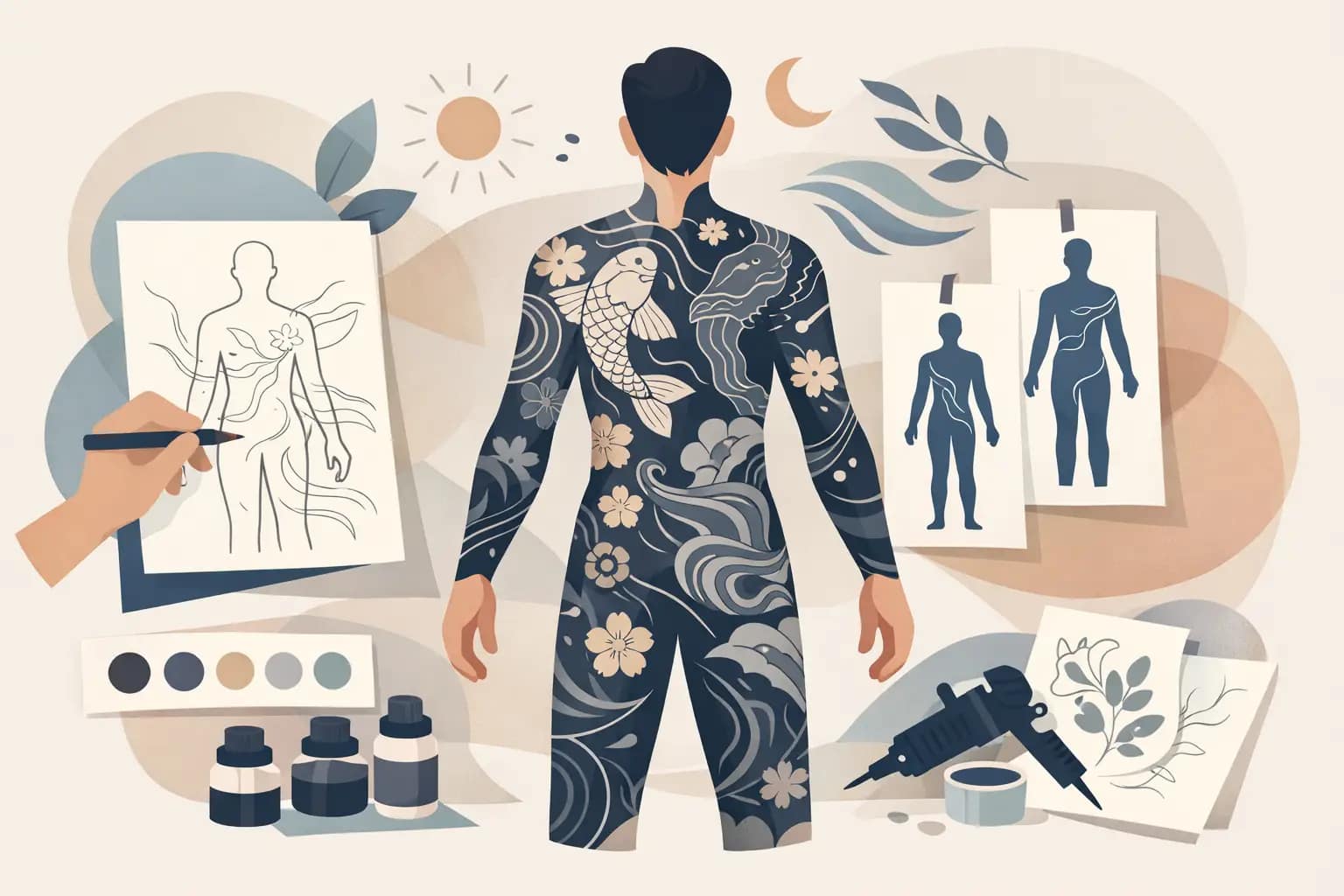
Think in zones: back, chest, arms, ribs, stomach, hips, thighs, and lower legs. Identify the areas you want included, the skin you prefer to leave open, and any existing tattoos that need to be integrated, covered, or allowed to remain distinct. A good artist can help refine those decisions, but arriving with an honest sense of your boundaries makes the consultation more productive.
Choose One Central Story
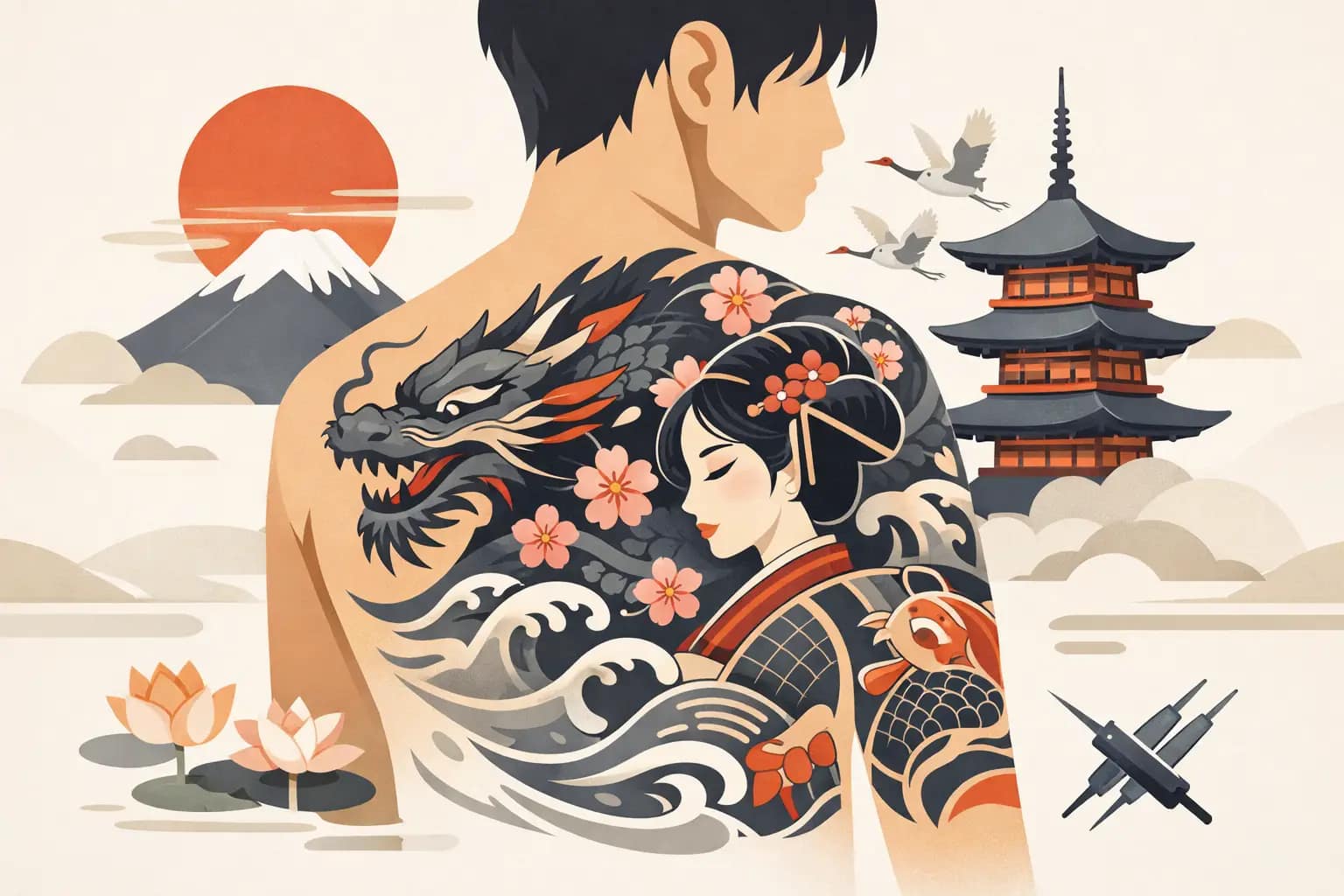
A bodysuit does not need a literal narrative, but it needs a unifying idea. In Japanese and Irezumi-inspired tattooing, a central subject often anchors the composition: a dragon, tiger, koi, hannya mask, phoenix, snake, warrior, or a symbolic figure tied to the client’s story. Secondary imagery supports that subject rather than competing with it.
Ask yourself what you want the work to communicate. Maybe it is resilience after a difficult chapter, devotion to family, controlled strength, transformation, or a lifelong connection to the natural world. The answer does not have to be poetic. It simply needs to be specific enough to guide the design.
For example, a dragon, peonies, wind bars, and clouds can create a powerful overall feeling, but they should be chosen because they work together visually and emotionally. A tiger, maple leaves, and crashing water create a different energy. The goal is not to collect symbols with impressive meanings. It is to create a composition that feels like it belongs to one person and one body.
If you are inspired by traditional Japanese imagery, approach it with respect. Learn the visual language, understand that motifs carry history, and work with an artist who can distinguish between thoughtful influence and random decoration. A custom design should honor the source material while becoming your own original piece.
Decide What Leads the Eye
Every successful bodysuit has hierarchy. One or two major images should lead the eye, while supporting elements create movement around them. If every surface is packed with a face, animal, flower, weapon, or highly detailed object, the work can become visually noisy.
Your artist may recommend placing the primary subject on the back, chest, or outer arm, depending on the subject’s shape and the areas you plan to cover. Broad, powerful imagery often benefits from the back or chest. Long, winding subjects can move naturally through an arm, leg, or side body. This is less about rigid rules than working with anatomy instead of fighting it.
Plan for Body Flow and Movement
The body is not a flat canvas. Shoulders roll forward, ribs expand, elbows bend, and the stomach changes with posture. A bodysuit design should look strong in motion as well as in a photograph.
This is where background becomes essential. Wind, water, clouds, smoke, rocks, flowers, leaves, or abstract Neo-Traditional framing can connect major pieces across the body. Background is not filler. It controls direction, balances dark and open skin, and helps the composition turn corners naturally.
A sleeve may flow over the shoulder into a chest panel. A backpiece may wrap toward the ribs without crowding the front. A thigh design can be built to complement a leg sleeve rather than stopping abruptly above the knee. These transitions are what make a bodysuit feel designed rather than assembled.
Leave room for skin, too. Saturation creates impact, but open space creates contrast and lets the work breathe. The right amount depends on your preferred style, skin tone, existing work, and how bold you want the suit to read from a distance. A dense black-and-gray design can be dramatic, while a color-forward Neo-Traditional suit may need carefully placed open areas to keep each color field clear over time.
Build a Session Plan You Can Actually Sustain
A bodysuit is a commitment of money, healing time, and physical endurance. Planning for that reality protects both the artwork and your experience.
Talk openly about your pace. Some clients prefer frequent sessions to maintain momentum. Others need several weeks or months between appointments due to work, travel, budget, or recovery. Neither approach is wrong, but a plan should account for how different areas heal and how long the project may take.
Pain tolerance matters, although it should not be the only factor. Outer arms, thighs, and parts of the back are often easier places to begin than ribs, sternum, stomach, armpits, knees, or inner thighs. Starting with a manageable area can help you understand your own session tolerance before moving into more demanding placements.
Budgeting deserves the same clarity as design planning. Custom bodysuit work is not a one-time purchase. Ask how sessions are structured, how design time is handled, and what stage of the project should come first. Avoid rushing an artist into smaller, disconnected pieces simply because the complete vision feels far away. A phased approach can still be deliberate when the master plan is established first.
Bring Reference, Not a Blueprint
Reference images are useful when they communicate mood, scale, color, or movement. They become limiting when they are treated as instructions to reproduce someone else’s tattoo.
Bring a small, focused set of references and explain what you respond to in each one. You might love the open background in one image, the color palette in another, and the energy of a third. Also bring photos of your current tattoos, if you have them, along with a realistic list of placements you want covered.
Then leave room for the artist’s point of view. Custom work is strongest when the client brings meaning and direction while the artist solves composition, flow, line weight, and long-term readability. At Dani Olmos Tattoo, that collaboration is where a personal idea becomes a cohesive piece of body art rather than a copied design.
Questions Worth Asking in Your Consultation
Ask how the proposed design will connect to future areas, where the main focal points will sit, and what background elements will unite the work. Ask whether any of your preferred motifs clash in scale, seasonality, symbolism, or visual density. You should also ask which areas should be tattooed first to preserve the strongest options for the project later.
A thoughtful artist will explain their reasoning. They may redirect a placement, simplify an idea, or suggest saving a favorite image for a better section of the body. That is not a lack of creativity. It is craftsmanship protecting the finished result.
Give the Design Time to Become Yours
The best bodysuits are built with confidence, not urgency. Your ideas may evolve after the first sleeve or back session, and that is normal. The important part is maintaining the central visual language: consistent line quality, intentional color choices, balanced contrast, and imagery that continues to serve the story.
Choose an artist whose work you would be proud to wear even before your personal symbolism is added. When the style, composition, and collaboration are right, a bodysuit becomes more than coverage. It becomes a lasting body of work that moves with you and still feels unmistakably yours years from now.