
A Japanese tattoo is rarely a small decision. Whether you are considering a koi sleeve, a dragon back piece, a hannya mask, or a Neo-Traditional design influenced by Irezumi, the work needs more than a strong reference image. The right San Francisco Japanese tattoo artist should understand how the design moves with the body, how traditional imagery carries meaning, and how to build a tattoo that still reads clearly years from now.
For collectors and first-time serious clients alike, choosing an artist is about finding a creative partner. You are not simply selecting a style from a wall. You are trusting someone to translate a personal idea into permanent art with scale, intention, and technical precision.
What Japanese-Inspired Tattooing Requires
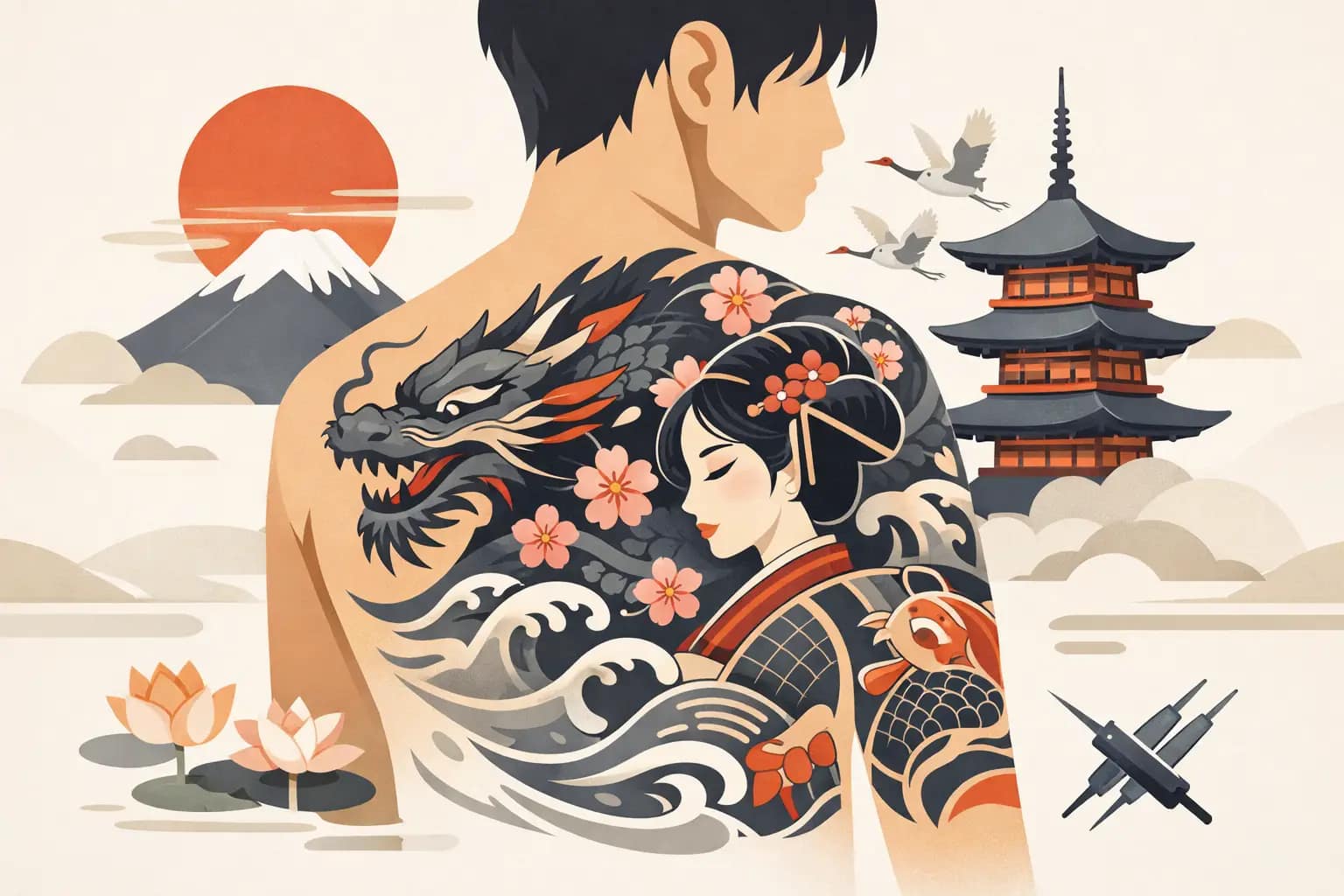
Japanese tattooing is a broad visual language, not one interchangeable look. Traditional Irezumi-informed work often relies on bold outlines, deliberate black backgrounds, flowing wind bars, water, clouds, flowers, and a carefully balanced relationship between subject and negative space. Every element has a job. A dragon should feel like it is moving through the body, not sitting flatly on an arm. A koi should follow the curve of a calf or forearm. Background and secondary imagery should support the main subject rather than compete with it.
Neo-Traditional Japanese work can create more flexibility with color, line weight, stylization, and personal symbolism. That does not mean abandoning structure. The strongest modern pieces still respect the principles that make Japanese tattooing powerful: contrast, movement, readability, and a clear visual hierarchy.
This is why a great Japanese tattoo artist does not approach every request as a collection of separate images. They consider the entire composition first. A sleeve is a sleeve before it becomes a tiger, peonies, maple leaves, and smoke. A back piece is a large field of movement before the main figure is placed.
How to Choose a San Francisco Japanese Tattoo Artist
Start with the portfolio, but look beyond the most dramatic finished photos. Fresh tattoos can look striking under studio lighting. What tells you more is consistency across different body placements, skin tones, color palettes, and project sizes. Look for clean linework, confident black saturation, intentional shading, and backgrounds that create depth without making the design muddy.
Pay close attention to whether the artist shows work that is similar in scale to what you want. If you are planning a full sleeve, seek out artists with fully resolved sleeves, not only isolated palm-sized designs. Large Japanese work requires planning from the first stencil. Adding disconnected imagery over several appointments can work in some tattoo styles, but it often weakens the flow of a Japanese-inspired project.
It also helps to look for evidence of healed work. Tattoos change as skin settles and ages. Bold outlines, balanced spacing, and strong value contrast are not just aesthetic choices. They are part of long-term craftsmanship. A design with too much fine detail packed into a small area may look impressive on day one but lose clarity over time.
Style fit matters just as much as technical ability. Some artists lean traditional, with classic motifs and restrained palettes. Others bring a more illustrative, Neo-Traditional approach with unusual color combinations or contemporary subject matter. Neither route is automatically better. The right direction depends on what you want the tattoo to feel like and how it will live alongside any existing work.
Begin With the Body, Then Build the Story
Clients often arrive with a favorite symbol, and that is a useful starting point. A snake may represent protection, renewal, or personal resilience. A tiger may speak to courage and strength. Chrysanthemums, peonies, waves, and maple leaves can add seasonal feeling, contrast, and movement. But symbolism is most effective when it serves the design rather than turning the tattoo into a literal checklist.
An experienced artist will ask where the tattoo will sit, what tattoos surround it, how much skin you want to cover, and whether this is intended to become part of a larger collection. Those questions are not a delay tactic. They prevent a common frustration: loving an individual tattoo but realizing later that it blocks the placement or flow of the piece you really wanted.
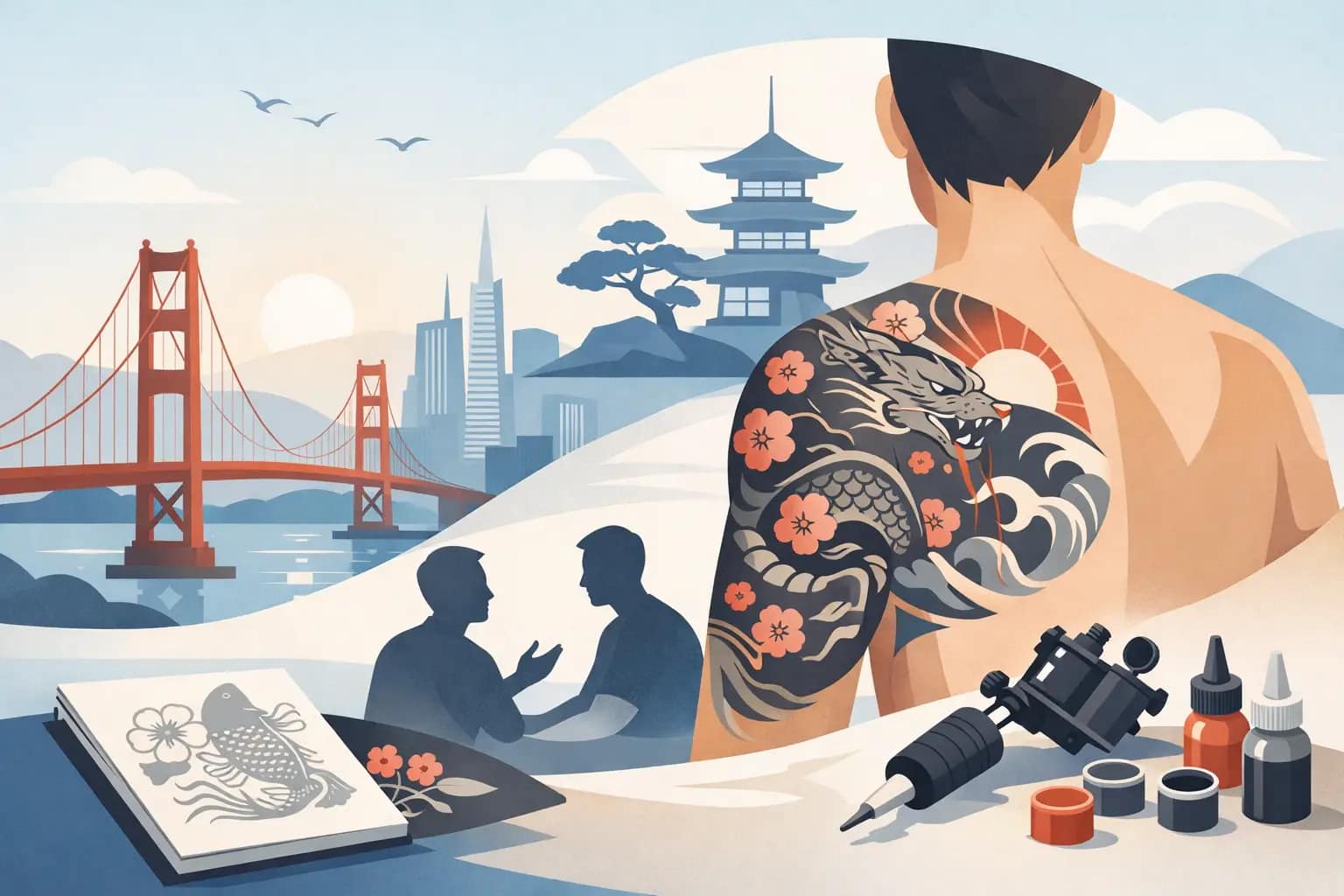
Placement changes everything. A dragon can wrap naturally around a shoulder and upper arm, while a vertical figure may be better suited to the thigh, calf, or outer forearm. A chest panel has different visual demands than a half sleeve. The body is not a flat page, and the artist’s ability to use its curves is one of the clearest signs of thoughtful custom work.
Be open to changing the exact pose, direction, or supporting elements during the design process. That flexibility allows the artist to create something made for you rather than force a saved image into a placement where it does not belong.
Ask About the Custom Design Process
A strong consultation should feel collaborative and direct. You should leave with a clearer sense of the concept, placement, approximate scale, and session expectations. The artist does not need to reveal every line of the final drawing before the appointment, but they should listen carefully, explain their artistic reasoning, and make sure the design is aligned with your vision.
Bring references to communicate mood, subject matter, and color preference, not to request an exact copy of another person’s tattoo. Referencing existing art is normal. Copying a custom tattoo is not. The goal is an original piece that carries your story and fits the artist’s hand.
Ask how the artist handles revisions and how much freedom they need to make the composition work. There is a healthy balance here. You should feel heard, especially when the tattoo includes meaningful themes. At the same time, the artist needs room to make decisions about scale, flow, contrast, and visual balance. Those decisions are what separate a custom tattoo from a collage of ideas.
Respect the Tradition Without Treating It Like a Costume
Japanese imagery has deep cultural, historical, and spiritual roots. You do not need to be an expert in Japanese art history before booking a tattoo, but you should approach the style with curiosity and respect. Learn the general associations of the imagery you choose, and ask questions when you are unsure.
That respect also means avoiding the assumption that every motif has one fixed meaning. Symbolism can shift by era, region, artistic tradition, and personal interpretation. A skilled artist can help you understand common readings while creating a piece that remains honest to your own connection with the subject.
If cultural specificity is central to your idea, choose an artist who can discuss the visual tradition thoughtfully rather than using Japanese motifs as surface decoration. The best work honors its influences while still making room for a personal, contemporary tattoo.
Plan for Time, Budget, and Long-Term Care
Quality Japanese tattooing is an investment in both time and skin. Larger projects usually require multiple sessions, healing periods, and patience between appointments. The exact pace depends on placement, complexity, your skin, and how well you heal. A full sleeve or back piece should not be rushed simply to reach a finish date.
Budget should be approached the same way. The least expensive option can become expensive if the tattoo needs extensive reworking later. Prioritize an artist whose work you trust, whose process feels professional, and whose portfolio demonstrates the level of finish you want. Saving for the right artist is often the better choice than compromising on a permanent piece.
For Bay Area clients who value a specialized, artist-led experience, traveling can also be worth considering. Dani Olmos Tattoo welcomes clients from San Francisco and throughout Northern California for custom Japanese and Neo-Traditional work built around thoughtful composition and enduring visual impact.
Aftercare is part of the result, not an afterthought. Follow your artist’s instructions closely, protect the tattoo from sun exposure, and give each session time to heal before returning for more work. Saturated color, rich blackwork, and crisp detail all benefit from good healing habits and consistent long-term care.
The right tattoo should feel more considered as time passes, not less. Choose an artist whose work gives you confidence, bring a story worth translating, and allow the design enough room to become the kind of art you will be proud to wear for life.