
A great tattoo consultation usually starts with one honest question: what are you actually trying to say with this piece? That is where strong custom tattoo reference ideas matter. Not because your artist needs you to design the tattoo for them, but because the right references reveal mood, symbolism, placement goals, and the level of detail you are drawn to.
The best reference material gives direction without boxing the design in. If you come in with ten screenshots of finished tattoos and ask for a copy with minor changes, the result often feels flat. If you come in with clear visual inspiration, a few personal anchors, and room for artistic interpretation, the design has a much better chance of becoming something original and lasting.
What good custom tattoo reference ideas actually do
References are not there to replace the artist’s job. They help translate your taste into a visual language. That distinction matters, especially for large-scale Japanese and Neo-Traditional work where flow, readability, and long-term aging are part of the design from the beginning.
A strong reference can show that you prefer heavier black balance over soft gray, that you like movement in the composition, or that you want the tattoo to feel bold rather than delicate. It can also reveal what you do not want. Sometimes the clearest direction comes from saying, this dragon feels too aggressive, this chrysanthemum is too ornate, or this snake has the right motion but the wrong mood.
For custom work, references work best when they answer visual questions instead of trying to solve the whole tattoo. They give your artist a starting point, not a blueprint.
The best sources for custom tattoo reference ideas
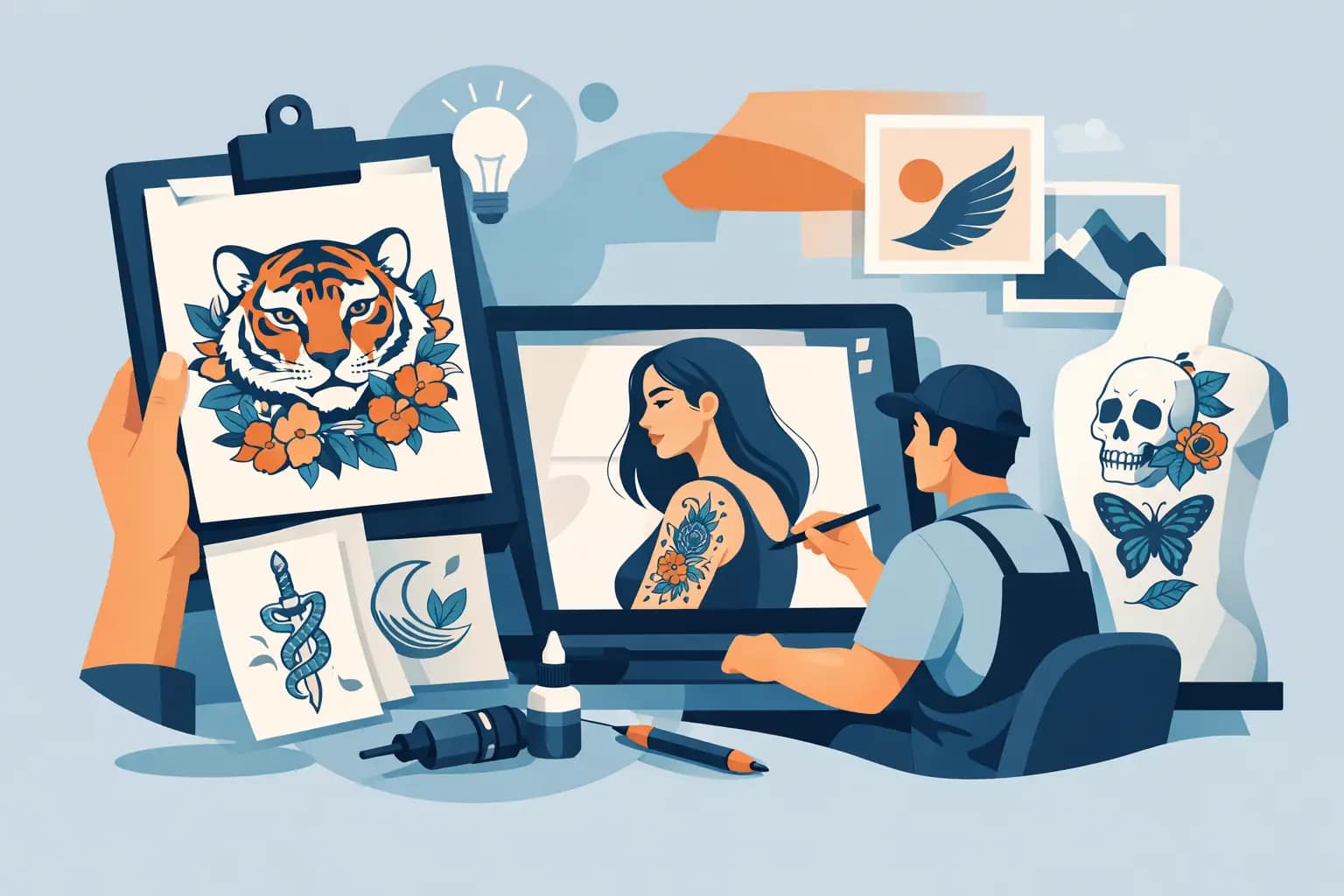
The most useful references usually come from a mix of tattoo-specific and non-tattoo imagery. Finished tattoos can help communicate style, but they should not be the only thing you bring. When every reference is another person’s completed tattoo, it becomes harder to separate inspiration from imitation.
Tattoos for style, not copying
Tattoo references are helpful when you are pointing to qualities like line weight, background treatment, color palette, and composition. Maybe you love the way a koi wraps with the body instead of sitting on it. Maybe you are drawn to bold peonies with simplified petals rather than hyper-detailed floral work. That kind of direction is useful.
What is less useful is bringing one exact sleeve or chest panel and asking for the same arrangement with slightly different elements. A custom tattoo should be built for your body and your story, not reverse-engineered from someone else’s piece.
Fine art, prints, and illustration
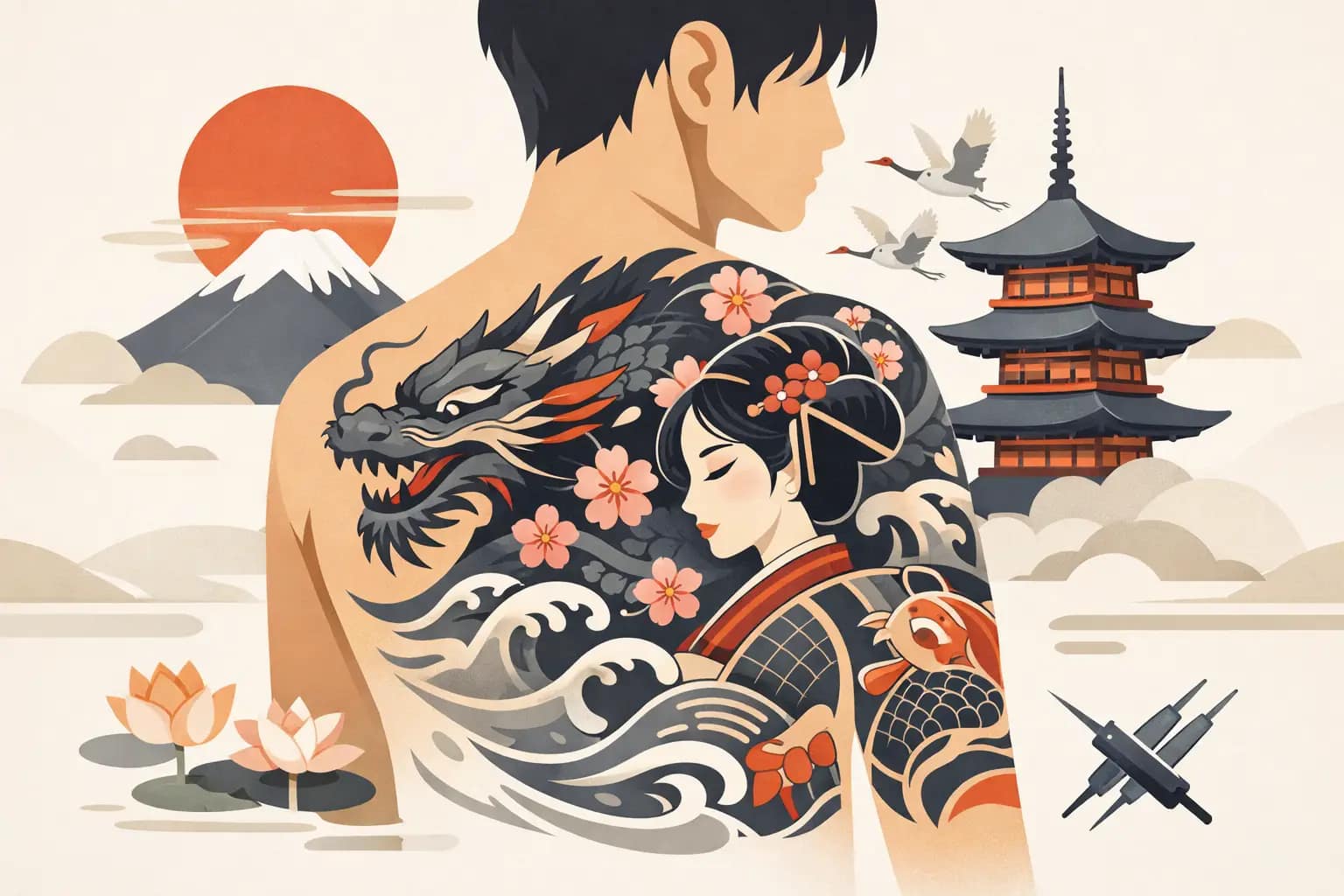
If you are interested in Japanese-inspired tattooing, traditional woodblock prints, painted screens, folklore illustrations, and botanical studies can all be stronger references than random tattoo screenshots. They often carry the movement, symbolism, and visual rhythm that make a custom piece feel more grounded.
For Neo-Traditional clients, vintage illustration, poster art, animal studies, and ornamental design can also help. These sources communicate atmosphere and shape language in a way that opens creative possibilities instead of narrowing them.
Personal photos and meaningful objects
Some of the best references are deeply personal. A flower from your grandmother’s garden, a photo of an old family keepsake, the shape of a mountain line you grew up seeing, or the posture of a dog you lost years ago can all add something real to the design.
These references do not have to be dramatic. They just need to be specific enough to carry meaning. That is often what separates a tattoo that looks cool from one that actually feels like yours.
How to choose references that lead to better design
More images does not always mean more clarity. If you send fifty pictures with no explanation, your artist has to guess what you are responding to. That can slow down the process and create mismatched expectations.
A smaller set of references, with a sentence about why each one matters, is far more effective. You might say that one image has the right scale, another has the kind of background movement you like, and a third captures the expression you want in a tiger’s face. Now your artist can see the pattern.
Focus on visual priorities
Before gathering references, decide what matters most. Is the priority symbolism, body flow, color story, level of detail, or overall energy? Not every piece can maximize everything at once. A highly detailed design may lose some bold readability from a distance. A very simple composition may age beautifully, but leave out some narrative complexity.
Knowing your priorities helps your artist make smart design decisions. It also makes the collaboration smoother because both of you are aiming at the same target.
Think about placement early
Placement changes everything. A design that works on the thigh may fall apart on the forearm. A back piece can hold more narrative and secondary elements than a palm-sized tattoo ever could. If you are collecting custom tattoo reference ideas, look at examples that live on a similar part of the body.
This is especially important with snakes, dragons, koi, and floral compositions where movement is part of the impact. The right subject in the wrong placement can still feel wrong.
What to avoid when bringing tattoo references
The biggest mistake is treating references like a final draft. That usually creates tension because the client expects a near copy and the artist is trying to make an original piece that fits the body correctly. Custom work needs some creative space.
Another common issue is mixing too many unrelated styles. If one reference is soft black and gray realism, another is bright Neo-Traditional, and another is minimalist fine line, the design direction gets muddy fast. You can absolutely blend influences, but the piece still needs a clear visual center.
Low-quality images are another problem. Tiny screenshots, heavily filtered social posts, or cropped photos with no visible detail are hard to work from. If an image matters, save a clean version.
Turning ideas into a tattoo that feels personal
A strong concept usually starts with three layers: subject, meaning, and aesthetic direction. The subject is what the tattoo shows. The meaning is why it matters. The aesthetic direction is how it should feel visually.
For example, a client might know they want a dragon. That is the subject. The meaning might be resilience after a major life change. The aesthetic direction might be bold, elegant, and flowing rather than angry or chaotic. Once those layers are clear, the references become easier to choose and the final design becomes stronger.
This is where an experienced custom artist brings real value. Good design is not just about drawing well. It is about editing, shaping, and building a piece that reads clearly on skin and still holds its power years later. A well-made tattoo does more than look impressive on day one.
Reference ideas for Japanese and Neo-Traditional pieces
If you are not sure where to begin, think in combinations instead of single images. A koi paired with water movement, maple leaves, and a seasonal mood tells more of a story than just a fish alone. A hannya mask changes completely depending on whether it is framed by peonies, smoke, waves, or a tighter ornamental approach.
For Neo-Traditional work, you might build around an animal, a dagger, a rose, or a sacred heart, then use color references and framing elements to define the tone. The design does not need to be overloaded to feel rich. Often the strongest custom pieces are selective, not crowded.
At Dani Olmos Tattoo, that design process is treated like collaboration, not order-taking. The goal is to understand what you are drawn to, then turn that into artwork with structure, movement, and lasting visual strength.
How to prepare for your consultation
Come in with a focused set of images, an open mind, and enough self-awareness to explain what you connect with. You do not need perfect tattoo vocabulary. You just need to communicate clearly. If you know you want a sleeve that feels bold, balanced, and rooted in Japanese influence, that is useful. If you know a piece should honor family without becoming overly literal, that is useful too.
It also helps to be honest about flexibility. Some ideas need adjustment to fit anatomy, scale, or style. That is not a compromise in the bad sense. It is often where the best design choices happen.
Good custom work is a conversation between vision and craftsmanship. The references open that conversation, but they are only the beginning. Bring what inspires you, say what matters, and let the piece become more than a collage of saved images.