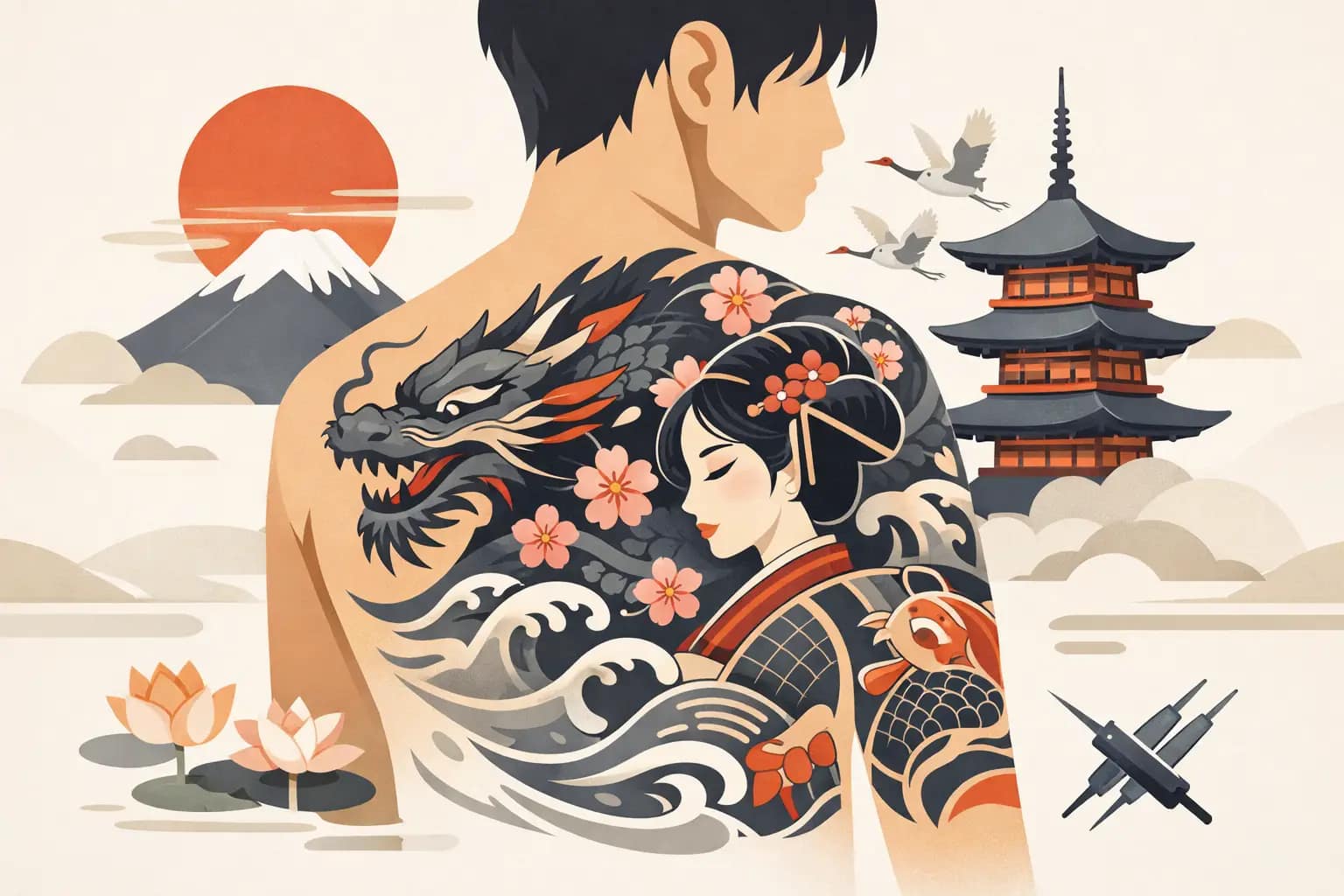


Some tattoo ideas arrive fully formed. Most do not. What clients usually bring into a tattoo design consultation is something more valuable than a finished sketch – a mood, a story, a symbol, a reference, or a feeling they want the piece to carry for years.
That starting point matters, because great custom tattooing is not about copying an image onto skin. It is about translating your idea into something that fits your body, reads clearly at a distance, holds detail where it should, and still looks strong over time. If you are investing in a custom Japanese, Irezumi-inspired, or Neo-Traditional piece, the consultation is where that process begins to take shape.
Why a tattoo design consultation matters
A strong tattoo is not just a good drawing. It is a design built for skin, placement, movement, scale, and longevity. That is why the consultation matters so much. It gives the artist room to understand what you want, but just as importantly, why you want it.
Sometimes a client comes in asking for a dragon, a tiger, a snake, or a mask. On the surface, that sounds straightforward. In practice, those ideas can go in very different directions depending on the emotional tone, the body placement, the amount of skin available, and the style language that will shape the final piece. A dragon meant to feel protective reads differently from one meant to feel aggressive. A tiger on the forearm needs different composition choices than a tiger built into a full sleeve.
The consultation creates clarity before the machine ever turns on. It helps prevent rushed decisions, awkward placement, overcrowded detail, and designs that feel disconnected from the body. It also builds trust, which is a big part of any successful custom tattoo experience.
What to bring to a tattoo design consultation
The best consultations are focused, not overpacked. You do not need to show up with a complete design. In fact, trying to pre-design every inch of the piece can sometimes make the process harder. What helps most is bringing the right kind of direction.
Reference images are useful when they show style, mood, movement, color palette, or compositional elements you are drawn to. They are less useful when the goal is to replicate someone else’s tattoo exactly. A custom piece should feel like it belongs to you, not like a screenshot transferred to skin.
It also helps to come in with a clear sense of placement, approximate size, and whether this piece needs to connect to existing work. If the tattoo has personal meaning, say so. You do not have to explain every detail of your life, but context can shape the design in powerful ways. A good artist is listening for the idea beneath the image.
The most helpful things to communicate
Be honest about what you love, what you dislike, and what feels non-negotiable. If you want bold flow over tiny detail, say that. If you care more about symbolic accuracy than color, say that too. The more clearly you communicate priorities, the better the artist can build around them.
That said, there is a balance. Giving direction is helpful. Trying to control every technical choice usually is not. A consultation works best when the client brings vision and the artist brings design judgment.
How the artist shapes your idea
This is where experience shows. During a tattoo design consultation, the artist is not simply collecting your preferences. They are evaluating what will actually work.
That includes scale, anatomy, flow, readability, negative space, and how the design will age. Skin is not paper. A concept that looks great in a digital mockup can become muddy if it is too small, too busy, or placed in a way that breaks the composition every time the body moves.
In Japanese and Neo-Traditional work especially, design choices need structure. Large forms, intentional rhythm, and clear hierarchy matter. Background elements, secondary motifs, and motion lines should support the main subject, not compete with it. The result should feel cohesive, not crowded.
Sometimes this means the artist will suggest changing the pose, enlarging the piece, simplifying a section, or moving the placement entirely. That is not resistance. That is craftsmanship. Good consultation is not about saying yes to everything. It is about building the strongest version of the idea.
Placement, size, and long-term quality
Clients often think about placement in terms of visibility first. That makes sense. You want the tattoo to live where it feels right. But visibility is only one part of the equation.
The shape of the body changes how a design reads. A shoulder cap invites motion and wrap. A forearm favors vertical flow. The ribs can hold elegant movement but require commitment. A thigh gives room for scale. A back piece opens up entirely different possibilities than a calf or outer arm. During the consultation, placement becomes a design decision, not just a location choice.
Size matters for the same reason. Fine details need enough room to breathe. Bold traditional structure often benefits from larger scale because it lets the composition settle in naturally. Going too small to fit an ambitious idea usually costs more than it saves. The tattoo may lose impact early, and aging can make that problem worse.
A well-run consultation addresses this upfront. The goal is not just to make the tattoo fit today. The goal is to make it read beautifully years from now.
Collaboration is not the same as customization on demand
This is where expectations matter. Custom tattooing is collaborative, but it is still artist-led. Those two things are not in conflict.
A real consultation is not a menu of edits until the design becomes a compromise. It is a working conversation where your story, preferences, and goals are translated through the artist’s style, experience, and visual language. If you are choosing a specialist, that perspective is part of what you are hiring.
For clients seeking Japanese or Irezumi-inspired work, this matters even more. Those designs have history, flow, and internal logic. Motifs carry visual and symbolic weight. Composition is not random. When an artist with a strong point of view guides the design, the tattoo tends to feel more unified and more timeless.
At Dani Olmos Tattoo, that collaborative approach is part of what makes custom work feel personal without becoming generic. The piece is built around the client, but it is also built with artistic discipline.
Questions worth asking during the consultation
A consultation should leave you more confident, not more confused. You do not need to interrogate the process, but you should understand how the artist sees the piece developing.
Ask how the design will fit the chosen area. Ask whether the scale is right for the level of detail you want. Ask if the concept would be stronger in black and gray or color. If you already have tattoos nearby, ask how this new piece can relate to them. If the design carries cultural references, ask how the artist approaches those themes respectfully and visually.
The best answers usually sound thoughtful rather than rehearsed. Good artists explain design choices clearly. They can tell you why a concept needs room, why a background should stay restrained, or why one motif reads stronger than another on a specific part of the body.
Signs you are ready to book
You do not need every answer before moving forward. But you should feel alignment on the big things. The concept makes sense. The artist understands your intent. The placement and scale feel considered. You trust the design process.
That last part matters more than many clients expect. If you are constantly second-guessing the artist before the tattoo even starts, the issue may not be the design. It may be the fit. Custom work asks for trust on both sides.
For clients traveling from Sacramento or elsewhere in Northern California for specialized tattooing, that trust often begins at the consultation stage. You are not just booking time in a chair. You are choosing the hand and eye that will shape the piece for the long haul.
A tattoo design consultation should feel like the first real moment your idea becomes tangible. Not smaller, not safer, not watered down – clearer, stronger, and more at home on the body. When that happens, the next step is easy: let the design do what it was meant to do.