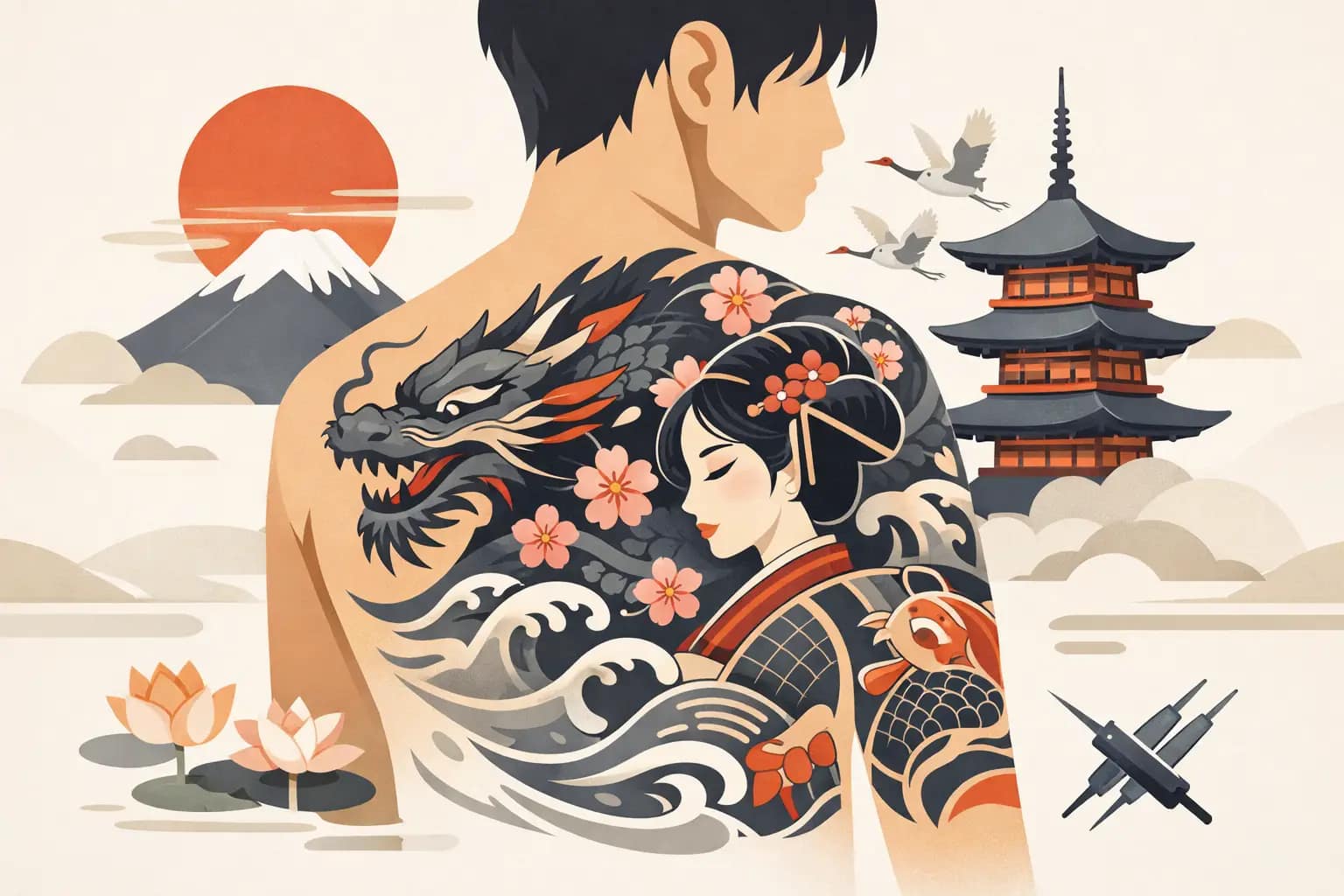

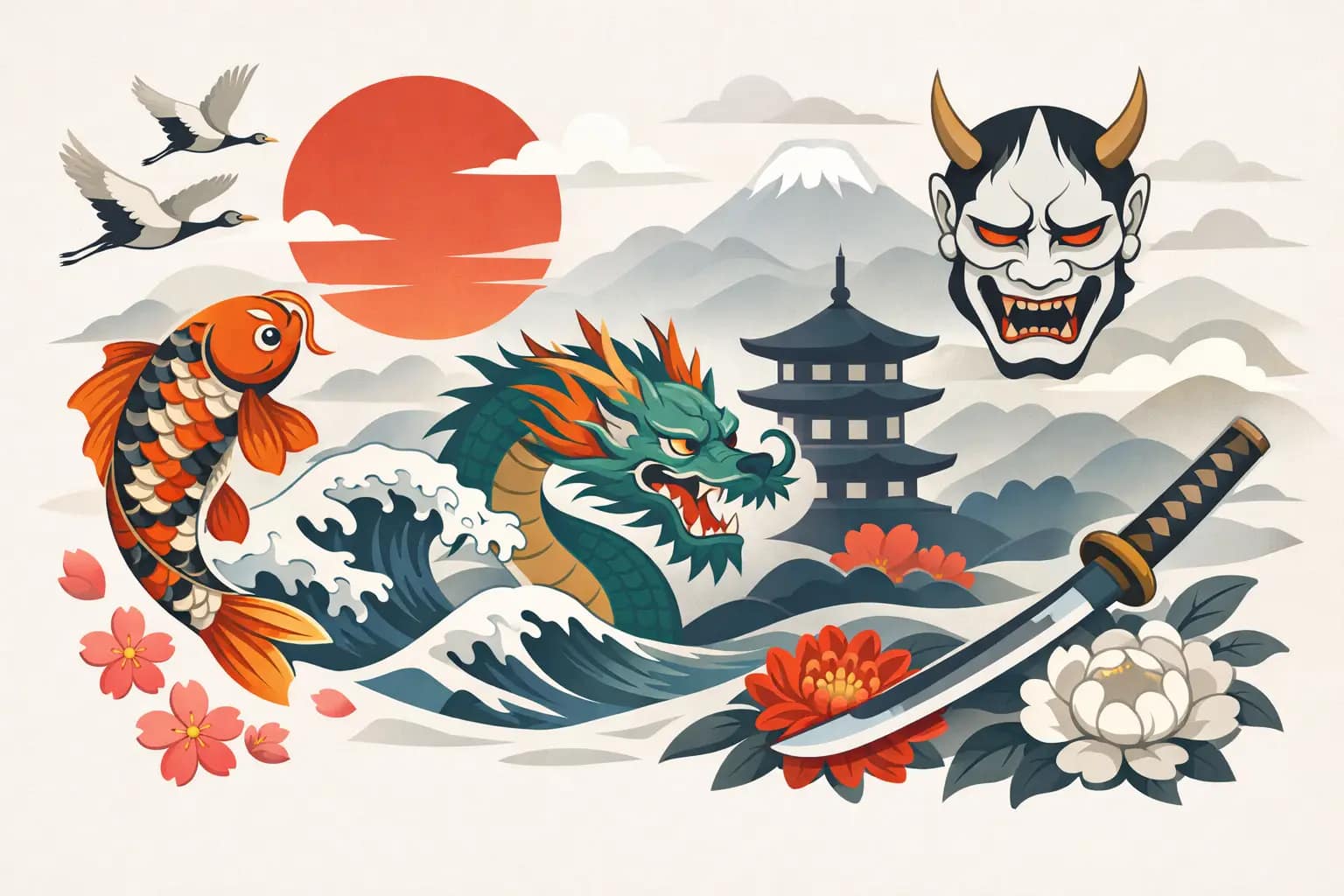
A strong Japanese tattoo rarely works because of the main subject alone. The dragon, koi, tiger, or mask may grab attention first, but japanese tattoo background elements are what give the piece movement, atmosphere, and staying power on the body. They connect the design, control visual rhythm, and make the tattoo feel like a complete composition instead of a sticker placed on skin.
This is where a lot of people underestimate the design process. Backgrounds are not filler. In Japanese and Irezumi-inspired tattooing, they carry structure, symbolism, and flow. When they are handled well, the tattoo breathes. When they are treated as an afterthought, even a beautifully drawn subject can feel flat or disconnected.
Why japanese tattoo background elements matter so much
Background elements do several jobs at once. First, they create motion. A wind bar can push the eye across the shoulder and into the chest. Water can wrap around the calf or forearm and make the body part feel intentional rather than awkward. Clouds can soften transitions and give heavier imagery room to sit.
They also create contrast. A bold koi against clean water bars reads differently than that same koi floating in an empty field of skin. A snake against dark wind and peony leaves feels more dramatic. A hannya with smoke, blossoms, and black shading can become intense and theatrical. The background tells the viewer how to experience the main image.
Just as important, background elements help a tattoo age well. Large-scale Japanese work depends on readable shapes, clean separation, and balanced negative space. A smart background supports those things. Too much texture, too many competing motifs, or poor spacing can make a piece muddy over time.
The most common Japanese tattoo background elements
In traditional and Irezumi-inspired work, a few background motifs appear again and again because they solve design problems beautifully and carry recognizable visual language.
Wind bars
Wind bars are one of the most classic choices. They create flow, speed, and directional energy. Visually, they can pull a composition around the body and connect separate subjects into a single field. They are especially effective in sleeves, back pieces, and leg work where movement matters.
Wind bars also offer a clean, graphic structure. That makes them useful for clients who want the background to feel bold without becoming overly busy. Depending on how they are shaped, they can feel calm and elegant or intense and forceful.
Water and waves
Water is one of the most recognizable Japanese tattoo background elements, and for good reason. It brings power, motion, and visual drama. It works naturally with koi, dragons, frogs, namakubi, and mythic scenes, but it can also add contrast to floral or animal subjects that need more energy.
Waves can be drawn in a heavier, storm-driven way or in a more controlled decorative style. The right approach depends on the main image and placement. A full sleeve with a koi often benefits from stronger motion. A chest panel with softer floral work may need water used more sparingly.
Clouds and smoke
Clouds and smoke are useful when a piece needs atmosphere more than force. They can frame a dragon, soften a mask composition, or transition between major forms without adding too much hardness. This is often a strong option for clients who want a background that feels layered and dimensional but not overly aggressive.
Smoke tends to feel moodier and more dramatic. Clouds can feel more traditional and expansive. The difference is subtle, but it matters in the final tone of the piece.
Rocks, stone, and earth
These elements ground a composition. If the subject feels too floaty, rocks or earth forms can anchor it. They work especially well with tigers, snakes, peonies, and guardian-inspired imagery. They can also break up large areas of motion from wind or water so the overall design feels balanced.
This is one of those areas where restraint matters. Too much stone texture can make the tattoo heavy. Used well, it gives the eye a place to rest and gives the subject more presence.
Floral and botanical framing
Flowers are not always the main subject. In many Japanese compositions, they also function as part of the background structure. Cherry blossoms, peonies, chrysanthemum petals, maple leaves, and bamboo can frame movement, add seasonal meaning, and soften the transitions between heavier motifs.
This is especially helpful in designs that need elegance alongside strength. A sleeve with a fierce animal can become more refined with the right floral support. It also gives more room for personal symbolism without forcing unrelated objects into the design.
How background changes the story of the tattoo
A dragon with wind bars tells a different story than a dragon with storm waves and lightning. A koi with cherry blossoms feels different from a koi pushing through rough current and dark shading. The subject may stay the same, but the emotional tone shifts.
That is why the background should come from the concept, not from habit. If the tattoo is meant to reflect endurance, water and current may be the right language. If the piece is about intensity, conflict, or transformation, darker clouds, smoke, or sharper movement may serve it better. If the goal is grace, control, and beauty, floral framing and lighter wind patterns may create a better balance.
For custom work, this is where the artist-client conversation matters. A good design process asks what the tattoo needs to feel like, not just what objects need to appear in it.
Placement changes which background works best
Not every background element fits every body part the same way. This is one of the biggest reasons copied reference tattoos often fall short.
Arms and sleeves
Sleeves need continuous flow. Wind bars, water, and clouds are often effective because they wrap naturally around the arm and help tie the upper and lower sections together. The background also has to account for how the design looks from the front, side, and back, not just in a flat photo.
Legs
Leg pieces can handle strong movement and heavier contrast. Water, rocks, and large directional backgrounds often work well here because the anatomy gives space for rise and drop in the composition. A calf piece may need a different rhythm than a full leg sleeve.
Back pieces and body suits
Large-scale work gives background elements room to do what they are supposed to do. This is where clouds can open up, waves can surge, and negative space can really breathe. On larger projects, the background is often what creates unity across multiple major subjects.
Smaller placements
On a forearm panel, thigh piece, or shoulder cap, background needs more discipline. Too many elements can crowd the tattoo fast. Sometimes one strong environmental motif is better than layering wind, flowers, smoke, and water all at once.
The balance between tradition and customization
Japanese tattooing has established visual language for a reason. These elements are not random decoration. They come from a design tradition that values flow, hierarchy, contrast, and symbolic harmony. Respecting that structure usually leads to stronger tattoos.
At the same time, custom work should still reflect the individual. The best approach is not to force modern ideas into a traditional framework without thought, and it is not to copy tradition so rigidly that the tattoo loses personality. It is to understand the rules well enough to build something personal that still feels coherent.
That might mean choosing a traditional background treatment for a classic subject, or it might mean adjusting density, shape language, or contrast to better fit your body, your story, and the long-term vision for the piece.
What to ask for during the design process
If you are planning Japanese work, ask about background early. Ask how the piece will move with the body. Ask how much negative space will be left. Ask whether the background is meant to frame the subject quietly or push the entire piece with energy.
It is also worth asking how the tattoo will age. A thoughtful artist will consider readability from day one, not just the fresh photo. In a custom studio like Dani Olmos Tattoo, that kind of planning is part of what separates a designed piece from a collection of cool elements crowded together.
A great Japanese tattoo background does not compete for attention, but it does carry weight. It shapes the mood, supports the story, and gives the tattoo its visual backbone. If you are investing in a piece meant to live on your body for years, that background deserves as much thought as the subject itself.