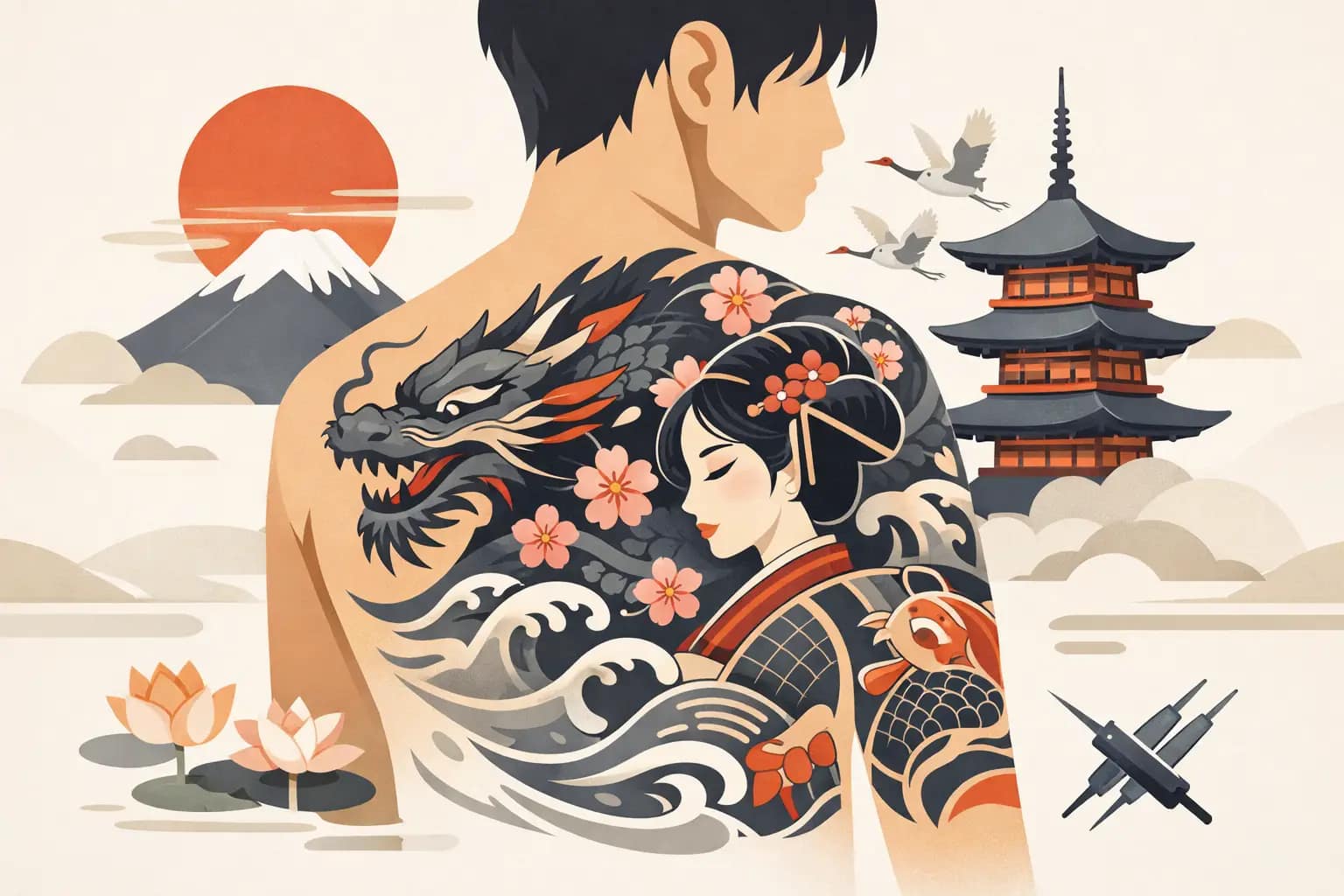

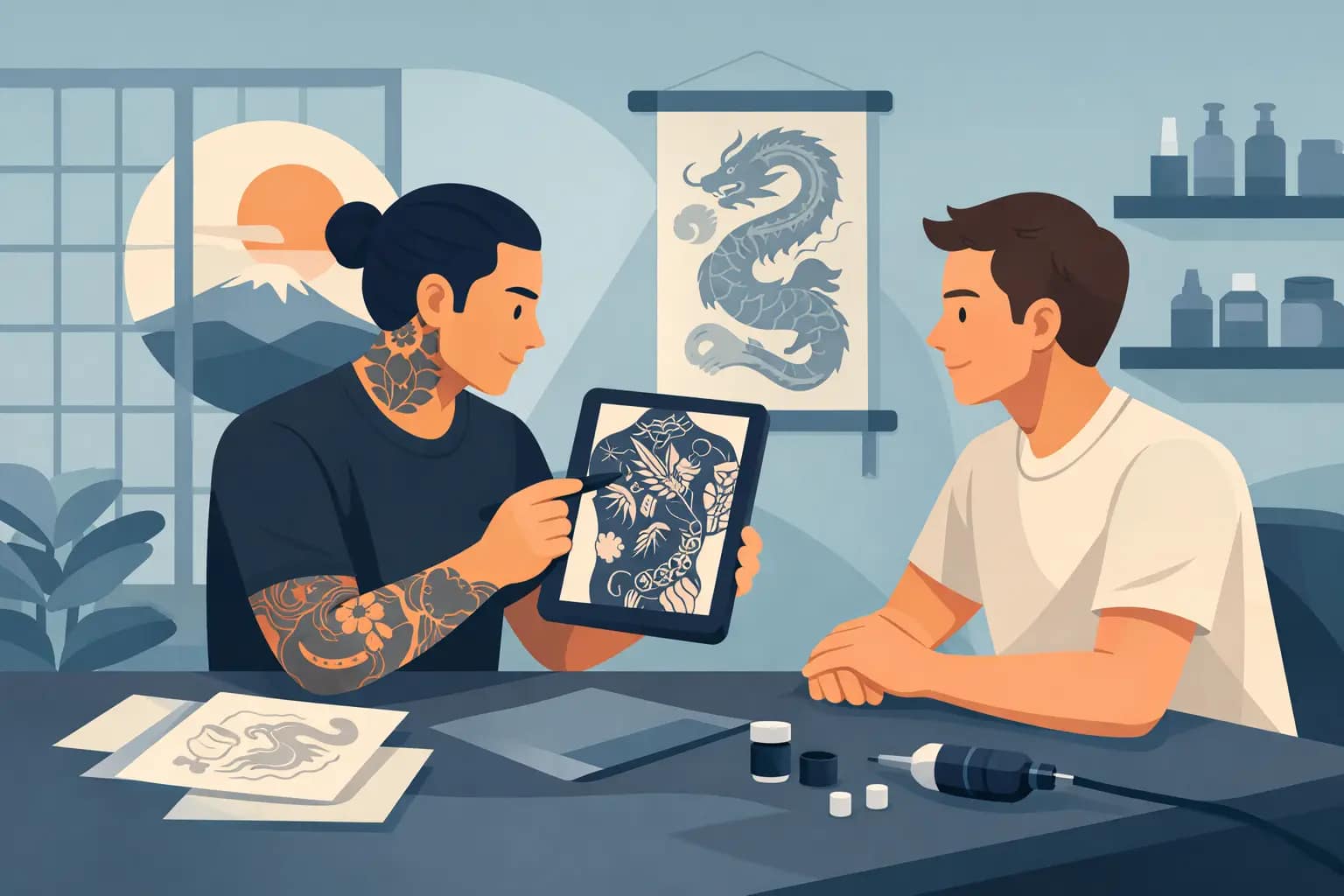
A strong Japanese-inspired tattoo usually starts long before the machine turns on. The irezumi consultation process is where the piece begins to take shape – not just visually, but conceptually. If you are investing in custom work with real intention behind it, that first conversation matters as much as the session itself.
Irezumi is not a style that rewards rushing. Large-scale Japanese work depends on flow, symbolism, body placement, and how each element supports the whole composition over time. A consultation is where those decisions get tested, refined, and aligned with your goals so the final tattoo feels cohesive instead of pieced together.
Why the irezumi consultation process matters
With smaller tattoos, people sometimes come in with a reference, pick a placement, and move forward quickly. Japanese work is different. Even when the tattoo starts as a single subject – a dragon, koi, tiger, hannya, peony, chrysanthemum – the design has to live on the body in a way that feels natural and balanced.
That is why the consultation is not just about choosing imagery you like. It is about understanding what you want the tattoo to say, how visible you want it to be, whether this is a standalone piece or part of a larger bodysuit direction, and how much room the design needs to breathe. Good irezumi planning protects the integrity of the artwork.
It also prevents one of the most common problems in custom tattooing: committing too early to an idea that sounds good in theory but does not fit the body, the story, or the long-term vision.
What you should bring to an irezumi consultation
You do not need to arrive with a fully solved concept. In fact, many of the best consultations start with a rough direction instead of a rigid blueprint. What helps most is clarity about your intent.
If a piece is tied to a personal experience, bring that context. If you are drawn to certain themes – resilience, protection, transformation, conflict, devotion, luck – say that plainly. If you have reference images, they should show mood, composition, texture, or subject matter, not something you expect copied exactly.
It also helps to be honest about practical things. Mention your job, your comfort level with visibility, your budget range, and whether you are thinking about one session or a larger project completed over time. Those details shape the design process more than most people realize.
Story first, symbolism second
Clients sometimes come in focused on symbolic meanings they found online. That can be useful, but it should not replace a real conversation. Japanese imagery carries tradition, but custom tattooing works best when symbolism is filtered through your life rather than pulled from a list.
For example, a koi can represent perseverance, but that does not automatically make it the right fit for every story about struggle. A dragon may signal power or wisdom, but depending on placement and surrounding elements, it can create a very different tone. The consultation helps sort out whether an image fits because it is meaningful to you or because it is simply familiar.
How an artist evaluates your idea
During the irezumi consultation process, an experienced artist is looking at more than the subject you request. They are evaluating movement, body flow, scale, contrast, and how traditional principles can be honored while still making the piece personal.
A sleeve, back piece, chest panel, or leg project has architecture. The body is not a flat page, and Japanese work looks strongest when the design moves with muscles, joints, and natural lines instead of fighting them. That means an idea may need to be expanded, simplified, or redirected.
Sometimes the best consultation outcome is hearing that your first concept needs adjustment. That is not resistance. That is design judgment. If a certain motif will read too small, feel crowded, or lose power in the placement you chose, it is better to hear that early than live with a compromised tattoo later.
Placement changes everything
A dragon wrapping a sleeve behaves differently than a dragon spread across the back. Flowers that add balance to a thigh piece may feel decorative in the wrong way on a forearm. Wind bars, water, rocks, clouds, and background all affect pacing and readability.
This is where consultations become collaborative in the best sense. You bring the intent. The artist brings the visual discipline to translate that intent into a design that works on skin, at scale, and over years of wear.
Expect questions about commitment and timeline
Japanese-inspired custom work often unfolds in stages. Even if you are not starting a full bodysuit, larger pieces require patience. A good consultation usually includes an honest discussion about how many sessions the project may take, how much detail the concept demands, and how your schedule affects progress.
This part is worth taking seriously. Clients often underestimate how important consistency is, especially with larger work. Long gaps between sessions are sometimes unavoidable, but they can affect momentum, planning, and how quickly the tattoo comes together as a complete statement.
That does not mean every client needs to commit to an enormous multi-year project. It means the scope should match your real capacity. A strong half sleeve executed with intention is better than a bodysuit idea with no practical path forward.
Design references are helpful – copying is not
Most artists expect clients to bring references. The key is using them correctly. In an irezumi consultation, references should clarify what you respond to: the aggression of a tiger, the elegance of a crane, the density of background, the balance between bold black and open skin, or the overall mood.
What does not help is assembling a collage of other tattooers’ finished custom work and asking for a near match. High-level custom tattooing is about interpretation, not duplication. The point is to build something rooted in strong traditions and tailored to your body and story.
That distinction matters even more in Japanese work because composition is so central. A borrowed image may look strong on someone else’s arm and fail completely on yours.
What gets decided in the consultation – and what does not
Clients sometimes expect to leave a consultation with every visual detail locked in. Usually, that is not how strong custom work happens. The consultation is where the direction becomes clear. The final drawing often comes after the artist has had time to synthesize the concept, placement, references, and technical needs.
You should expect to leave with a much better understanding of subject matter, placement, scale, general mood, and project scope. You may also discuss pricing structure, scheduling, and preparation for the first session.
What may not be finalized on the spot is every background element, line of movement, or compositional transition. That part often requires studio time and focused design work. Trust matters here. If you are choosing a specialist, you are also choosing their eye.
The best consultations feel honest, not performative
A useful consultation is not a sales pitch. It should feel like a real exchange about whether the idea makes sense, whether the fit is right, and how the tattoo can be developed at a high level.
That honesty goes both ways. Clients should be clear about expectations, pain tolerance, and any concerns around placement or visibility. Artists should be clear about what they recommend, what they would avoid, and where flexibility exists.
At Dani Olmos Tattoo, that collaborative approach is part of what makes custom Japanese-inspired work feel personal without losing artistic discipline. The goal is not to force your idea into a template. It is to shape it into something with strength, clarity, and staying power.
How to know you are ready
You do not need to know every flower, mask, wave, or mythological reference before booking a consultation. You just need enough clarity to start an informed conversation. Know what draws you to irezumi, what kind of commitment you can realistically make, and what kind of piece you want to live with for years.
If you are still deciding between subjects, that is fine. If you know you want Japanese work but are unsure whether your concept should become a sleeve, chest panel, or back piece, that is exactly what the consultation is for.
The right start is not having all the answers. It is being open to the process, honest about your goals, and willing to let a custom design become stronger through collaboration.
The best tattoos do not begin with urgency. They begin with a conversation that gives the artwork room to become what it should be.