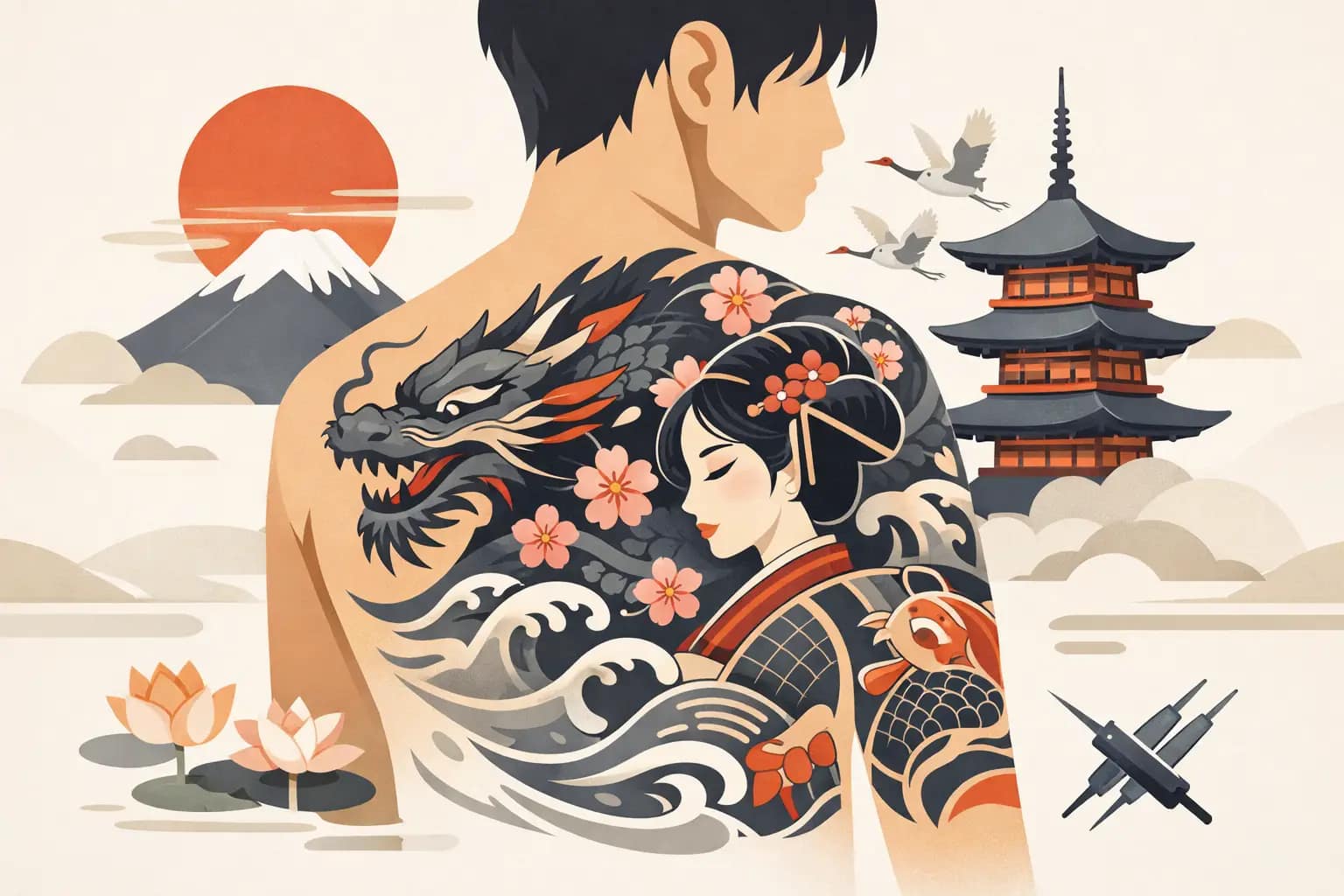

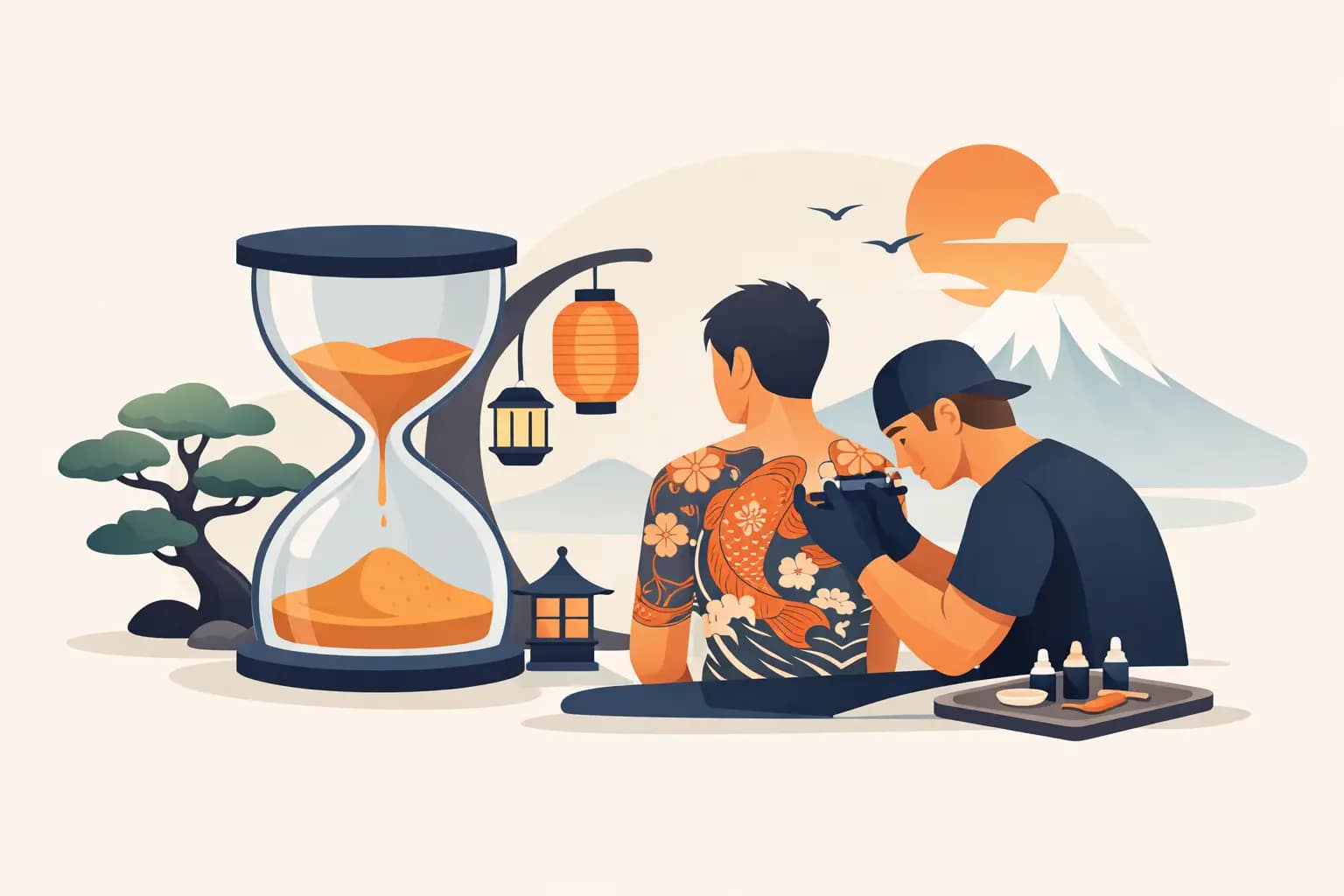
A full Japanese tattoo rarely gets measured in hours alone. It gets measured in sessions, healing cycles, design decisions, and how much skin you are asking the story to cover. If you are wondering how long do Japanese tattoos take, the honest answer is anywhere from a single long appointment for a smaller piece to many months, and sometimes more than a year, for a large custom project.
That range is wide for a reason. Japanese tattooing is not built around rushing. Whether you are planning a koi sleeve, a dragon back piece, or a bodysuit-inspired composition, the time involved reflects the scale, flow, and detail that make the work feel powerful for the long haul.
How long do Japanese tattoos take for most clients?
For a smaller Japanese-inspired tattoo, you might be looking at one to two sessions. A forearm piece with simplified background elements could take around 4 to 8 hours total, depending on linework, color, and detail.
A full sleeve is a different commitment. Most clients should expect roughly 20 to 40 hours, often spread over multiple appointments. A half sleeve may land closer to 10 to 20 hours. Large back pieces, chest panels, or full leg projects can climb well beyond that, especially when the design includes extensive background, multiple subjects, and heavy saturation.
A full suit or bodysuit-style project is in its own category. Those are major undertakings that can take dozens upon dozens of hours over an extended timeline. In custom Japanese work, the larger the composition, the more the artist has to think not just about the individual image, but how every element moves with the body.
What actually determines the time?
Size is the obvious factor, but it is not the only one. A large design with open areas and strong, readable shapes may move faster than a smaller tattoo packed with intricate scales, layered flowers, tight waves, and dense background texture.
Color also matters. Bold black and gray work can sometimes move faster than full color, but not always. Saturated reds, greens, and blues in Japanese tattooing often require careful packing to heal clean and stay vivid. That takes time, especially when the goal is long-term quality rather than a quick finish.
Placement changes everything too. Some parts of the body are easier to tattoo efficiently than others. A flat outer thigh gives an artist a different working surface than ribs, elbow ditch, knee, armpit, or inner arm. Areas that are more sensitive may require more breaks, shorter sessions, or a slower pace.
Then there is composition. Japanese work is famous for flow. A skilled artist is not just placing a tiger or snake on the body. They are building movement around muscles, joints, and natural lines, often using wind bars, waves, smoke, maple leaves, peonies, chrysanthemums, or background fields to make the piece feel complete. That design thinking adds value, but it also adds time.
Custom design adds time before tattooing starts
This is the part many people forget. The tattoo does not begin when the machine turns on.
With custom Japanese work, there is usually consultation time, concept development, reference discussion, and composition planning before the first session even starts. If the project is deeply personal or covers a large area, that planning stage matters. It helps the final piece feel intentional instead of pieced together.
For clients who care about originality, that is time well spent. A custom sleeve or back piece should not feel like stock imagery dropped onto skin. It should feel built for your body and your story.
Why large Japanese tattoos are done in sessions
Even if you could sit for 15 straight hours, that does not mean you should. Large Japanese tattoos are almost always broken into sessions for practical reasons.
First, your skin has limits. Once the area becomes too irritated, quality can suffer. Second, your body has limits. Long sessions are physically demanding, and fatigue changes how well you sit. Third, healing matters. Giving the skin time to recover between appointments often leads to cleaner results.
Most large pieces are approached in stages. One session may focus on linework. Another may build shading. Later sessions may handle color saturation, background, or refinements. Some artists prefer to work in sections, while others map out major structure first and build from there.
That means a tattoo that takes 30 total hours may still unfold across several months. Not because the artist is dragging it out, but because that schedule supports better healing and stronger execution.
How healing affects the overall timeline
When clients ask how long do Japanese tattoos take, they are usually thinking about chair time. But the real calendar timeline includes healing between appointments.
Most artists want enough recovery time before retattooing the same area. Depending on the body part, the intensity of the session, and how your skin heals, that may mean a few weeks between appointments. If your schedule is busy, or if you can only book monthly sessions, the full project naturally stretches out.
This is completely normal. A sleeve is not less successful because it took eight months instead of three. In many cases, spacing sessions properly leads to a better healed result.
Pain tolerance can change the pace
People do not always love hearing this, but pain tolerance plays a role. Japanese tattoos often include large sections of coverage, and some placements are simply tougher than others.
If you sit well for long sessions, progress can move faster. If you need frequent breaks or shorter appointments, the project may take longer overall. Neither approach is wrong. The goal is not to prove toughness. The goal is to get a beautiful tattoo without forcing the process.
A good artist adjusts the pace to the client and the area being tattooed. That is part of a professional, client-centered experience.
Sleeve, back piece, leg sleeve, and chest timing
If you want rough expectations, a Japanese half sleeve might take 10 to 20 hours. A full sleeve often falls between 20 and 40 hours. A full back piece may take 30 to 60 hours or more, depending on complexity. A full leg sleeve can be similar to an arm sleeve, though placement and detail may push it higher. Chest panels vary widely, especially if the design wraps into the shoulder, sternum, or connects into a larger bodysuit layout.
Those numbers are not promises. They are working ranges. An artist who prioritizes bold design, clean saturation, and long-term readability may not work at the same speed as someone trying to finish as fast as possible. In custom tattooing, faster is not automatically better.
What can make a Japanese tattoo take longer?
A few choices consistently add time. Detailed backgrounds are a big one. Waves, wind bars, rocks, smoke, and floral framing make Japanese tattoos feel complete, but they increase labor. So does heavy color saturation, cover-up work, scar tissue, or reworking older tattoos.
Large-scale symmetry can also slow things down. If the project involves matching sleeves, balanced chest panels, or a bodysuit-inspired layout, every choice needs to feel intentional from side to side. That level of craftsmanship is worth protecting.
And then there is revision by indecision. If the concept changes repeatedly after the process has started, the timeline gets longer. Clear communication up front saves time later.
What helps the process move smoothly?
Show up rested, hydrated, and fed. Keep your schedule realistic. Follow aftercare carefully so the skin heals well between sessions. And choose an artist whose specialty matches what you want.
That last point matters more than people think. A specialist in Japanese and Irezumi-inspired work can often plan the design more efficiently because they already understand the visual language, body flow, and technical demands of the style. That does not mean the tattoo will be rushed. It means the process is more intentional from the start.
For clients in Sacramento and beyond who are investing in custom work, that clarity makes the whole experience better.
The best answer is not just a number
If you are asking how long do Japanese tattoos take, what you are really asking is how long it takes to do them well. That is a better question.
A strong Japanese tattoo should feel balanced from a distance and rewarding up close. It should hold its shape as your body moves. It should heal with clarity and age with strength. Those things take planning, patience, and the right pace.
If your goal is meaningful custom work, the timeline is not a problem to beat. It is part of the craft. Give the piece enough time to become what it is supposed to be, and you will feel the difference every time you look at it.