
If you’ve ever asked how are Japanese tattoos called, the short answer is this: most people are referring to Irezumi. But like a lot of things in tattooing, the real answer has more nuance. Different words carry different meanings, and if you care about the art form, it helps to use the right term for the right context.
That matters even more when you’re planning a custom piece. Japanese tattooing is not just a visual style with dragons, koi, and waves. It is a tradition shaped by history, symbolism, composition, and craft. Knowing what these tattoos are called is a small step, but it often leads to a better conversation with your artist and a stronger final design.
How are Japanese tattoos called in tattoo culture?
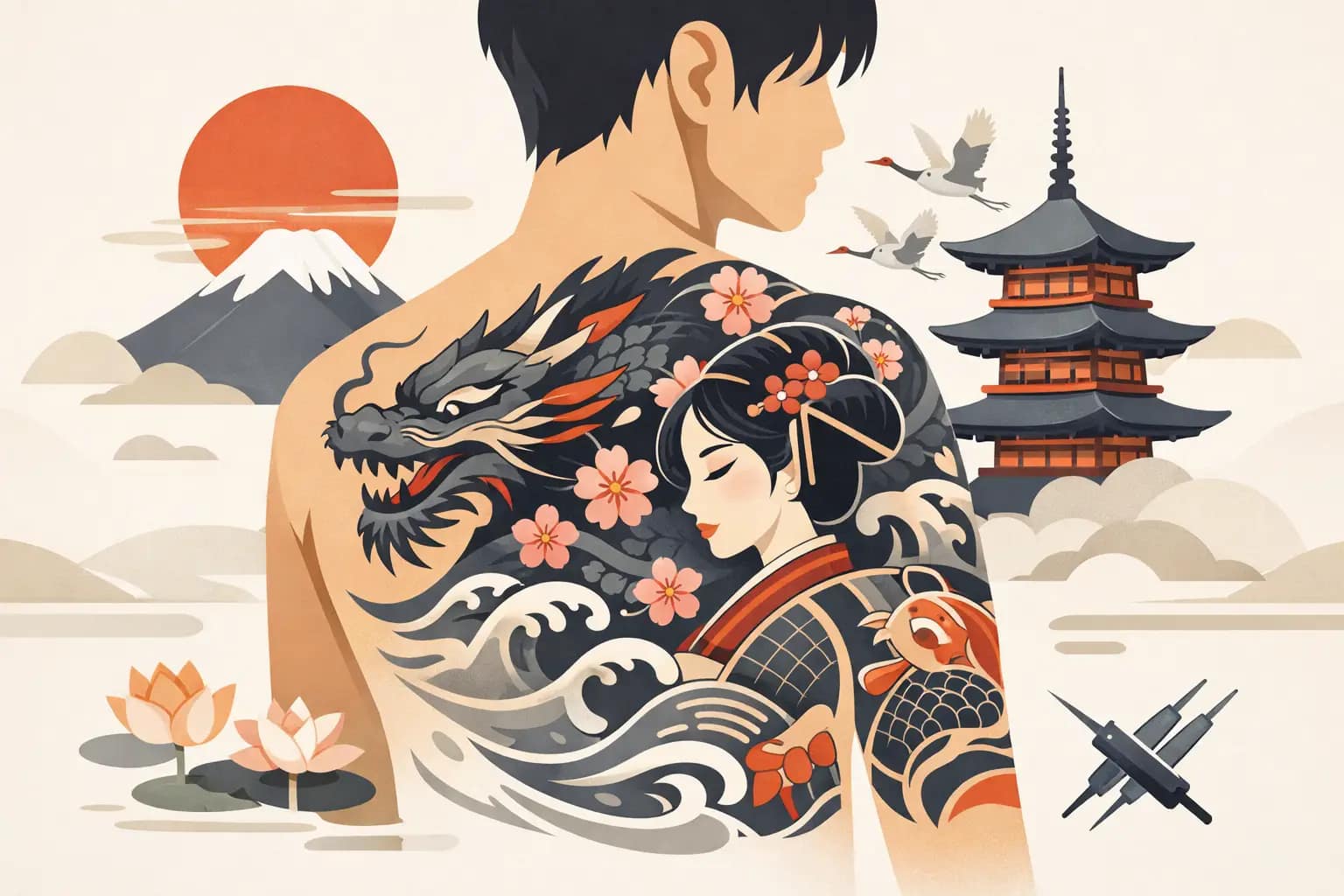
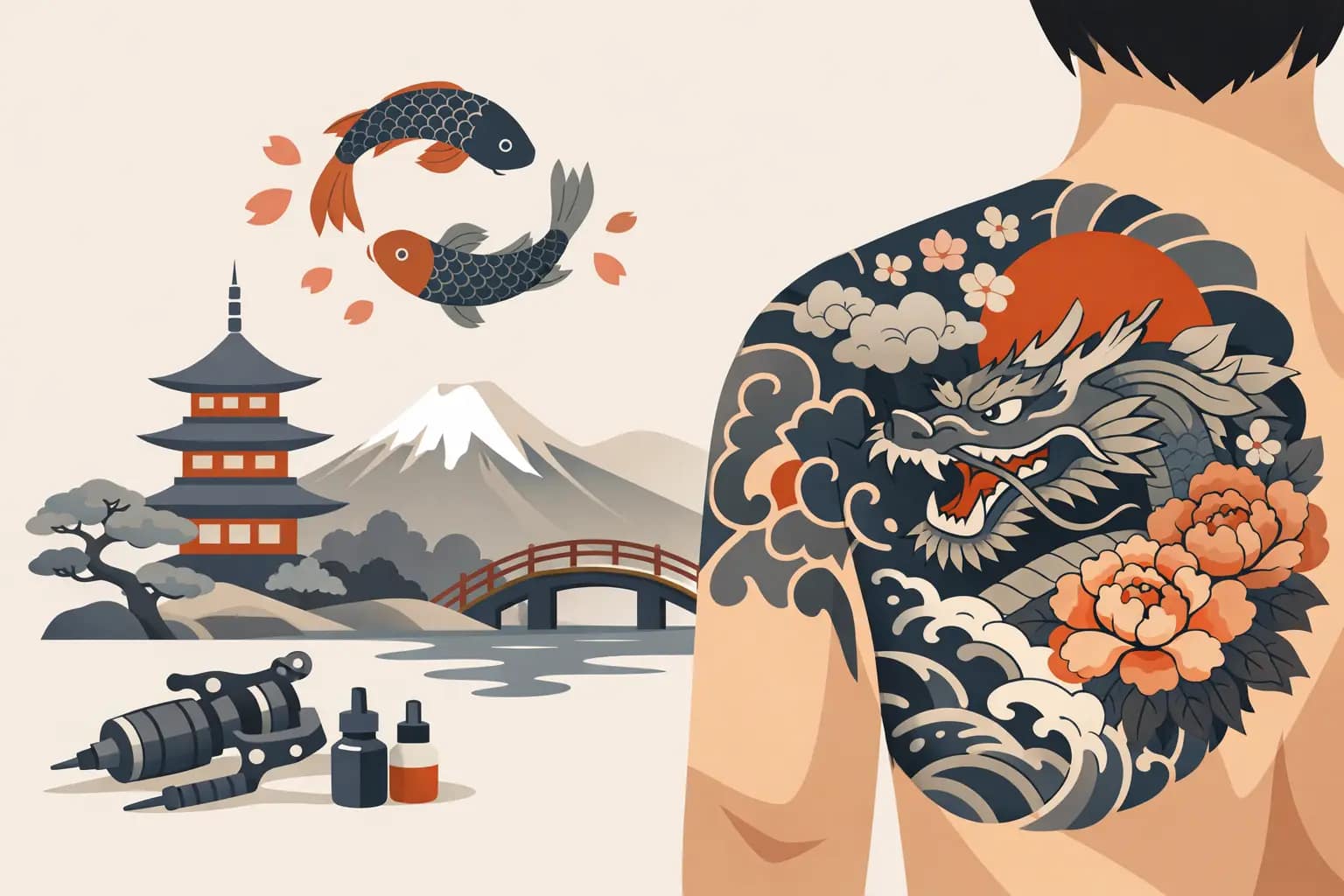
In everyday tattoo conversations, Japanese tattoos are most commonly called Irezumi. In Western tattoo culture, that word has become the catch-all term for large-scale Japanese tattoo work, especially sleeves, back pieces, bodysuits, and other compositions inspired by traditional Japanese imagery and layout.
That said, Irezumi is not the only word you’ll hear.
You may also come across Horimono, Tebori, and Wabori. These terms are related, but they are not perfect substitutes for one another. They point to slightly different parts of the tradition, whether that means the tattoo itself, the method used, or the broader Japanese approach to tattooing.
For clients, the key takeaway is simple. If you say “Irezumi,” most experienced artists will understand that you mean Japanese-style tattooing. If you want to be more precise, it helps to know what each term actually refers to.
What does Irezumi mean?
Irezumi is the term most often used to describe traditional Japanese tattoos. The word itself generally refers to inserting ink into the skin. In modern usage, especially outside Japan, it has become the best-known label for Japanese tattoo art.
When people talk about Irezumi, they are usually referring to work built around classic motifs such as koi fish, dragons, tigers, snakes, peonies, chrysanthemums, maple leaves, wind bars, waves, and mythic figures. Just as important as the imagery is the structure. Traditional Japanese tattooing is known for flow across the body, negative space, background elements, and a sense that the tattoo belongs to the body rather than sitting on top of it.
That’s a big reason serious collectors are drawn to it. A well-designed Japanese sleeve or back piece does not feel random. It feels composed.
Irezumi, Horimono, Wabori, and Tebori
This is where the vocabulary gets more interesting.
Horimono is another term you may hear used for Japanese tattooing. In some contexts, it can refer to engraved or carved decoration more broadly, but in tattoo culture it is often used to describe full traditional tattoo work. Some artists and collectors prefer it because it can sound more specific or more closely tied to the tattoo tradition itself.
Wabori is also used, particularly to distinguish Japanese-style tattooing from Western tattooing. “Wa” points to Japanese style or Japanese origin, while “bori” relates to carving or tattooing. If someone says Wabori, they are often talking about tattooing done in a distinctly Japanese visual language.
Then there is Tebori. This one is different. Tebori does not mean Japanese tattoo in general. It refers to the traditional hand-poked tattooing technique, where ink is inserted manually rather than with a machine. So while a tattoo can be Irezumi done with Tebori, not all Irezumi is Tebori.
That distinction matters. A lot of people use Tebori as if it means any Japanese tattoo, but it actually describes the method, not the entire category.
Why the term depends on context
If you’re speaking casually, “Japanese tattoo” is perfectly clear. If you’re speaking with an artist who specializes in the style, the conversation often becomes more detailed. Are you asking about traditional Japanese composition? A modern Japanese-inspired sleeve? A hand-poked piece? A bodysuit planned in the classic way? Those are different things.
This is where language helps set expectations.
For example, a Neo-Traditional Japanese-inspired tattoo may borrow heavily from Irezumi themes while using a different color palette, line weight, or compositional approach. It can still honor the visual power of Japanese tattooing without claiming to be a strict traditional piece.
That kind of honesty is important. Good artists do not just copy surface-level imagery. They think about placement, symbolism, scale, and how the tattoo will age. The right name for the style is useful, but the deeper question is whether the work respects the design logic behind it.
What most clients actually mean when they ask
Usually, when someone asks how are Japanese tattoos called, they are not looking for a dictionary definition. They are trying to make sure they’re using the right word before they book a consultation or start discussing ideas.
In most cases, saying “I’m interested in Japanese tattooing” or “I’m looking for an Irezumi-inspired sleeve” is a strong start. It tells the artist you are drawn to that tradition without pretending every Japanese-inspired piece fits one rigid label.
That matters because Japanese tattooing is broad. A black-and-gray dragon sleeve, a bold full-color koi half sleeve, and a Neo-Traditional hannya mask piece may all sit in the same family visually, but they are not identical in style, intent, or execution.
The best consultations start with clarity. Not performative expertise, just clarity.
The history behind the name
Japanese tattooing has a long and complex history. Over time, it has been associated with spirituality, status, punishment, labor, personal identity, and later, organized crime in the public imagination. Because of that, tattoo terminology in Japan can carry social weight that does not always translate neatly into American tattoo culture.
That is part of why definitions can feel slippery. A term might be technically accurate but still carry a different tone depending on who is using it and where. Outside Japan, Irezumi is often used with admiration for the artistry. Inside Japan, tattoo language can be shaped by older stigma as well as contemporary attitudes.
For clients in the US, the respectful move is not to overcomplicate it. Learn the basic terms, understand the tradition has depth, and work with an artist who approaches the style with skill rather than costume-level imitation.
How to talk about your idea with an artist
If you love Japanese tattooing, you do not need to show up trying to sound like a historian. You just need to communicate clearly.
Tell the artist whether you want a traditional Japanese piece, an Irezumi-inspired design, or a Japanese and Neo-Traditional blend. Mention the imagery you’re drawn to, but also be open to composition advice. In this style, background, flow, and body placement are not secondary details. They are part of what makes the tattoo feel powerful.
It also helps to discuss what matters most to you. Is it symbolism? Is it visual balance? Is it staying close to tradition? Is it creating something more personal through a Japanese visual language? There is no single correct answer, but each answer leads the design in a different direction.
That’s where a custom process becomes valuable. An experienced artist can help shape your references into something that feels cohesive, intentional, and built for your body over the long term.
So, what should you call them?
If you want the simplest answer, call them Japanese tattoos or Irezumi. Both will make sense in most conversations.
If you want to be more specific, use Horimono when referring to traditional tattoo work in a more culturally rooted way, and use Tebori only when you are actually talking about the hand-poked technique. If your idea blends tradition with a modern custom approach, it is completely fair to describe it as Japanese-inspired or Irezumi-inspired.
Precision is useful, but respect matters more than showing off vocabulary. The real goal is understanding the art well enough to choose an artist who can do it justice.
A strong Japanese tattoo is never just about what it’s called. It’s about whether the piece carries weight, movement, symbolism, and craftsmanship in a way that still feels right years from now. If you start there, the language tends to fall into place.