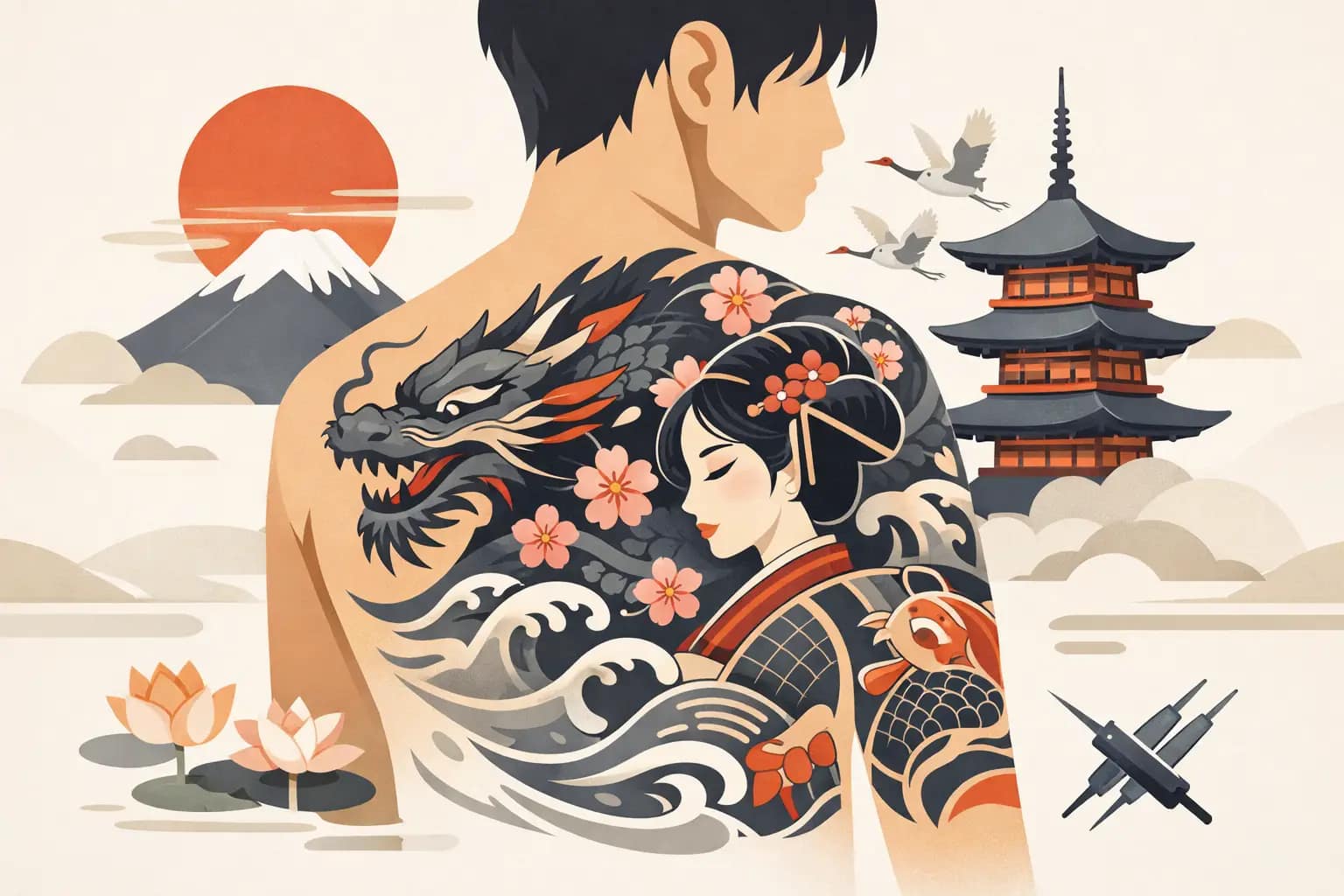

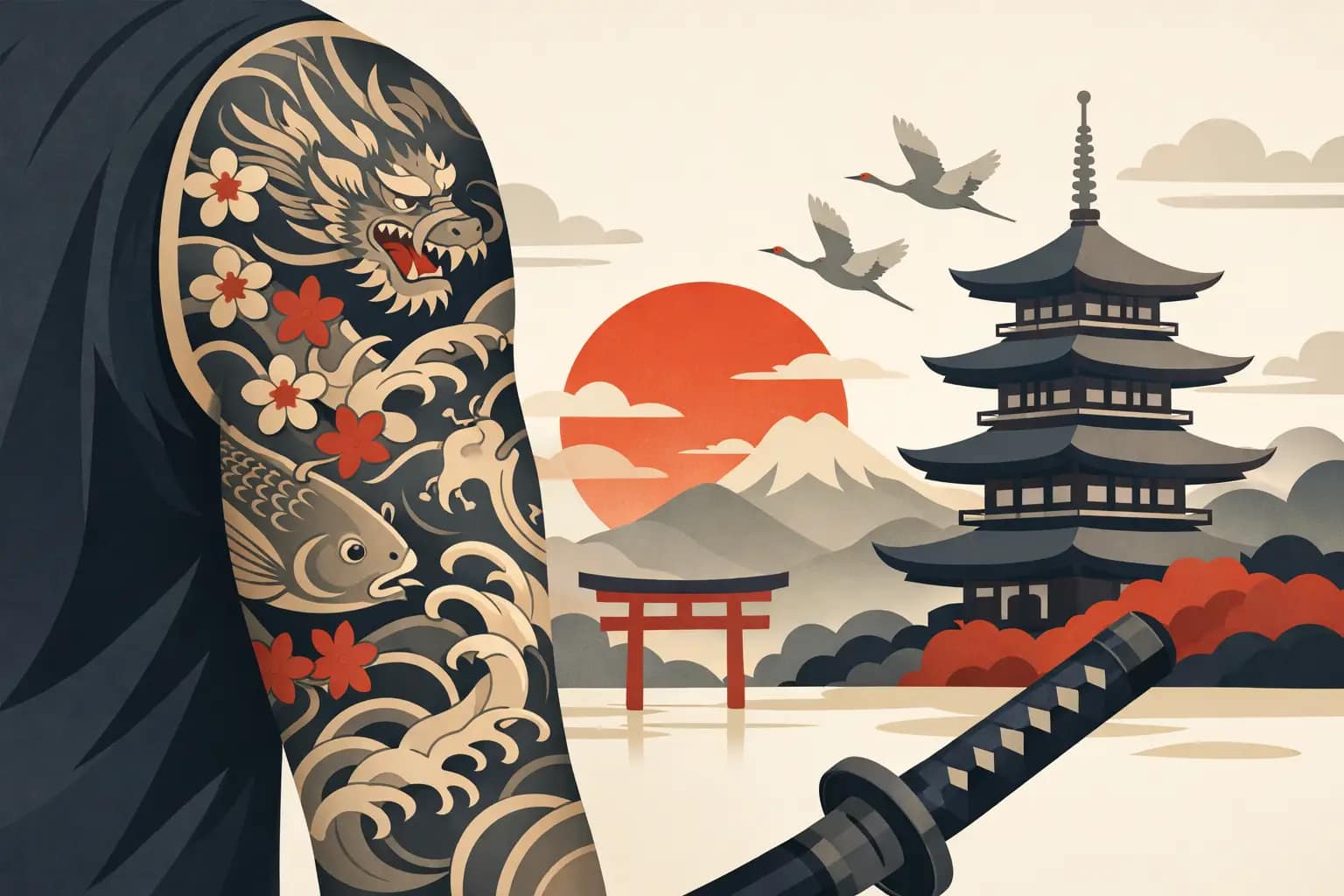
You can spot it across a room. The movement is different, the composition feels alive, and the tattoo seems built for the body rather than placed on top of it. If you’ve been asking what is japanese traditional tattoo style, the short answer is this: it’s a highly intentional approach to tattooing rooted in Japanese visual tradition, large-scale storytelling, and design that flows with human anatomy.
That short answer only gets you so far. Japanese traditional tattoo style, often associated with irezumi, is not just a look made of koi, dragons, or waves. It’s a system of design. It uses symbolism, negative space, background elements, and body placement in a way that creates harmony across the whole piece. The best work doesn’t feel random or overly decorated. It feels composed.
What Is Japanese Traditional Tattoo Style in Practice?
In practice, Japanese traditional tattoo style is defined by strong imagery, clear visual hierarchy, and a sense of motion that wraps naturally around the body. Instead of treating a tattoo as an isolated sticker, this style often treats the arm, leg, back, or torso as a full canvas.
That’s why sleeves, back pieces, chest panels, and bodysuits are so closely tied to the tradition. Even when the tattoo is smaller, the design language still tends to reflect large-scale thinking. Main subjects are supported by background elements like wind bars, water, smoke, clouds, chrysanthemums, maple leaves, peonies, and waves. Those supporting elements are not filler. They create rhythm, contrast, and cohesion.
This is also a style where readability matters. Japanese-inspired work usually relies on bold composition and deliberate shape language so the tattoo stays visually strong over time. Details matter, but structure matters more. A technically clean dragon with weak flow will never hit as hard as a well-composed dragon built to move with the shoulder, chest, or back.
The Difference Between Irezumi and Generic Japanese-Inspired Tattoos
This is where things can get blurry.
People often use “Japanese tattoo” to describe any tattoo with Japanese imagery. But there’s a difference between traditional irezumi-informed work and a design that simply borrows a motif. A snake with some waves in the background is not automatically Japanese traditional tattoo style.
Traditional irezumi has established design principles, recurring symbolism, and a deep connection to Japanese art history, folklore, and woodblock print aesthetics. It favors balance over clutter and storytelling over trend. Modern artists may adapt those principles with updated technique, cleaner color transitions, or more personalized symbolism, but the foundation still matters.
That doesn’t mean every tattoo has to follow historical rules in a rigid way. Good custom work often lives in the space between tradition and individuality. But if someone is serious about this style, they should understand whether they want a faithful traditional approach, a modern Japanese piece, or a neo-traditional interpretation influenced by irezumi.
Core Elements That Define the Style
The imagery gets most of the attention, but the style is really built on relationships between elements.
Large central motifs are common. Dragons, koi, tigers, snakes, phoenixes, hannya masks, samurai, geisha, and mythical creatures each carry their own energy and symbolism. Floral pairings matter too. Peonies can suggest wealth, bravery, and beauty. Chrysanthemums can imply longevity and resilience. Cherry blossoms often point to impermanence and the fleeting nature of life.
Then there’s the background, which is one of the most misunderstood parts of the style. Water, wind, clouds, rocks, and bars of shading help shape the composition and give the tattoo motion. Without a strong background structure, the design can feel disconnected. With it, the piece begins to breathe.
Color also plays a major role, though black and gray Japanese work can be incredibly powerful. Traditional palettes often use black, red, gold, green, and blue with purpose rather than excess. The point is not to make every inch loud. The point is to create contrast and longevity.
Symbolism Matters, but Context Matters More
One reason people are drawn to Japanese traditional tattoo style is that the imagery carries meaning without becoming overly literal. A koi can represent perseverance and transformation. A dragon may symbolize wisdom, strength, or protection. A tiger can suggest courage and power.
Still, symbolism is not a menu where every image has one fixed translation. Meanings shift depending on pairings, pose, color, direction, and overall composition. A sleeve built around a koi moving upstream tells a different story than one centered on a descending dragon framed by storm clouds.
That’s why custom design matters so much in this style. The strongest work is not assembled from disconnected symbols. It’s developed around a visual narrative and a clear emotional tone. For clients who want something personal, this makes all the difference. You’re not just choosing cool imagery. You’re building a piece with intention.
Why Body Flow Is Everything
If there’s one concept that separates average Japanese-inspired work from masterful work, it’s flow.
Japanese traditional tattoo style is famous for how naturally it moves with the body. A sleeve should turn with the arm. A rib or chest panel should complement the body’s shape rather than fight it. A back piece should feel architectural, not crowded.
This is why placement decisions matter early. A dragon that looks great on paper may need to be redrawn completely to work on a shoulder cap or full back. The same is true for koi, snakes, and floral compositions. Experienced artists design for movement, muscle structure, and long-term readability.
For clients, this is a big reason to choose custom work over pre-made art. The tattoo should feel like it belongs to you physically, not just symbolically.
What Is Japanese Traditional Tattoo Style Compared to Neo-Traditional?
This question comes up a lot, especially for clients who love bold, illustrative work but are not sure where they fit.
Japanese traditional tattoo style tends to follow more established compositional rules, symbolic pairings, and background structures. Neo-traditional work, by comparison, often borrows that boldness and decorative richness while allowing more flexibility in line weight, rendering style, color choices, and subject matter.
Neither is automatically better. It depends on what you want. If you’re drawn to the discipline, heritage, and body flow of irezumi-inspired design, a traditional approach may feel right. If you want something rooted in that world but pushed through a more contemporary lens, neo-traditional may suit you better.
A lot of strong custom tattooing sits somewhere in between. That middle ground can be powerful when handled with respect and a clear artistic point of view.
Common Misunderstandings About the Style
One misconception is that Japanese traditional tattoos have to be huge to work. Large-scale pieces are ideal for the full language of the style, but smaller tattoos can still carry the same design principles if they are composed thoughtfully.
Another misconception is that more detail always means better quality. In reality, this style depends on strong shapes, contrast, and flow. Too much unnecessary detail can muddy the tattoo and weaken it over time.
There’s also the assumption that choosing Japanese imagery is only about aesthetics. For many clients, the visual impact is the first draw, but the lasting connection usually comes from how the piece reflects resilience, change, discipline, protection, or personal history.
How to Know if This Style Is Right for You
If you want a tattoo that feels timeless, bold, and deeply considered, Japanese traditional tattoo style is worth serious attention. It tends to appeal to people who value composition as much as symbolism and who are open to trusting an artist’s design process.
It may be less ideal if you want a tiny, highly isolated design with no interest in background or flow. This style shines when there’s room to build a full visual statement. That doesn’t mean every piece has to become a bodysuit, but it does mean thinking beyond a single object floating on skin.
For clients looking for custom Japanese or irezumi-inspired work, the real goal is not to copy traditional imagery. It’s to create something with the same strength, balance, and lasting presence that made the style endure in the first place.
A great tattoo should look powerful on day one, but it should also still feel honest years later. That’s the beauty of this style when it’s done well. It carries weight, movement, and meaning without having to explain itself.