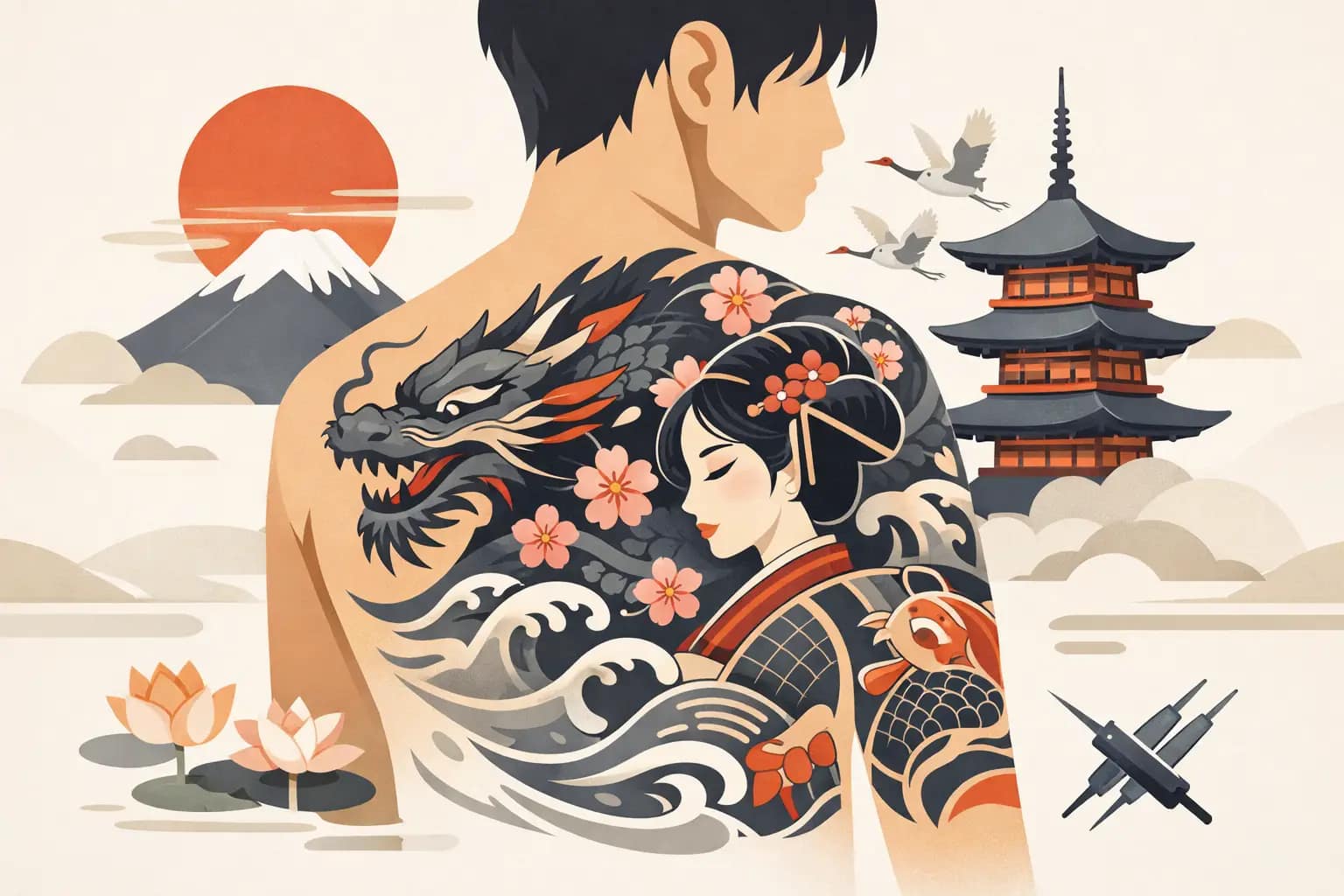

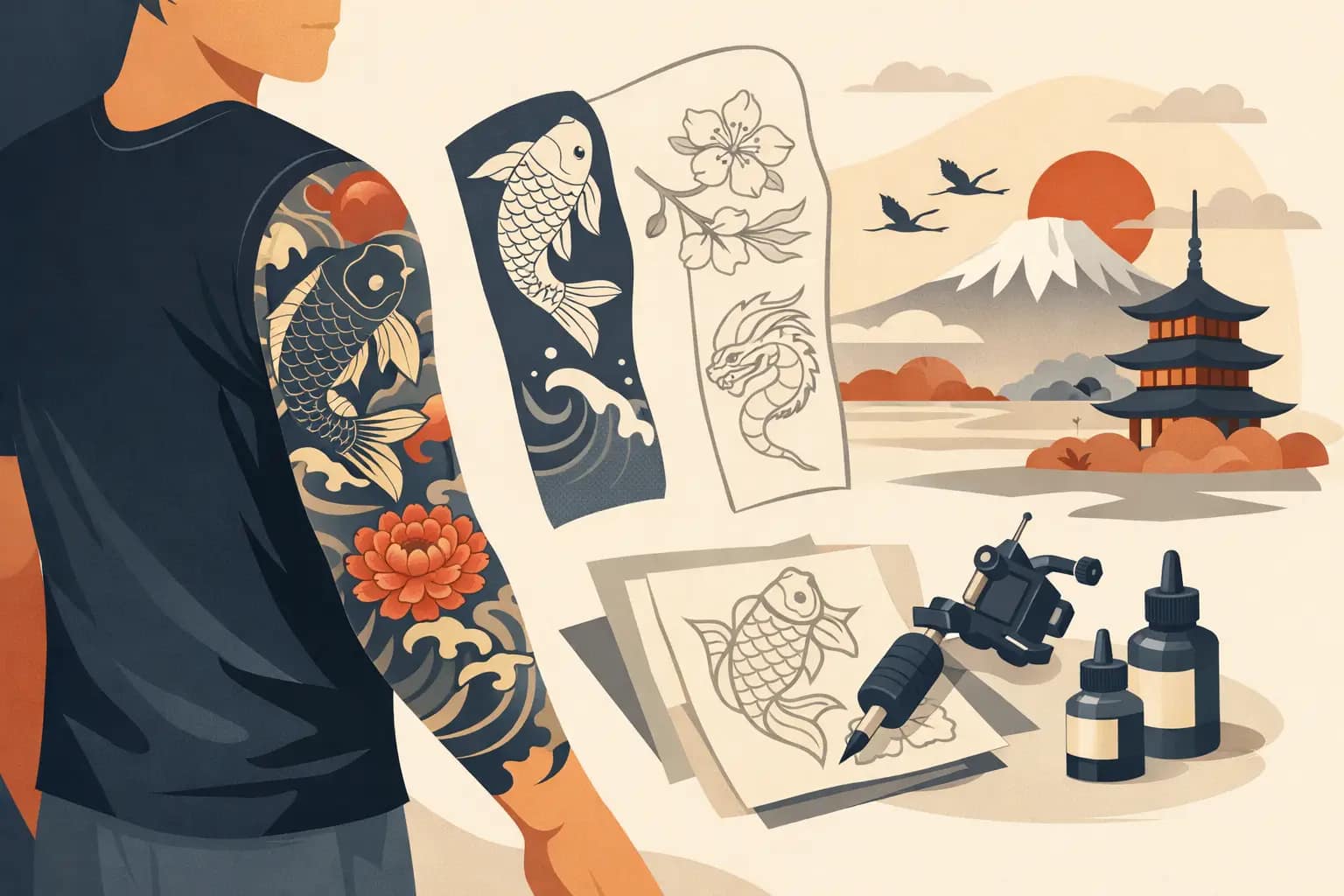
A Japanese-inspired sleeve is not a collection of separate tattoo ideas stacked along an arm. It is one composition with movement, hierarchy, and a point of view. This japanese sleeve planning guide is designed to help you arrive at a consultation with the right questions, a clear sense of your story, and enough flexibility to let the artwork become stronger than a reference folder.
The best sleeves feel intentional from every angle. A dragon should appear to travel through the arm, not sit on top of it. Wind bars, water, clouds, peonies, maple leaves, and background shading should create rhythm while giving the central subject room to command attention. That level of unity begins well before the first stencil is applied.
Start With Meaning, Then Choose the Main Subject
Japanese tattoo imagery carries visual weight because it is built on enduring symbols, natural forces, folklore, and contrast. You do not need a perfect scholarly explanation for every element, but you should choose imagery that feels personally relevant and artistically compatible.
A dragon can represent wisdom, protection, ambition, or the ability to move through change. A koi often speaks to perseverance and transformation. Tigers bring intensity, courage, and guardianship. Hannya masks can hold themes of grief, jealousy, rage, or emotional survival. Botan flowers, maple leaves, chrysanthemums, and cherry blossoms each bring a different seasonal mood to the piece.
Start by identifying the emotional core of the tattoo. Perhaps it marks a difficult period you overcame, honors family strength, or simply reflects a lifelong connection to a subject that has stayed with you. Then select one primary image. A sleeve with one commanding focal point usually has more impact than a sleeve trying to make five ideas equally important.
This is also where a custom artist’s perspective matters. Your first concept may be a tiger, snake, wave, and mask all competing for attention. The final design may still include those elements, but the artist can establish a clear visual lead and use the others as supporting chapters rather than visual clutter.
Plan the Japanese Sleeve as an Arm, Not a Flat Canvas
The arm twists, flexes, narrows at the wrist, and changes shape around the shoulder and elbow. A successful sleeve uses those contours. What looks balanced in a straight-on photo can feel disconnected when the arm is relaxed at your side.
The outer upper arm and shoulder often carry major visual impact, making them strong placements for a dragon head, tiger face, mask, or large flower grouping. The forearm offers excellent visibility and can hold important secondary movement. The inner arm is more private and more sensitive, but it is often the place where a composition becomes complete. The elbow itself requires thoughtful planning because skin texture and frequent movement can affect how detail settles over time.
Think about how you want the sleeve to read in three moments: from across the room, at conversational distance, and up close. From far away, the design needs a recognizable silhouette and strong black-and-gray structure. At midrange, the subject and flow should become clear. Up close, the linework, texture, color transitions, and small details reward attention.
A full sleeve does not need to begin as a full sleeve, but it should be planned like one if you believe you may extend it later. Starting with a self-contained half sleeve and leaving no logical room for background or continuation can make a future expansion harder. It is usually better to discuss the long view early, even if your first appointment focuses on one section.
Background Is What Makes the Sleeve Feel Complete
Clients often come in focused on the hero image, then underestimate the role of background. In Japanese and Irezumi-inspired tattooing, background is not filler. It creates atmosphere, connects separate motifs, directs the eye, and gives the arm a cohesive visual field.
Wind bars can create speed and dramatic direction. Waves bring power, flow, and a natural foundation for koi, dragons, or snakes. Clouds can soften transitions and create a more open, atmospheric design. Rock formations add structure. Black-and-gray background can make color flowers or a bold central figure feel more vivid, while a carefully restrained background can preserve breathing room around a detailed subject.
There is a trade-off. Heavy background produces a bold, finished look and often helps a sleeve age with authority. It also commits more skin to black and can make the overall tattoo feel darker. Open skin can create elegance and contrast, but it demands precise composition. The answer depends on your skin tone, the imagery, how visible you want the tattoo to feel, and whether you prefer a dense traditional look or a more contemporary Neo-Traditional interpretation.
Color, Blackwork, and Aging Should Be Decided Early
A sleeve should look powerful on day one and still read clearly years from now. That means planning contrast, line weight, and color with aging in mind rather than chasing tiny details that may not hold their shape.
Black-and-gray Japanese-inspired sleeves can be dramatic, sculptural, and especially effective when built around strong shading and negative space. Color sleeves bring another level of symbolism and energy: deep reds, warm golds, greens, and saturated florals can make the design feel alive. Many of the strongest pieces use both, with black background and outlines supporting controlled areas of color.
More color is not automatically better. A dragon, tiger, or koi can lose visual clarity if every inch of the arm receives equal saturation. Strategic color creates emphasis. A flower may become the bright interruption in a darker composition, or a central figure may carry color while the surrounding background stays restrained.
Be honest about sun exposure, work demands, and aftercare habits. Sacramento summers, outdoor work, and frequent UV exposure can all affect a tattoo over time. Quality pigment, technical application, and consistent sunscreen matter, but no tattoo is untouched by years of wear. Designing with clear shapes and adequate contrast is part of protecting the artwork’s future.
Build a Reference Folder Without Copying a Tattoo
References are useful when they communicate direction, not when they become a blueprint to duplicate. Bring images that show the type of dragon movement you like, the mood of a background, a preferred color palette, or how much coverage feels right. Include photos of your arm from different angles if you are planning remotely.
Avoid sending twenty finished tattoos with instructions to combine them exactly. Those pieces were designed for different bodies, placements, and stories. A custom sleeve deserves its own composition. The strongest consultation material is a short collection of visual cues paired with a few direct notes: what resonates, what you do not want, and why the tattoo matters to you.
This approach gives the artist room to solve the design as artwork. At Dani Olmos Tattoo, the goal is not to force your story into a preset image. It is to translate it into a piece that feels considered, personal, and built for your body.
Set Expectations for Time, Budget, and Sessions
A sleeve is a serious commitment in both time and investment. The total depends on coverage, detail, color, placement, skin, and how the design develops across sessions. A full arm often requires multiple appointments, with healing time between them. A half sleeve may be completed more quickly, but a dense design with layered background can still require significant work.
Do not rush the process by treating each appointment as a disconnected task. The artist needs to see how healed sections settle before making final decisions around transitions, saturation, and background. Give yourself enough calendar space to heal well, avoid major travel or sun exposure after sessions, and keep your expectations realistic around sensitive areas such as the inner bicep, elbow ditch, wrist, and inner forearm.
Budgeting matters because compromising the design halfway through can affect the final result. If a full sleeve is your goal, discuss a phased approach that preserves the composition from the beginning. It is far better to build the piece in deliberate stages than to reduce the background, contrast, or scale simply to finish faster.
Questions That Lead to a Better Consultation
A productive consultation is a conversation, not a test you need to pass. Ask how the subject will move with your arm, where the focal point should sit, how the background will connect each section, and whether your preferred imagery works together stylistically. Ask what should be simplified for longevity and whether your plan leaves room for future chest, back, or hand extensions.
You should also share practical details. Tell the artist about existing tattoos, scars, skin sensitivities, your usual sun exposure, and any deadline that could affect the appointment schedule. If visibility at work is a concern, explain where you need the tattoo to stop. These details are not limitations. They are design information.
Give the Design Room to Become Art
The best Japanese-inspired sleeves balance personal symbolism with a strong artistic framework. Come prepared with the story, the imagery you connect with, and a realistic understanding of the commitment. Then allow your artist to guide scale, flow, contrast, and placement.
A sleeve becomes timeless when every element has a reason to be there, from the largest figure to the smallest break of open skin. Give the process patience, trust the craft, and let the final composition carry more than a list of ideas. Let it carry presence.