
A backpiece asks for more than a cool idea. It asks for commitment, patience, and a design strong enough to carry across one of the largest canvases on the body without falling apart halfway through the process. If you’re wondering how to plan backpiece tattoo work in a way that looks intentional from day one and still reads beautifully years later, the answer starts with design thinking, not just subject matter.
The biggest mistake people make is planning a backpiece like a small tattoo, just larger. That usually leads to a crowded composition, weak flow, or a design that has a few strong moments but no real structure. A great backpiece needs hierarchy. It needs movement. It needs breathing room. Most of all, it needs to fit your body as naturally as if it belonged there all along.
How to Plan Backpiece Tattoo Design With the Body in Mind
The back is wide, but it is not flat. Your shoulder blades move. Your spine creates a visual center line. Your traps, lower back, and ribs all affect how a design stretches and settles. That is why the first real design decision is not color or theme. It is flow.
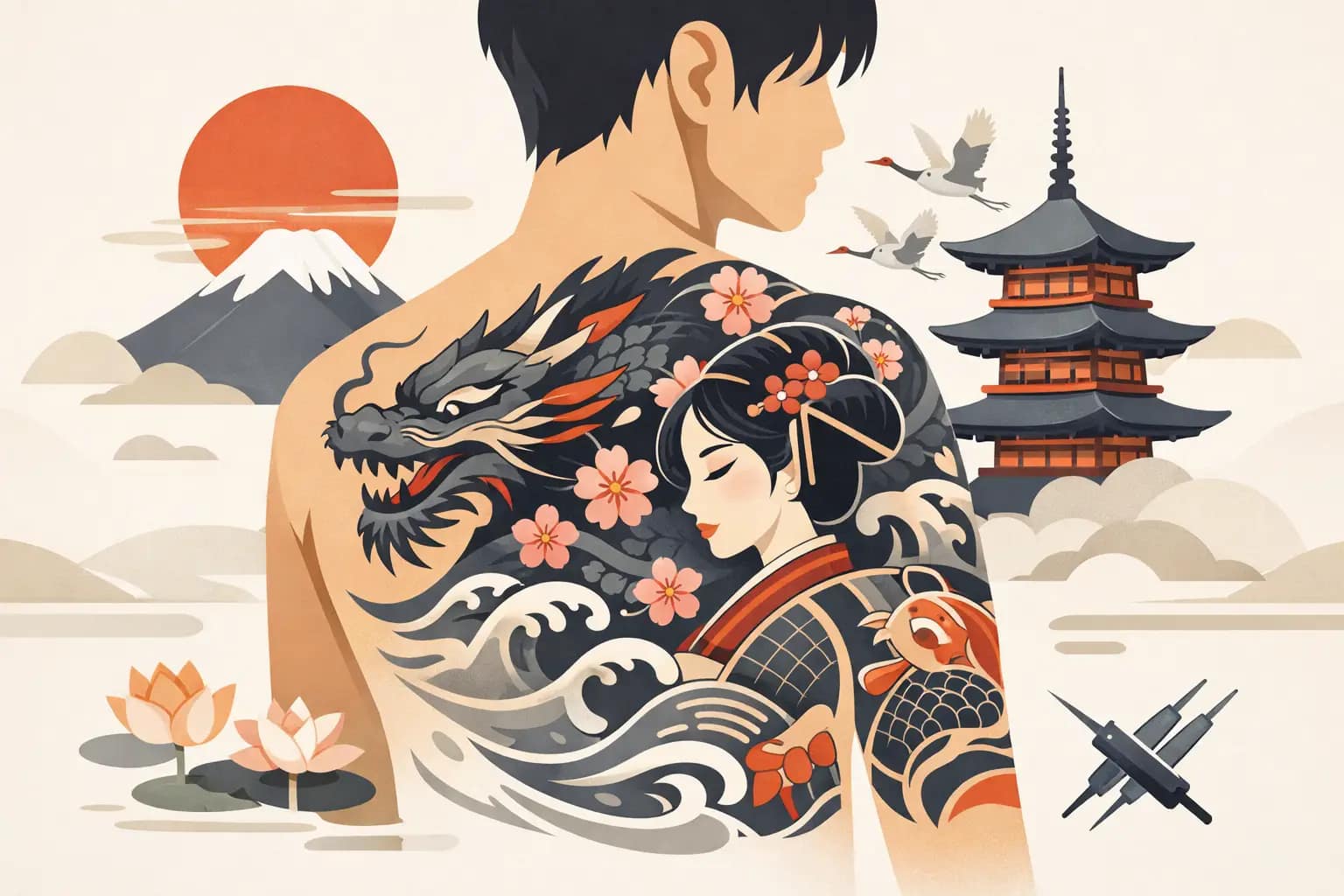
Flow means the piece follows the architecture of your body instead of fighting it. In Japanese and Irezumi-inspired work, this matters a lot. Elements like dragons, snakes, koi, tigers, masks, waves, wind bars, peonies, and maple leaves are not just placed for decoration. They are arranged to guide the eye through the full composition. The central figure may carry the emotional weight, but the background is what gives the piece rhythm and lasting readability.
This is also where style matters. A Neo-Traditional backpiece can hold bold focal imagery and strong color blocking, while a more traditional Japanese layout often depends on a balance between primary subject and supporting background. Neither approach is better across the board. It depends on whether you want a mural-like statement, a story-driven composition, or something that feels rooted in classic tattoo structure.
Start With Meaning, Then Edit Ruthlessly
Most clients come in with more ideas than a backpiece can realistically hold. That is normal. The back feels like the place to include everything that matters, but strong design usually comes from choosing the right symbols, not the most symbols.
A better approach is to begin with the core story. Ask yourself what the piece is really about. Protection, resilience, transformation, grief, discipline, legacy, personal rebirth – those themes can be translated visually in a much more powerful way than a list of unrelated objects. Once the emotional center is clear, the imagery becomes easier to refine.
For example, if your backpiece is about overcoming chaos, that could become a dragon moving through waves and storm, or a warrior figure framed by wind and fire. If it is about family and continuity, a koi, crane, or floral motif may make more sense depending on the tone you want. The point is not to choose symbols because they look impressive. The point is to choose them because they belong together.
Good artists will help edit. That is part of the process. If every element is competing for attention, the final tattoo will feel busy instead of masterful. A backpiece should feel composed.
Think About the Full Layout Before the First Session
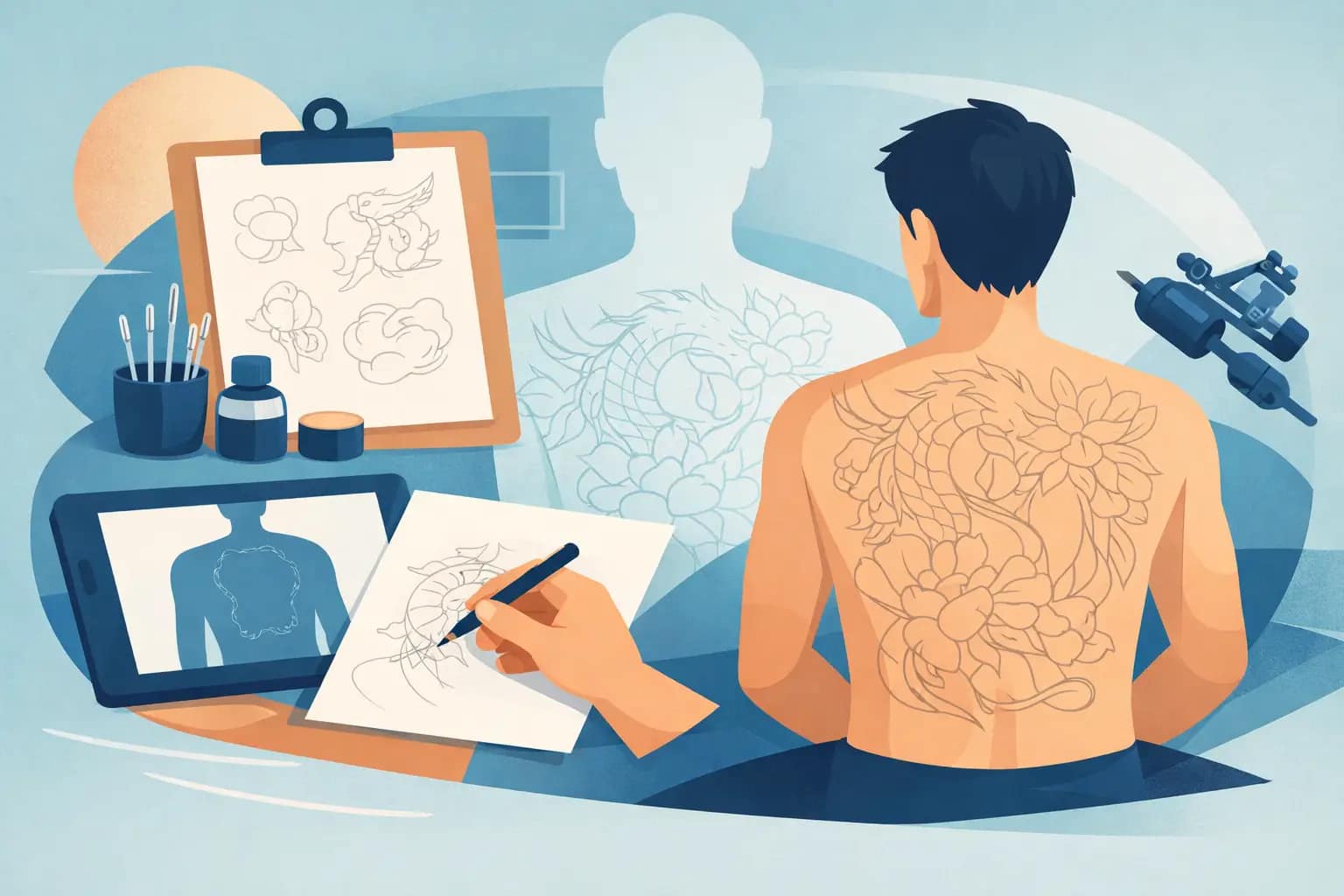
One of the smartest ways to plan a backpiece tattoo is to design the whole destination before any line goes in. Even if the tattoo will be completed over many sessions, the complete layout should exist from the start.
That matters because backpieces are often built in phases. You may begin with the central figure and return later for background, secondary elements, and color. If the larger structure has not been mapped out, each stage can start to feel like a patch instead of part of a unified work.
This is especially important if you already have tattoos nearby. Existing shoulder work, arm work, neck tattoos, or lower back tattoos can affect the new composition. Sometimes they can be incorporated. Sometimes they need visual separation. Sometimes they limit what will read best from a distance. None of that is a dealbreaker, but it needs to be accounted for early.
A strong consultation should cover proportion, negative space, symmetry versus asymmetry, and how the eye moves from the top of the back to the lower section. The piece should look compelling both up close and from across the room.
Session Planning Is Part of the Design Process
A backpiece is not just an artistic commitment. It is a physical one. Planning sessions realistically will make the experience better and often improve the result.
Some clients prefer longer sessions to make faster progress. Others sit better in shorter blocks, especially for difficult areas near the spine, lower back, and shoulder blades. There is no universal right answer. Skin sensitivity, pain tolerance, schedule, and healing all play a role.
The timeline also depends on style. Heavy color saturation, intricate background work, and layered detail usually mean more time. Black and gray can move differently than full color. Japanese-inspired work with large fields of background and texture may require a different pacing than a Neo-Traditional piece with crisp focal imagery and controlled color zones.
Budget should be part of this conversation too. Not because the goal is to cheap out on a major tattoo, but because a realistic plan keeps the process steady. It is better to commit to a thoughtful long-term schedule than to rush into a large project without the time or resources to finish it well.
Placement Choices Change the Feeling of the Piece
Not every backpiece needs to fill every inch of skin. Full back, half back, upper back dominant, or backpiece extending into the shoulders and glutes – each option creates a different presence.
A full backpiece has undeniable impact, but it also demands the most planning. It gives room for dramatic storytelling, layered backgrounds, and strong top-to-bottom movement. An upper-back-focused piece can feel cleaner and more concentrated. A design that connects into sleeves can become part of a larger body suit concept, which is common in Japanese tattoo planning.
This is one of those areas where personal lifestyle matters. Some clients want the reveal of a private large-scale piece. Others are building a broader collection and want the back to connect with arms, chest, or legs over time. If there is any chance your backpiece will eventually tie into other large work, say that upfront. Future planning can change the entire layout.
Reference Images Help, But They Are Not the Blueprint
Bring references, but bring them for direction, not duplication. The most helpful references show mood, movement, composition, and style preferences. They tell your artist what kind of energy you are drawn to.
What does not help is trying to stitch five tattoos from five different artists into one design and expecting it to feel cohesive. A custom backpiece needs one clear artistic point of view. Otherwise, it starts to look assembled instead of designed.
This is where working with a specialist makes a difference. An artist experienced in large-scale Japanese or Neo-Traditional work will know how to translate your references into a tattoo that fits your body and ages well. At Dani Olmos Tattoo, that custom approach is the difference between a piece that merely fills space and one that actually carries weight.
Healing and Longevity Should Influence Design Choices
Planning for the long term means thinking beyond the stencil. Fine details that look exciting on paper can get lost if they are overused across a large backpiece. Strong shapes, clean transitions, smart contrast, and intentional negative space are what keep a tattoo readable over time.
That does not mean every backpiece should be simple. It means detail should be placed where it matters. The focal point can hold intricacy. Background should support, not overwhelm. Color should be chosen with aging in mind, especially if you spend a lot of time outdoors.
Healing also affects scheduling. The back is an area that can be awkward to care for, especially if you live alone, work a physical job, or need to wear restrictive clothing. If you know your schedule is packed, it may be smarter to begin when you can actually heal properly between sessions.
How to Know You’re Ready
If you are still changing the concept every few days, you may not be ready yet. A backpiece does not require absolute certainty about every leaf and wave, but it does require confidence in the direction. You should know the kind of imagery you want, the style you trust, and the artist you want to build it with.
The right artist will not just say yes to every idea. They will shape the project, challenge weak choices, and protect the final composition. That collaboration is where the best large-scale tattoos come from.
A backpiece should feel earned before it is ever started. Give it the time it deserves. When the concept is strong, the layout is intentional, and the artist knows how to make the body part of the design, the result is not just a big tattoo. It is a piece with presence, structure, and staying power.
Take your time with the planning. The right backpiece should feel like it was always meant to live there.