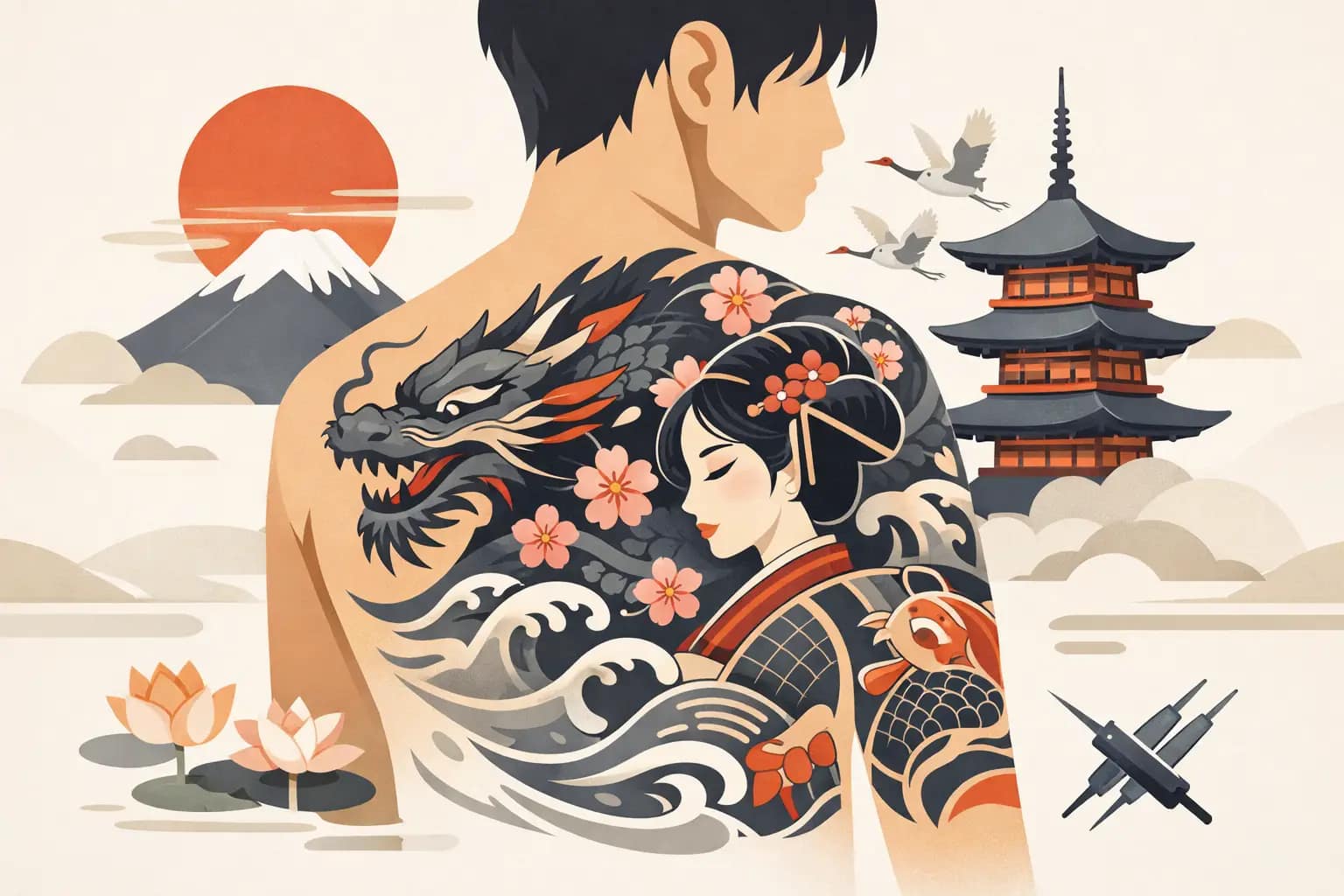

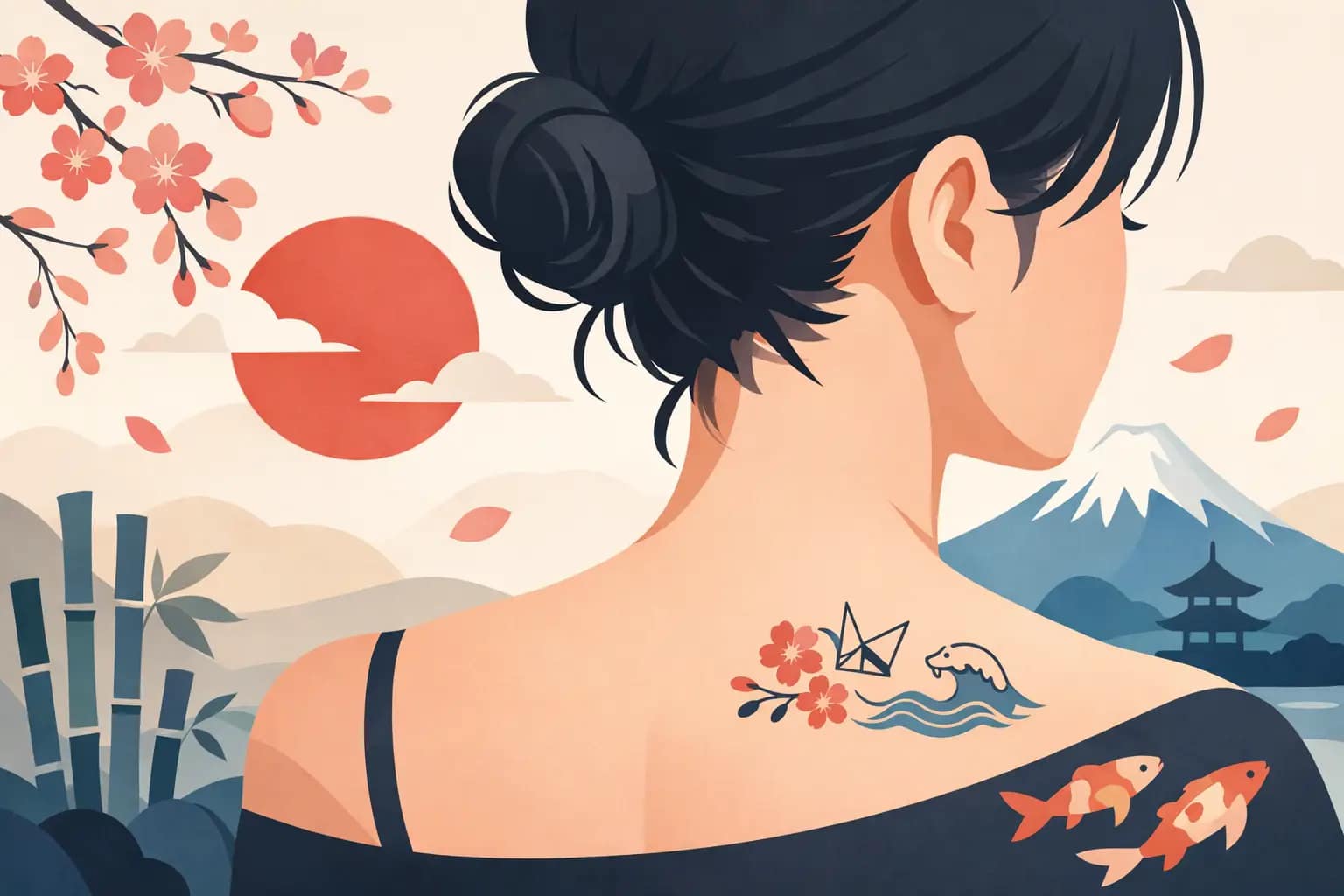
A small tattoo has nowhere to hide. Every line, every curve, and every choice in spacing has to work harder – especially with Japanese-inspired work, where symbolism and flow matter as much as the image itself. That is why japanese tattoos small in size are not just scaled-down versions of larger pieces. They need their own design logic.
For clients who love Japanese tattooing but are not ready for a sleeve, back piece, or large panel, small work can be a smart place to start. It offers the chance to carry meaningful imagery in a more discreet format, but it also asks for restraint. Not every traditional motif translates well when reduced. The strongest small Japanese tattoos are the ones built around clarity, not clutter.
Why japanese tattoos small designs work so well
Japanese tattooing is known for movement, storytelling, and bold visual rhythm. In large-scale work, that often shows up through sweeping backgrounds, layered symbolism, and multiple elements working together. With a smaller tattoo, the goal changes. Instead of telling the whole story, the piece captures one strong note.
That can be powerful.
A single koi can suggest perseverance. A chrysanthemum can speak to resilience and beauty. A wave can carry motion, energy, and respect for nature without needing extra decoration around it. When the design is handled well, a small tattoo still feels intentional and complete.
The biggest advantage is focus. Smaller Japanese-inspired tattoos often feel cleaner, more direct, and easier to place on the body. They can fit the wrist, forearm, ankle, back of the arm, calf, or behind the ear depending on the concept. For some clients, they also become the first piece in a larger collection, giving the artist a foundation to build from later.
The difference between small and rushed
Small does not mean simple, and it definitely should not mean rushed.
One of the most common mistakes people make with Japanese-inspired tattooing is trying to force too much into too little space. A dragon head, peony, clouds, wind bars, waves, and kanji all packed into a tiny area may sound exciting in theory. On skin, it usually turns into visual noise.
Good small tattoo design comes from editing. The artist has to decide what matters most, what can be simplified, and what should be left out completely. That is where specialization matters. Japanese work has its own visual language, and shrinking it successfully takes more than tracing a motif from reference and making it tiny.
There is also the long-term factor. Tattoos change slightly as they settle and age. Lines soften. Tight details can close up over time if they are pushed too close together. A strong small tattoo is designed with breathing room so it still reads clearly years down the line.
Best motifs for small Japanese tattoos
Some imagery naturally adapts better than others. The best small Japanese tattoos tend to have a clear silhouette, strong symbolism, and enough visual simplicity to hold up at a reduced scale.
Koi
A small koi works well because the shape is recognizable and fluid. It can be designed with gentle movement and still look complete in a compact area. Depending on direction, posture, and expression, it can suggest determination, growth, or personal transformation.
Hannya
A Hannya mask can be striking in a smaller format if the design stays bold. The expression carries a lot of emotional weight, so it does not need much else around it. This is a good example of a motif that benefits from clean decision-making rather than excessive detail.
Chrysanthemum and peony
Floral imagery is a natural fit for smaller Japanese-inspired tattoos. Chrysanthemums read beautifully with layered petals and balanced structure. Peonies can work too, though they often need a bit more room to avoid becoming overly dense. Both can stand alone or pair with a subtle leaf or wave accent.
Waves and wind
If you want something more abstract, waves and wind bars can make excellent small tattoos. They carry unmistakable Japanese influence and can be shaped to fit different placements. They also work well as future building blocks if you plan to expand the tattoo later.
Daruma, frogs, and other compact symbols
Certain folk-inspired or symbolic motifs can be strong choices for smaller pieces. A Daruma, for example, has a bold form and a deep connection to perseverance and intention. Compact animal motifs can also work, depending on how they are stylized.
What usually does not work at a very small size
This is the part many artists should say more often: some ideas need more space.
Full dragons, phoenixes with layered feathers, complex samurai scenes, or masks surrounded by heavy background elements usually lose impact when reduced too far. The same goes for designs that rely on tiny textures, intricate faces, or multiple overlapping symbols.
That does not mean the concept is wrong. It just means the scale may be wrong.
Sometimes the better move is to keep the same inspiration but redesign it around one element. Instead of a full battle scene, maybe it becomes a single helmet detail. Instead of an entire dragon body, maybe it becomes a dragon claw, head, or coiled section with enough room to breathe. A custom artist can preserve the spirit of the idea without forcing the whole thing into an area that cannot support it.
Placement matters more than people think
With small Japanese tattoos, placement changes everything.
A design that looks great on paper may feel cramped on the wrist but balanced on the inner forearm. A circular floral motif may sit naturally on the shoulder cap or calf, while a wave may look better wrapping slightly along the ankle or tricep. The body is not a flat canvas, so scale and shape need to work with the anatomy.
Visibility matters too. Some clients want a piece they can see every day. Others prefer something more private. Neither approach is better, but it does affect what makes sense visually. Fine line direction, curve, and negative space all play differently depending on whether the tattoo sits on a high-motion area, a narrow area, or a broader surface.
This is where a consultation becomes valuable. A strong tattoo is not just a good drawing. It is a good drawing for that exact part of your body.
Color or black and gray?
Both can work, but the right answer depends on the image and the size.
Black and gray often gives small Japanese-inspired tattoos a timeless, understated look. It can emphasize shape and contrast without crowding the design. If the concept relies on mood, expression, or dramatic form, black and gray may be the stronger choice.
Color can be incredible in smaller Japanese work when used with discipline. Red, gold, muted blue, or soft green can bring a motif to life, but too many colors in a tight space can make the tattoo feel busy. Usually, a limited palette ages more gracefully and keeps the focal point clear.
The best approach is not choosing color because it looks exciting in the moment. It is choosing color because it supports readability, symbolism, and longevity.
Why custom design matters here
Small tattoos are often underestimated because they seem less complex than larger projects. In reality, they can be less forgiving.
When a piece is small, weak composition shows immediately. If the silhouette is unclear, the tattoo reads poorly. If the line weight is off, the balance feels wrong. If the symbolism gets muddled, the whole design loses its point.
That is why custom work matters. A thoughtful artist does not just ask what image you want. They ask what you want it to say, where it belongs, how bold you want it to feel, and whether this piece needs to stand alone or leave room for future work. At a studio like Dani Olmos Tattoo, that collaborative process is what turns a small idea into a piece with real staying power.
Choosing the right artist for small Japanese work
If you are considering japanese tattoos small in scale, look closely at the artist’s portfolio. Not just whether they tattoo well, but whether they understand Japanese design principles and can edit with confidence. Big, dramatic work does not automatically translate into good small work.
Look for clean line control, readable shapes, and tattoos that still feel balanced without relying on a lot of filler. Pay attention to healed results when possible. The right artist will be honest about what can and cannot work at a given size, even if that means recommending a different placement or a slightly larger design.
That kind of honesty is a good sign. It shows the artist is thinking beyond the appointment and toward how the tattoo will live on your skin over time.
A small Japanese-inspired tattoo can be quiet or bold, personal or highly visible, simple or layered with meaning. The size does not determine the significance. The design does. When the concept is clear and the craftsmanship is there, a smaller piece can carry just as much presence as something far larger.