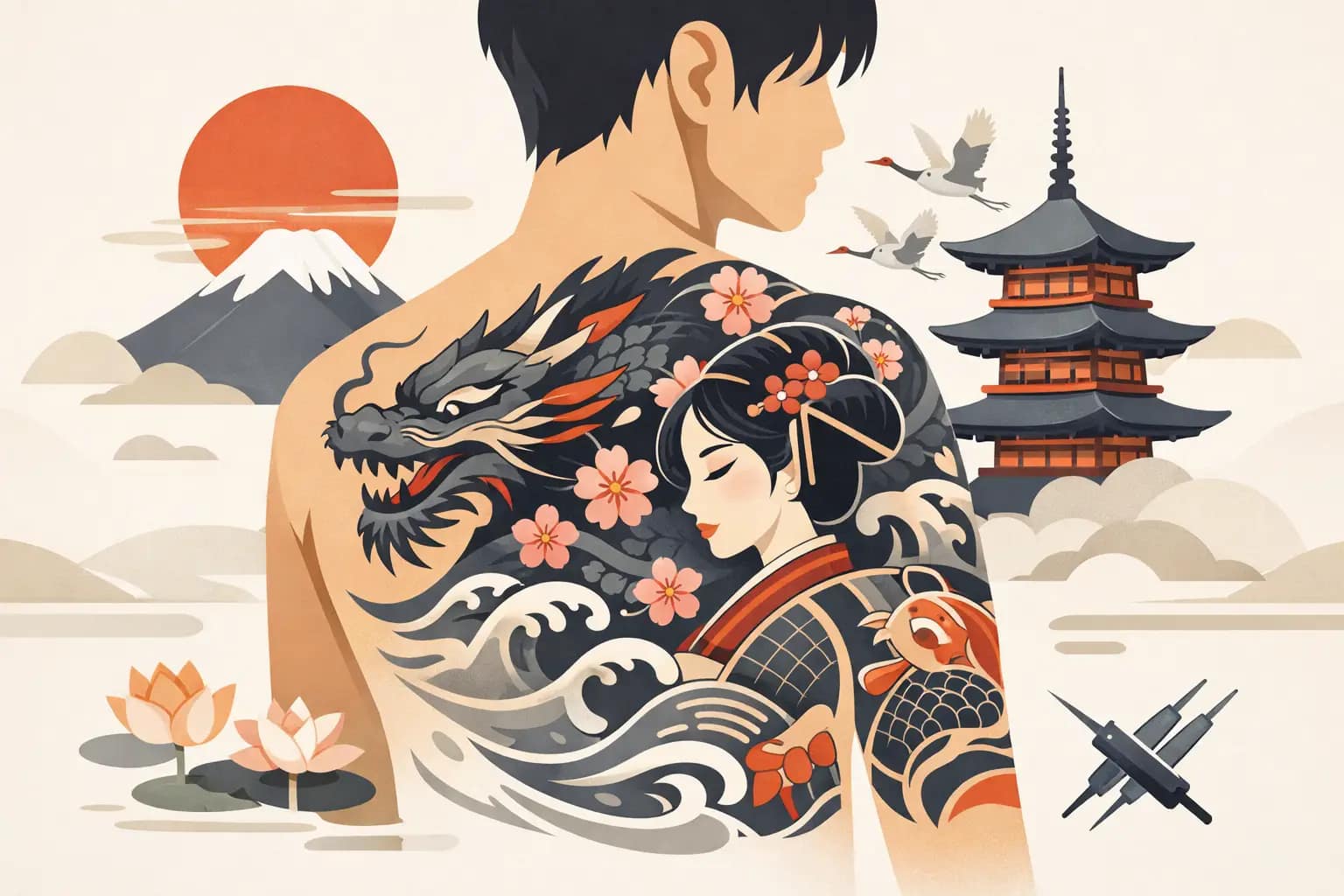

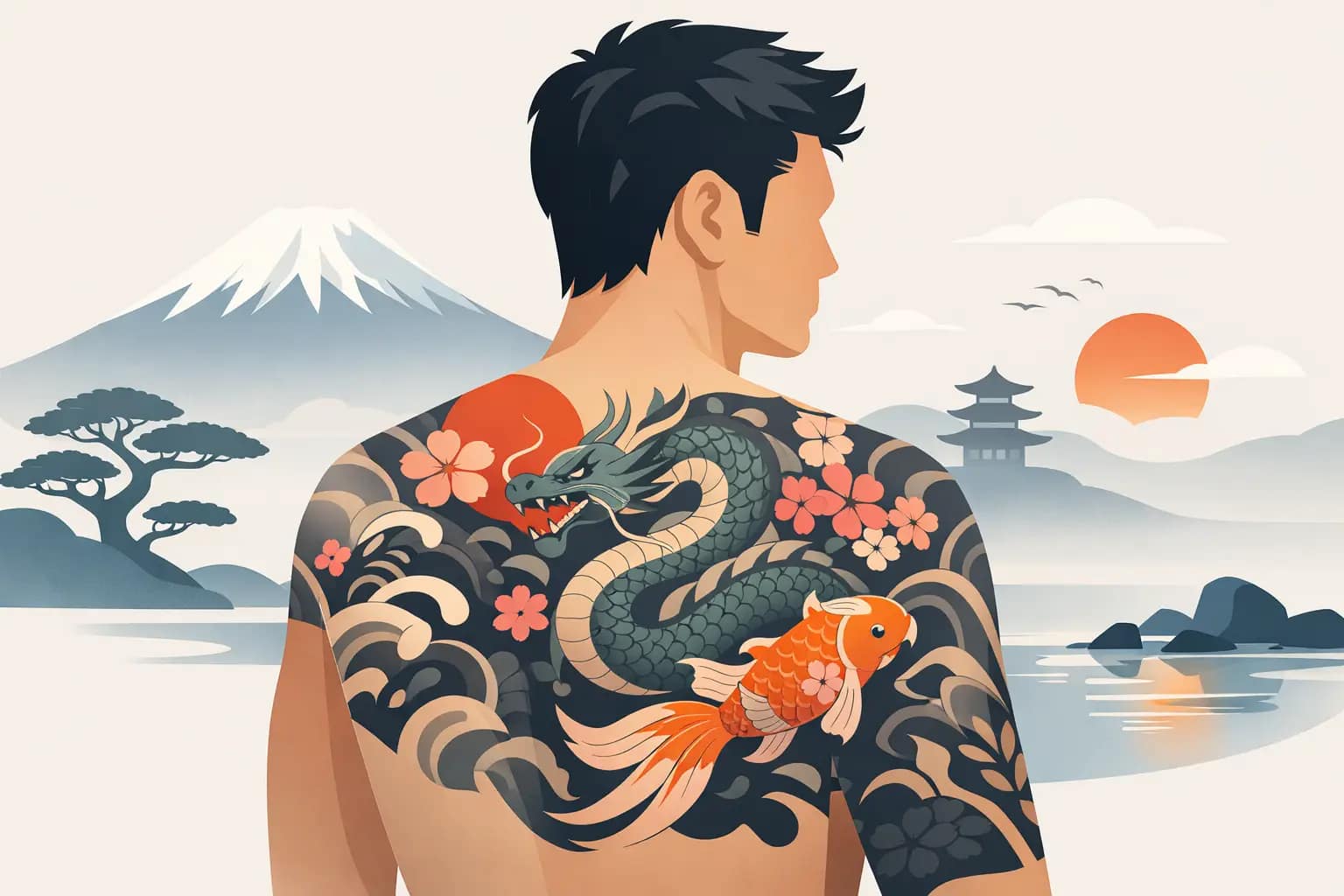
A great Japanese sleeve does not start with picking a dragon off a wall. It starts with scale, flow, and a clear idea of what the tattoo needs to say ten years from now. That is why japanese tattoos for men tend to stand apart from trend-driven work – when they are designed well, they feel powerful on day one and still read clearly as the body changes with time.
For clients who want more than a cool image, Japanese tattooing offers something rare. It gives you structure, symbolism, and room to build a piece that feels personal without looking forced. The best results come from treating the tattoo as a full composition, not just a collection of separate elements.
Why japanese tattoos for men stay compelling
Japanese tattooing has visual authority. The line work is decisive, the movement is intentional, and the imagery carries generations of meaning. Even in modern custom work, that underlying framework gives the tattoo a sense of permanence that many styles do not have.
For men, that often translates into pieces that read strong across larger areas of the body – sleeves, back pieces, chest panels, ribs, and legs. The style was built around flow. Wind bars, waves, smoke, flowers, scales, and background fields are not filler in the lazy sense. They connect the story and help the piece move with the anatomy.
That matters more than people think. A design can look impressive in a flat drawing and still fail once it wraps a shoulder or bends around a forearm. Japanese work tends to solve that problem beautifully because it respects the body first.
Choosing imagery with meaning, not just impact
A lot of clients are drawn to the obvious heavy hitters first – dragons, tigers, samurai, oni, koi. There is a reason those subjects endure. They are visually bold and symbolically rich. Still, the right choice depends on what kind of energy you want the tattoo to carry.
A dragon can suggest wisdom, protection, strength, or control over chaos. A tiger often feels grounded, fearless, and physical. Koi can represent perseverance and transformation, especially for someone who has pushed through a difficult stretch of life. A phoenix brings ideas of renewal, while a samurai leans more toward discipline, loyalty, and resolve.
The mistake is choosing based on popularity alone. Two men can both ask for a dragon and need completely different tattoos. One may need a calmer, noble composition with open breathing room. Another may want something more aggressive, storm-driven, and dense with motion. Same symbol, different story.
That is where custom design matters. The image should fit your body, your taste, and the emotional tone you want to live with. The strongest Japanese pieces do not explain everything literally, but they do feel intentional.
The role of supporting elements
Background and secondary imagery are often what turn a decent tattoo into a memorable one. Peonies can soften or balance a fierce subject without making it feel delicate. Chrysanthemums bring a different rhythm and a more formal presence. Maple leaves, cherry blossoms, water, wind, and clouds all shift the mood.
These elements also help establish seasonality and contrast, which are both important in traditional Japanese composition. Not every client needs strict historical symbolism, but understanding those relationships can lead to a piece that feels more coherent and more visually mature.
Placement changes everything
The same concept can succeed or fail depending on where it lives. Japanese tattoos for men usually shine when the placement gives the composition room to breathe. A full sleeve, half sleeve with chest panel, back piece, or full leg sleeve allows for proper movement and strong transitions.
That does not mean smaller work cannot be effective. It means the subject has to match the scale. An overly complex battle scene pushed into a small forearm tattoo usually loses what makes Japanese work compelling in the first place. The design becomes crowded, and the details fight each other.
If you want longevity, think bigger than the stencil and smaller than your ego. A tattoo should fit the body naturally. The shoulder cap may need a broader focal point. The forearm might call for cleaner vertical movement. A chest panel has to work with the curve of the pectoral and how it connects to the arm or sternum.
This is also why collecting random pieces over time can make a future Japanese bodysuit harder to build. It is not impossible, but it requires smarter planning. If you think you may want to expand later, say that early.
Traditional, Neo-Traditional, or somewhere between
Not every Japanese-inspired tattoo needs to follow strict historical rules. For many modern clients, the best work sits in a respectful middle ground – rooted in Irezumi principles but adapted through contemporary tattoo technique, color choices, and individual storytelling.
Traditional Japanese work tends to emphasize classic motifs, bold compositional balance, and established visual language. Neo-Traditional approaches may push color contrast, stylization, facial expression, or decorative detail further. Neither is automatically better. It depends on what you want the piece to do.
If your priority is timelessness, restraint usually wins. Bold line work, readable shapes, and thoughtful negative space age more gracefully than overcrowded detail. If your priority is a more painterly or modern look, that can absolutely work too, but it has to be handled with discipline.
A skilled artist will know where to sharpen the design and where to let it breathe. That balance is what keeps the tattoo from feeling busy after the skin settles.
What makes a Japanese tattoo age well
A tattoo that ages well is not just a tattoo with good ink. It is a tattoo designed with the future in mind.
First, the composition needs hierarchy. Your eye should know where to land. If every inch is screaming at the same volume, the tattoo tends to blur over time. Second, contrast matters. Dark fields, open skin, and clean shape language create durability. Third, placement and anatomy need to agree with each other. When movement lines fight the body, the design feels off long before the ink fades.
Color is another place where realism helps. Rich reds, muted golds, black and gray, and deliberate use of background can age beautifully. But brighter color stories need confident saturation and enough room around them. Too many similar mid-tones packed together can flatten with time.
This is one reason serious collectors often choose custom work over flash. A custom piece can be built around the way your arm turns, how broad your back is, or how your chest connects to an existing tattoo. That level of planning shows later.
Working with the right artist
Japanese tattooing is one of those styles where specialization matters. You are not just hiring someone to draw a tiger. You are trusting them to create a composition that fits your body, respects the visual language of the style, and still feels like your piece.
That calls for conversation. A good consultation should go beyond image references. It should cover placement, scale, how much skin coverage you want, whether you are building toward a larger project, and what kind of mood you want the tattoo to carry. The artist should be guiding the structure, not just taking an order.
For clients in Sacramento and across Northern California, that difference is usually easy to feel. A custom-focused studio like Dani Olmos Tattoo is built around collaboration, not volume. That means more attention to concept, more care in execution, and a stronger chance of ending up with a piece that still feels right years later.
Common mistakes to avoid
The biggest mistake is treating Japanese imagery like interchangeable decoration. Symbols have flexibility, but they are not random. A sleeve feels stronger when the elements relate to each other and to the body.
Another mistake is forcing too much into the first session design. Bigger stories take editing. Sometimes the best choice is to commit to one dominant subject and let the supporting elements create the richness.
Finally, do not underestimate patience. Japanese-inspired work often looks most impressive at scale, and scale takes time. If you want something truly masterful, rushing is usually the wrong instinct.
The right Japanese tattoo should feel like it belongs to you and only you. Not because no one else has ever worn a dragon or a koi, but because the composition, movement, and meaning were built around your body and your story. When that happens, the tattoo stops feeling like an accessory and starts feeling like part of your identity.