
A backpiece gives a story room to breathe. Meaningful backpiece tattoo concepts are not simply a collection of favorite images placed on a large canvas. The strongest designs use the entire back – shoulders, spine, ribs, and lower back – to create movement, hierarchy, and a feeling that the tattoo could not exist anywhere else.
For clients drawn to Japanese, Irezumi-inspired, or Neo-Traditional work, this scale is especially powerful. A full back can hold contrast between calm and chaos, strength and vulnerability, past and future, without becoming visually crowded. The goal is not to explain every detail at first glance. It is to create a piece that reveals more as you live with it.
Start With the Story, Not the Symbol
A tiger can represent courage. A dragon can represent protection, wisdom, or transformation. A flower can honor someone, mark a new chapter, or simply bring softness to a more powerful central image. Those associations are useful, but they are only a starting point.
Before choosing imagery, consider the experience behind the tattoo. What changed you? What do you protect? What lesson took years to learn? A meaningful backpiece often comes from one clear emotional center rather than five separate ideas competing for attention.
For example, someone who rebuilt their life after a difficult period may be drawn to a koi swimming upstream. That concept becomes more personal when the design reflects the actual feeling of persistence: turbulent water, a strong directional flow, and a koi positioned as if it is moving through resistance rather than floating decoratively. Another client may want to honor family while keeping the tattoo private. A guardian figure, paired with seasonal flowers associated with a meaningful time of year, can carry that intention without turning the design into a literal portrait of a family tree.
Meaning does not have to be obvious to everyone else. In fact, the most enduring tattoos often have a clear visual read from a distance and a more personal meaning known only to the wearer.
Meaningful Backpiece Tattoo Concepts With Visual Weight
A backpiece needs a central idea with enough visual authority to hold the composition. Certain subjects work particularly well because they naturally create movement across a broad surface.
Dragon and wind for transformation
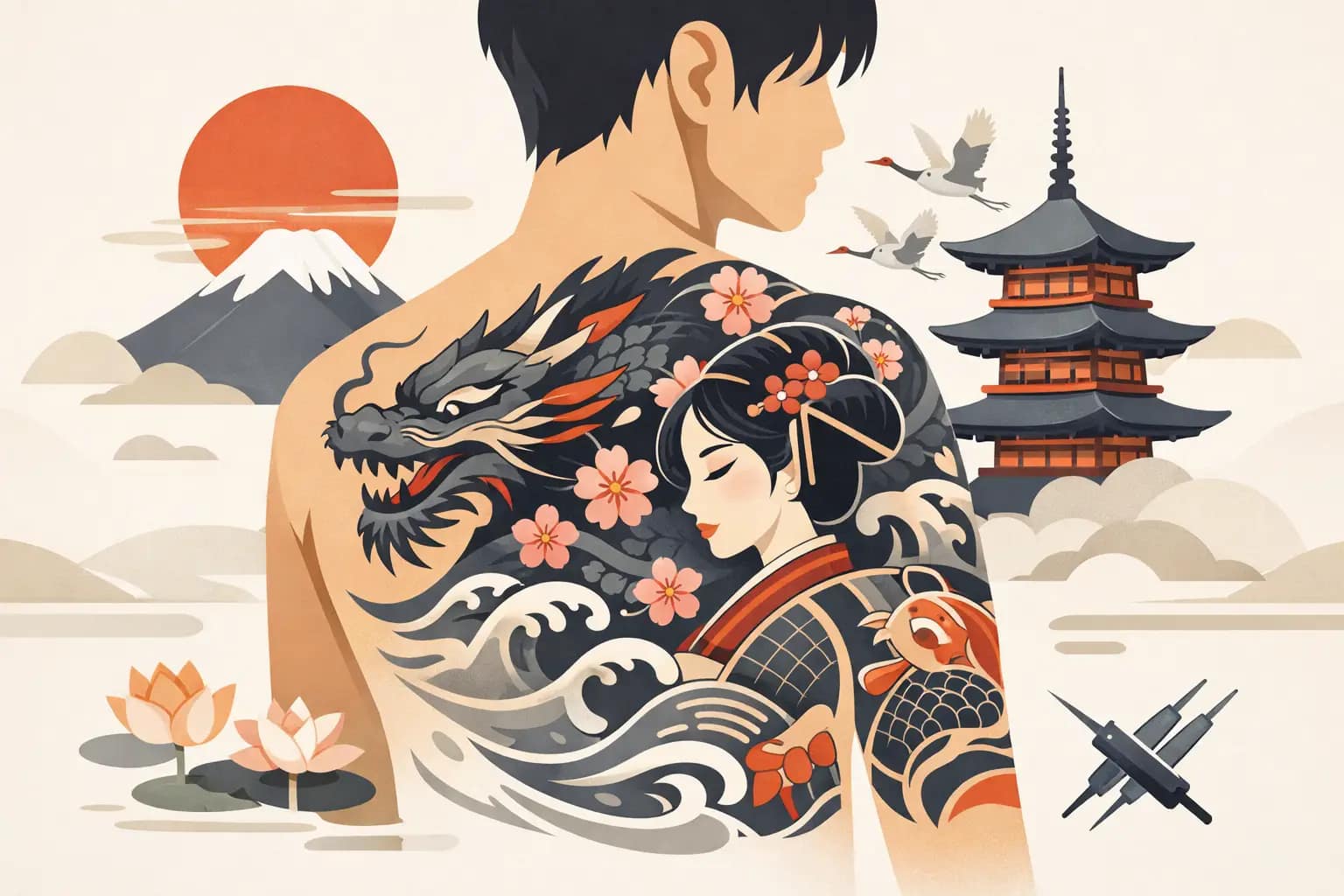
A dragon is a classic choice for a full back because its body can travel across the shoulders, curve around the spine, and create an intentional path through the design. It can represent change, discipline, protection, or the ability to move between different stages of life. Wind bars and clouds can make the piece feel expansive, while a darker background can add drama and make the scales or facial features stand forward.
The trade-off is that dragons are popular. A custom approach matters. The expression, posture, direction, scale pattern, accompanying elements, and negative space should be designed for your body and story, not copied from a reference image.
Koi, water, and the work of perseverance
Koi are often chosen for resilience, ambition, and forward movement. For a client who has pushed through recovery, career setbacks, grief, or a major personal reinvention, the image can feel deeply earned. Water gives the composition natural flow, creating a strong connection from the lower back up through the shoulders.
A single koi creates clarity and focus. Two koi can suggest partnership, duality, or the relationship between who you were and who you are becoming. Adding maple leaves, peonies, or chrysanthemums changes the emotional temperature of the piece and can tie the design to a season or personal memory.
Guardian imagery for protection and resolve
Foo dogs, samurai, oni masks, and other guardian-inspired imagery can communicate protection, courage, and a willingness to confront fear. These concepts work best when the emotional intent is considered carefully. A fierce face alone may read as aggression. Paired with flowers, smoke, clouds, or a quieter secondary element, it can feel more layered: strength with restraint, or protection born from experience.
For Japanese-inspired work, cultural respect is part of good design. Rather than treating traditional imagery as interchangeable decoration, take time to understand its visual language and let an artist who works within the style guide the composition. A thoughtful interpretation will always age better than a trend-driven mix of symbols.
Phoenix and florals for renewal
A phoenix gives a full-back design natural lift. Wings can frame the shoulders, while feathers, flames, or smoke can move down the spine and create a dramatic silhouette. It is an especially fitting concept for renewal after loss, survival, sobriety, divorce, illness, or any chapter that required you to become someone new.
The challenge is avoiding an overly literal “rising from the ashes” design. The best version may be quieter: a bird in controlled motion, a restrained use of flames, and florals that bring life and balance to the composition. The story is still there, but the art does not need to announce it.
Let the Body Shape the Design
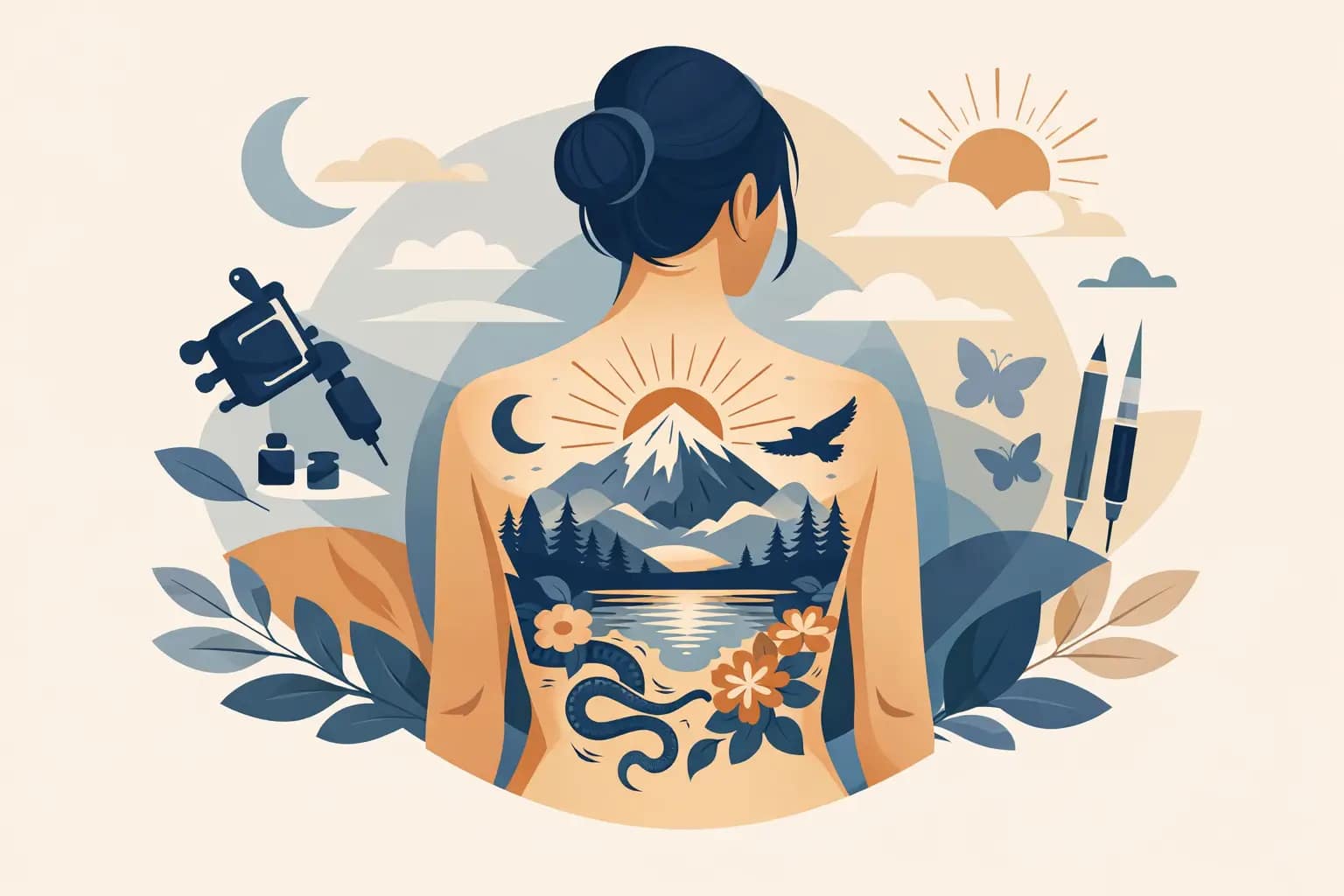
The back is not a flat rectangle. Shoulder blades shift, the spine creates a natural centerline, and the lower back narrows. A successful backpiece uses those contours instead of forcing a drawing onto them.
A symmetrical design can feel ceremonial, powerful, and intentional. Masks, guardian figures, and paired animals often benefit from this structure. An asymmetrical design can feel more alive and dynamic, especially with dragons, snakes, koi, or waves moving diagonally across the body.
Negative space is equally important. A packed background can make a new tattoo look dramatic, but it may obscure the focal point over time if there is not enough contrast. Skin breaks, open clouds, lighter areas of water, and carefully placed breathing room allow the design to read clearly from several feet away. This is craftsmanship with long-term visual quality in mind, not empty space left by accident.
Choose Supporting Elements With Purpose
Supporting imagery should do more than fill gaps. It should direct the eye, establish mood, and deepen the story. In Japanese and Neo-Traditional tattooing, florals, waves, wind, fire, clouds, rocks, and background textures are structural tools as much as decorative ones.
Seasonal flowers are a strong example. Peonies can bring abundance and bold beauty. Chrysanthemums can suggest endurance and reflection. Maple leaves can evoke transition, while cherry blossoms can speak to impermanence and the value of a fleeting moment. Their placement, color, and scale affect the entire piece.
Color deserves the same level of consideration. A limited palette can create a refined, cohesive backpiece with strong contrast. Rich reds and golds can make a traditional composition feel ceremonial and energetic. Black and gray can emphasize texture, form, and drama. Neither approach is inherently more meaningful. It depends on your skin tone, the style you are drawn to, your existing tattoos, and how much visual intensity you want to carry every day.
Plan for Time, Commitment, and Evolution
A meaningful backpiece is a commitment to both the process and the result. It may take multiple sessions, and good planning allows the artist to maintain consistency in linework, saturation, and overall flow. Rushing to complete a large-scale tattoo often creates compromises that become visible years later.
It is also worth deciding whether the backpiece should stand alone or connect to future work. A design can be framed cleanly as a complete back panel, or it can leave intentional routes into a bodysuit, chest panels, sleeves, or leg work. There is no wrong choice, but it is far easier to plan those relationships before the first session than to solve them afterward.
Bring references to a consultation, but bring your story too. Reference images show an artist what you respond to visually. Your experiences, values, and non-negotiables reveal what the tattoo needs to say. At Dani Olmos Tattoo, that conversation is where a personal concept begins to become a composition built for your body.
The right backpiece should feel striking on the day it is finished and more truthful as the years pass. Give the idea enough time to develop, choose imagery you can grow with, and let the design earn its place on the largest canvas you have.